JHPIEGO
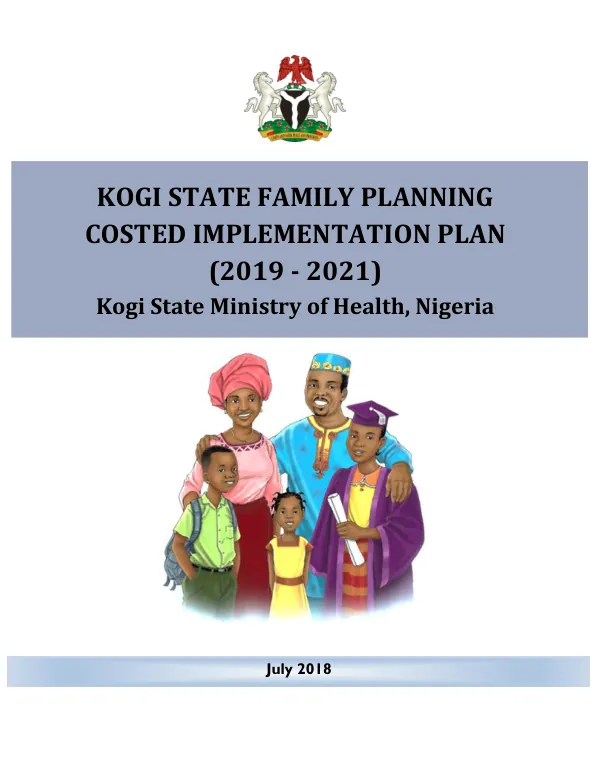
Kogi State Family Planning Costed Implementation Plan (2019-2021)
The Kogi State Family Planning Costed Implementation Plan (2019-2021) aims to improve family planning indicators in the state and contribute to the national commitment at the 2012 London Summit on Family Planning.
2018 · 43 pages
Sign in to readA free account is required to download.
Abstract
The plan is based on the Nigeria Family Planning Blueprint (scale-up plan) and is expected to increase the modern contraceptive prevalence rate (mCPR) from 8.5% to 20% by 2021. The current contraceptive prevalence rate in Kogi State is estimated at 11% for all married women, with only 8.5% of contraceptive users using a modern method. The plan aims to provide a broad choice of family planning methods to users, meeting their preferences and needs. The implementation of the plan is expected to improve maternal, newborn, adolescent, and child health in the state. The plan focuses on six key strategic priority areas: family planning demand generation and behavior change communication, staff and training, partnership with the private sector in service delivery, family planning policy and financing, and monitoring and coordination. The plan also aims to increase the availability and accessibility of family planning information and services in the state. The Kogi State Ministry of Health, with support from the Maternal and Child Survival Program (MCSP), developed the plan with funding from USAID. The plan is a detailed roadmap for achieving the 20% mCPR goal by 2021 and specifies the strategies, human, material, and financial resources needed to achieve this goal. The plan is expected to provide a veritable tool for evidence-based advocacy and broad-based resource mobilization to all collaborating partners and agencies. The private sector is also called upon to invest in the various thematic areas identified in the document. The plan is a significant achievement by the State Government towards improving the availability and access to high-quality family planning services in the state. The unmet need for family planning in Kogi State is estimated at 21%, and the total fertility rate is 4.2%, with 89.5% of women of reproductive age not using any contraceptive method. The plan aims to address the low contraceptive use among adolescents and young adults, which has resulted in a high prevalence of pregnancies, unsafe abortions, and related deaths. The plan is expected to improve the poor family planning indices in the state and contribute to the national commitment at the 2012 London Summit on Family Planning. The implementation of the plan will require the commitment and focus of all stakeholders, including the State Ministry of Health, Health Regulatory Bodies, Professional Health Associations, Family Planning Implementing Partners, Civil Society Organizations, and the Private Sector. The plan is a critical step towards achieving the laudable goal of improving family planning indicators in Kogi State and contributing to the national commitment at the 2012 London Summit on Family Planning. The plan is based on the Nigeria Family Planning Blueprint (scale-up plan) and is expected to increase the modern contraceptive prevalence rate (mCPR) from 8.5% to 20% by 2021. The plan focuses on six key strategic priority areas and aims to increase the availability and accessibility of family planning information and services in the state. The plan is a detailed roadmap for achieving the 20% mCPR goal by 2021 and specifies the strategies, human, material, and financial resources needed to achieve this goal. The plan is expected to provide a veritable tool for evidence-based advocacy and broad-based resource mobilization to all collaborating partners and agencies. The plan is a significant achievement by the State Government towards improving the availability and access to high-quality family planning services in the state. The plan aims to address the low contraceptive use among adolescents and young adults, which has resulted in a high prevalence of pregnancies, unsafe abortions, and related deaths. The plan is expected to improve the poor family planning indices in the state and contribute to the national commitment at the 2012 London Summit on Family Planning. The implementation of the plan will require the commitment and focus of all stakeholders, including the State Ministry of Health, Health Regulatory Bodies, Professional Health Associations, Family Planning Implementing Partners, Civil Society Organizations, and the Private Sector.