SAVE THE CHILDREN FUND
Meal Approaches for a Nationwide Literacy Programme
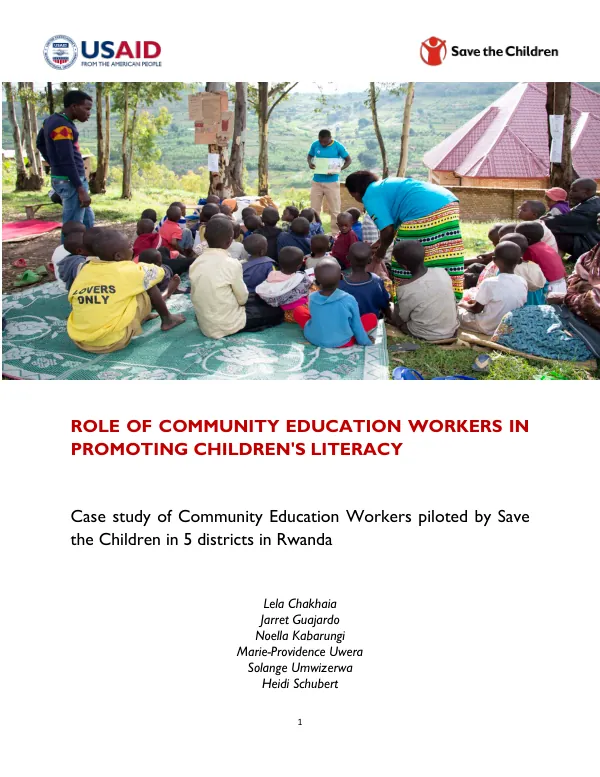
Mureke Dusome is a nationwide literacy program implemented by Save the Children in partnership with the MINEDUC/Rwanda Education Board, with countrywide coverage.
2021 · 38 pages
Sign in to readA free account is required to download.
Abstract
The program aims to improve literacy outcomes for children in primary grades (P.1-P.3) by fostering partnerships between schools and the broader community. The program's theory of change posits that if children are in supportive community and home learning environments, with the necessary time, materials, and support outside of school to practice reading, then their literacy outcomes will improve. The program's monitoring, evaluation, accountability, and learning (MEAL) system is designed to track progress towards the program's goals. The MEAL system includes monitoring, which involves tracking progress against results, and evaluation, which involves assessing the program's impact and effectiveness. Accountability refers to the program's commitment to transparency and responsiveness to beneficiaries, while learning involves documenting key insights from monitoring and evaluation data to inform program improvements. The program's MEAL plan outlines specific indicators to measure progress, including the number of learners reached in reading interventions at the primary level. This indicator measures the number of primary level learners in public schools exposed to interventions designed to improve reading skills, such as extracurricular reading clubs. The indicator is disaggregated by age range, sex, disability, grade, and district. The program uses a range of data collection methods, including SMS reporting, phone reporting, and activity reporting by implementers. Data is collected annually, and MEAL staff are responsible for tracking and analyzing the data to inform program improvements. The program's performance indicator reference sheet (PIRS) provides a detailed and succinct description of the indicator, including its precise definition, unit of measure, and rationale for selection. The program's MEAL system is an iterative process that involves setting SMART indicators, identifying human resources and training needs, and selecting data sources and collection methods. The program's implementation plan outlines the steps necessary to collect and use data to inform program improvements. The program's commitment to transparency and accountability is reflected in its program standards for community sharing and its hotline for complaint and feedback response. The program's learning component involves documenting key insights from monitoring and evaluation data to inform program improvements. The program's institutional learning mechanisms include capacity building, learning case studies, and information dissemination to stakeholders. The program's goal is to sustain improvements to the culture of reading, sustain capacity strengthening for school leadership, and promote equity in literacy work, with a focus on gender empowerment and the inclusion of children with disabilities.