USAID DEC
Role of Community Education Workers in Promoting Children's Literacy: A Case Study in Rwanda
Sign inRWANDAN EDUCATION BOARD
Role of Community Education Workers in Promoting Children's Literacy: A Case Study in Rwanda
Community Education Workers (CEWs) play a crucial role in promoting children's literacy in Rwanda.
2021 · 71 pages
Sign in to readA free account is required to download.
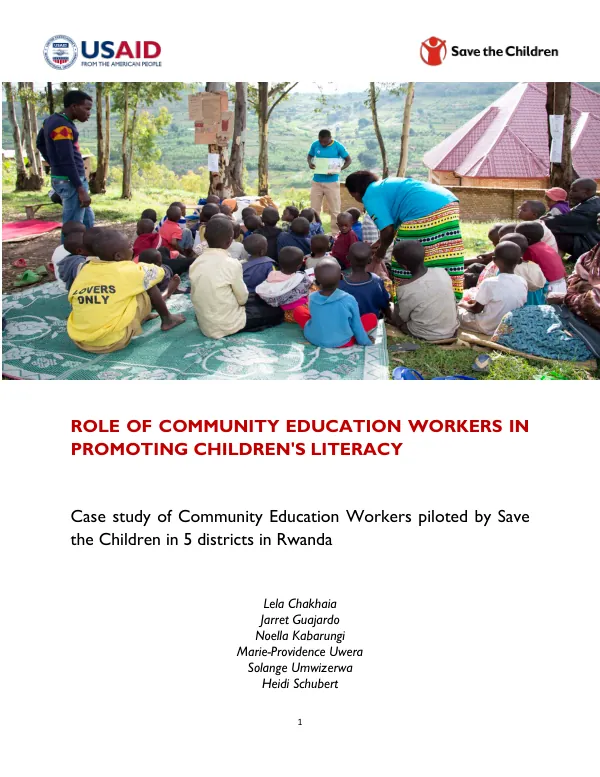
Abstract
A case study conducted by Save the Children in 5 districts of Rwanda aimed to explore the role of CEWs in promoting children's literacy. The study involved key informant interviews and focus group discussions with various stakeholders, including CEWs, parents, and local leaders. The study found that community leaders have a limited understanding of the role that CEWs play in promoting children's literacy. However, children and parents have a better understanding of the role of CEWs, with many expecting them to provide support and guidance in reading activities. The study also found that CEWs are perceived to have a positive impact on children's literacy, with many parents and children reporting improvements in reading skills. Despite these positive findings, the study also identified several challenges faced by CEWs, including inadequate mentoring support and feedback from local leaders and organizations. The study also found that the performance-based monitoring system has been effective in tracking the progress of CEWs, but there are challenges in linking the reading clubs to schools. The study also explored the role of other stakeholders, including Head Teachers, School General Assembly Committees, and Uwezo Youth Volunteers with disabilities, in supporting CEWs. The study found that these stakeholders have played a crucial role in providing support and feedback to CEWs, but there are challenges in empowering them to provide quality monitoring and support without external support. The study also examined the satisfaction of CEWs with their role and the financial incentives provided to them. The study found that CEWs are generally satisfied with their role, but there are challenges in providing adequate financial incentives to motivate them. The study made several recommendations, including the need for improved mentoring support and feedback for CEWs, the need to empower local leaders and organizations to provide quality monitoring and support, and the need to provide adequate financial incentives to CEWs. The study also recommended the need to improve the performance-based monitoring system and to link the reading clubs to schools more effectively. The study concluded that CEWs play a crucial role in promoting children's literacy in Rwanda, but there are several challenges that need to be addressed to ensure their effectiveness. The study highlighted the need for improved support and feedback for CEWs, as well as the need to empower local leaders and organizations to provide quality monitoring and support. The study's findings have implications for the implementation of literacy programs in Rwanda, highlighting the need for improved support and feedback for CEWs, as well as the need to empower local leaders and organizations to provide quality monitoring and support. The study's recommendations provide a framework for improving the effectiveness of CEWs in promoting children's literacy in Rwanda. The study's methodology involved key informant interviews and focus group discussions with various stakeholders, including CEWs, parents, and local leaders. The study's findings are based on the analysis of data collected from these interviews and discussions. The study's results have been presented in a clear and concise manner, with each finding supported by data and quotes from stakeholders. The study's recommendations are based on the analysis of the data and are presented in a clear and actionable manner. The study's conclusions highlight the importance of CEWs in promoting children's literacy in Rwanda, and the need for improved support and feedback for CEWs. The study's recommendations provide a framework for improving the effectiveness of CEWs in promoting children's literacy in Rwanda. The study's limitations are acknowledged, including the limited sample size and the potential biases in the data collection process. However, the study's findings are considered to be robust and reliable, and the study's recommendations are based on the analysis of the data. The study's implications for policy and practice are significant, highlighting the need for improved support and feedback for CEWs, as well as the need to empower local leaders and organizations to provide quality monitoring and support. The study's recommendations provide a framework for improving the effectiveness of CEWs in promoting children's literacy in Rwanda.