USAID DEC
Meeting National Goals and People's Needs with Long-Acting and Permanent Methods in Cambodia
Sign inENGENDERHEALTH
Meeting National Goals and People's Needs with Long-Acting and Permanent Methods in Cambodia
The Government of Cambodia's goal is to reach a modern contraceptive prevalence rate (CPR) of 60% by 2015 for married women of reproductive age.
2010 · 2 pages
Sign in to readA free account is required to download.
Abstract
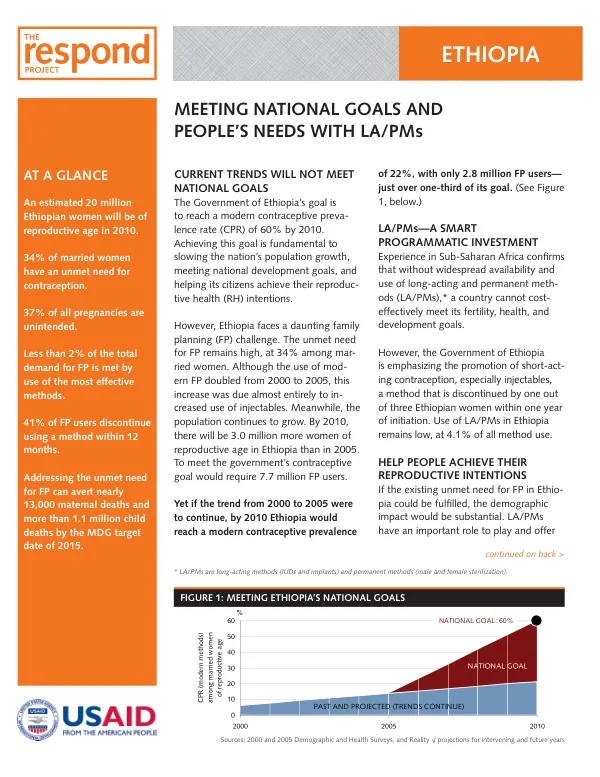
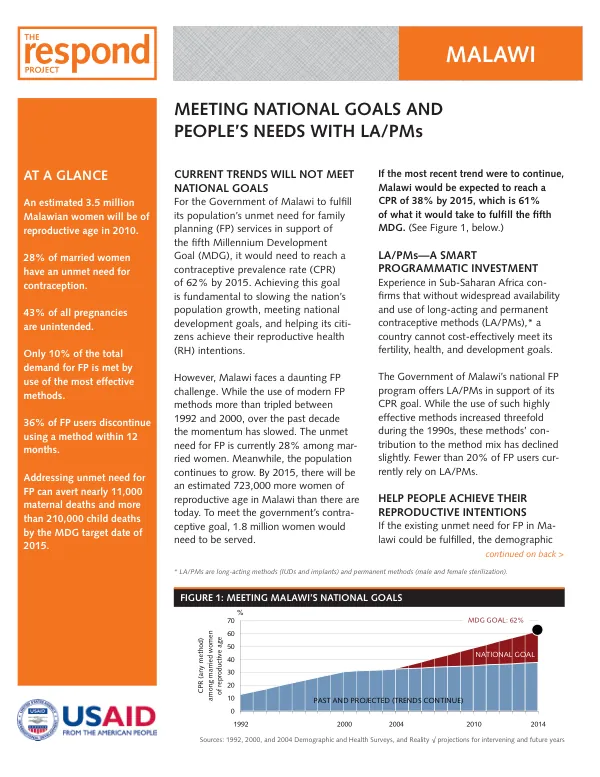
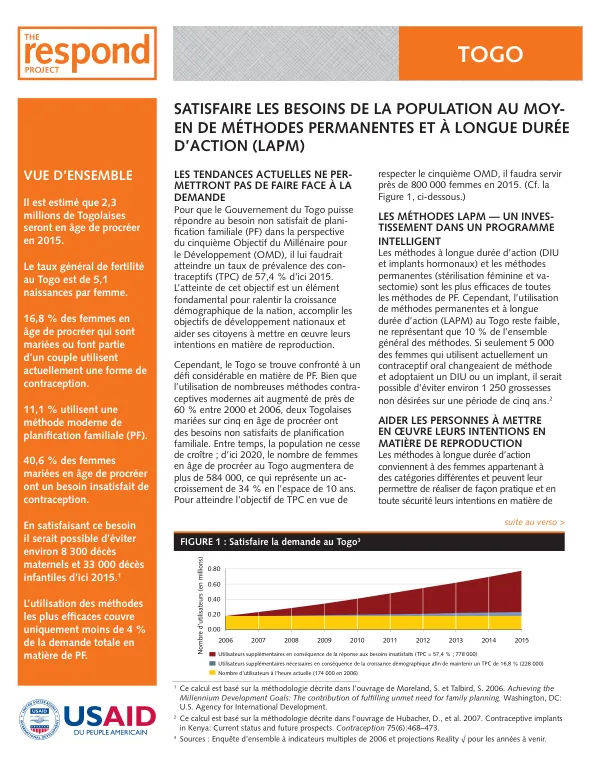
Achieving this goal is fundamental to slowing the nation's population growth, meeting national development goals, and helping its citizens achieve their reproductive health (RH) intentions. However, Cambodia faces a daunting family planning (FP) challenge. While FP use rose during the first half of this decade, from 24% to 40%, nearly half of this increase was due to the use of traditional methods, which account for nearly one-third of all FP use. The unmet need for FP remains high, at 25.1% among married women. The population continues to grow; by 2015, Cambodia will have an estimated 230,000 more married women of reproductive age than it has today, a 9% increase in just five years. To reach the national contraceptive goal, approximately 1.6 million married women will need to be served in 2015, an increase of nearly 550,000 over the number of modern contraceptive users currently being served. Yet if the trend from 2000 to 2005 were to continue, by 2015 Cambodia would achieve a modern method CPR of 45.6%, with approximately 1.25 million modern FP users—about 75% of what it will take to reach the goal. Long-acting methods (IUDs and implants) and permanent methods (male and female sterilization) are the most effective of all FP methods. However, use of long-acting and permanent methods of contraception (LA/PMs) in Cambodia remains low, at less than 10% of the overall method mix. If 10,000 current pill users (approximately 4% of the current number) were to switch to the IUD or implant, more than 2,500 unintended pregnancies could be averted over a five-year period. Cambodia's total fertility rate is 3.4 lifetime births per woman. An estimated 4.5 million Cambodian women will be of reproductive age in 2015. Addressing unmet need could avert approximately 100,000 unintended pregnancies, 18,000 abortions, and as many as 1,000 maternal deaths by 2015. Only 5.8% of the total demand for FP is met by use of the most effective methods. The RESPOND Project can help the Ministry of Health and the U.S. Agency for International Development Mission's implementing partners to improve reproductive health in Cambodia by adopting a holistic programming approach that results in skilled, motivated, well-supported LA/PM service providers, engaged communities, and an improved policy and program environment for FP services.
Related documents