FHI 360
Meeting Targets and Maintaining Epidemic Control (EpiC) Project
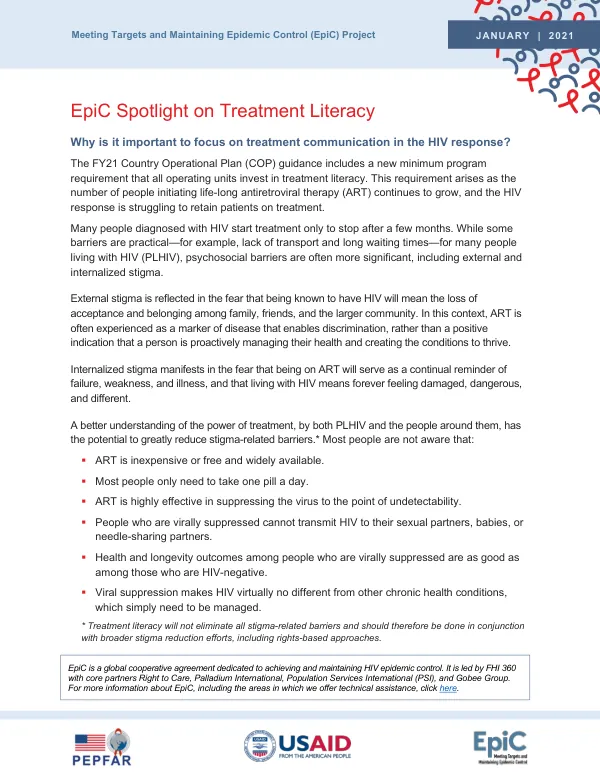
The Meeting Targets and Maintaining Epidemic Control (EpiC) Project is a global cooperative agreement dedicated to achieving and maintaining HIV epidemic control.
2021 · 3 pages
Sign in to readA free account is required to download.
Abstract
Led by FHI 360, the project brings together core partners Right to Care, Palladium International, Population Services International (PSI), and Gobee Group to address the growing number of people initiating life-long antiretroviral therapy (ART) and the need to retain patients on treatment. A key challenge in the HIV response is the high rate of treatment discontinuation among people living with HIV (PLHIV), often due to psychosocial barriers such as external and internalized stigma. External stigma arises from the fear of being known to have HIV and losing acceptance and belonging in their communities, while internalized stigma manifests as a fear of being on ART as a reminder of failure, weakness, and illness. A better understanding of the power of treatment, including its effectiveness in suppressing the virus and improving health outcomes, has the potential to greatly reduce stigma-related barriers. To address this challenge, EpiC takes a strategic marketing approach to treatment communication, which involves building positive emotional associations with ART. This approach is grounded in market realities, including the availability of treatment services and accurate information. EpiC uses methodologies such as ethnography to build empathy with the target audience and understand how people perceive HIV, ART, relationships, identity, and culture. The project also employs market segmentation, human-centered design, brand development, creative development, campaign strategy, integration, and metrics to create effective public health communications campaigns. EpiC's strategic marketing approach focuses on tailoring messages to specific groups based on emotional attributes and responses, rather than demographics or behaviors. The project brings PLHIV into the design process to co-create messages and materials that resonate with them. EpiC also engages other critical end-users, such as clinic staff, ministry of health officials, and local community leaders, to ensure that campaigns are relevant and appealing to those responsible for promoting awareness and providing services. The project's approach to treatment communication involves delivering consistent messages in the clinic, in the community, and through media that create and reinforce positive associations with ART. EpiC partners with creative agencies to develop campaigns with eye-catching visuals and memorable messages. The project also assesses the relevance of channels such as radio, TV, and social and print media, as well as in more personal channels such as counseling interactions and community gatherings. EpiC facilitates the integration of the tools of strategic marketing with deep knowledge of epidemiology and health systems to ensure that messages and content are technically accurate while also relevant and acceptable to the community. The project collects and monitors data to identify problems and improve performance, using key metrics such as clinical indicators and behavioral indicators related to exposure to campaign messages and materials. EpiC can support USAID missions and implementing partners to create strategic marketing campaigns for treatment communication or to validate and adapt existing campaigns in other contexts. The project can work independently or with existing communications partners to address the complex challenges of HIV treatment communication and retention.