USAID DEC
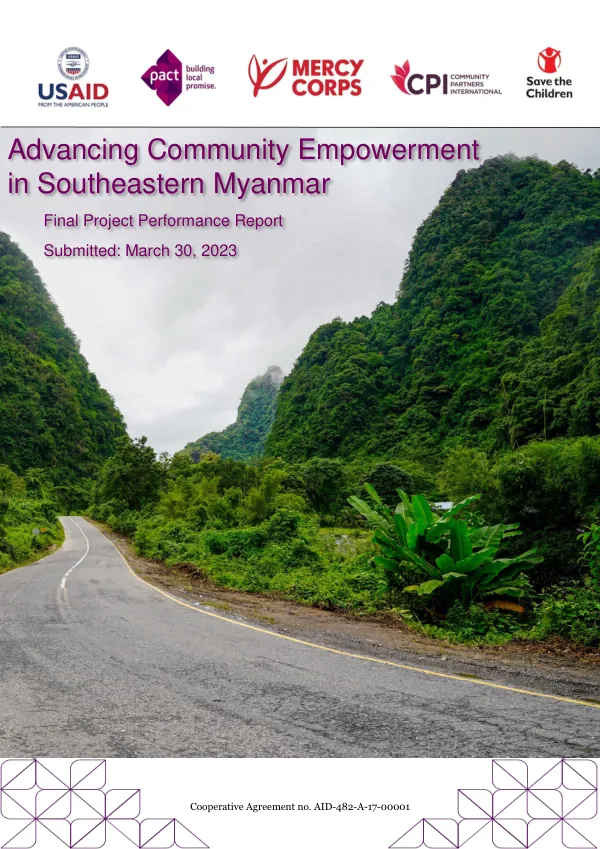
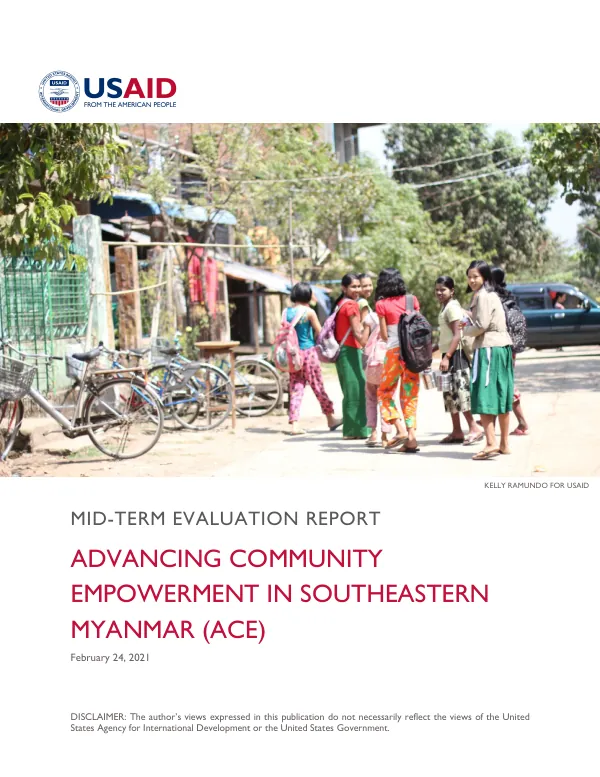
Mid-Term Evaluation Report: Advancing Community Empowerment in Southeastern Myanmar (ACE)
Sign inMERCY CORPS INTERNATIONAL
Mid-Term Evaluation Report: Advancing Community Empowerment in Southeastern Myanmar (ACE)
Advancing Community Empowerment in Southeastern Myanmar (ACE) is a five-year, $48 million project implemented by a consortium led by Pact, including Mercy Corps, Save the Children International, and Community Partners International.
2021 · 92 pages
Sign in to readA free account is required to download.
Abstract
The project aims to reduce community vulnerabilities, strengthen community participation, and strengthen local governance systems in Southeastern Myanmar. The project's goal is to improve the lives of vulnerable populations, particularly women and children, through a multi-sectoral and integrated approach. The project's objectives include increasing community participation in decision-making processes, improving access to healthcare and education, and enhancing economic opportunities for vulnerable populations. The project's theory of change is based on the assumption that community empowerment is essential for sustainable development. The project's critical assumptions include the need for a participatory approach, the importance of building trust between communities and project staff, and the need for a flexible and adaptive project design. The evaluation of ACE was conducted by Social Impact, a consulting firm, in collaboration with the project's implementing partners. The evaluation team used a mixed methodology, including key informant interviews and a mini-survey of village-level direct beneficiaries. The evaluation team examined six evaluation questions, including the impact of the political context on the project, progress against expected outcomes, the project's approach, its operational structure, the effect of the COVID-19 pandemic, and recommendations on possible changes for the project's remaining two years. The evaluation found that ACE had mixed results in reducing community vulnerabilities, strengthening community participation, and strengthening local governance systems. The project's components had met, exceeded, or underperformed on their targets, with different components showing varying levels of success. The evaluation team noted that the project's slow implementation was due to the COVID-19 pandemic, which significantly affected the ability to use traditional community organizing techniques. The pandemic also led to significant turnover of senior management staff in the early part of the project. The evaluation team recommended that ACE require significant revisions to its expected outcomes, timeline, and activities, given the ongoing pandemic. The team suggested that the project focus on building resilience and adaptability, and that it prioritize community engagement and participation. The evaluation team also recommended that the project's implementing partners work together to develop a revised project design that takes into account the lessons learned from the evaluation. The project's implementing partners, including Pact, Mercy Corps, Save the Children International, and Community Partners International, will need to work together to revise the project's design and implement the recommendations outlined in the evaluation report. The revised project design should prioritize community engagement and participation, and should take into account the lessons learned from the evaluation. The project's implementing partners will also need to work together to develop a plan for revising the project's expected outcomes, timeline, and activities, given the ongoing pandemic. The evaluation report provides a comprehensive assessment of ACE's progress and challenges, and offers recommendations for improving the project's effectiveness. The report highlights the importance of community engagement and participation in achieving sustainable development outcomes, and emphasizes the need for flexibility and adaptability in project design and implementation.