TVT ASSOCIATES
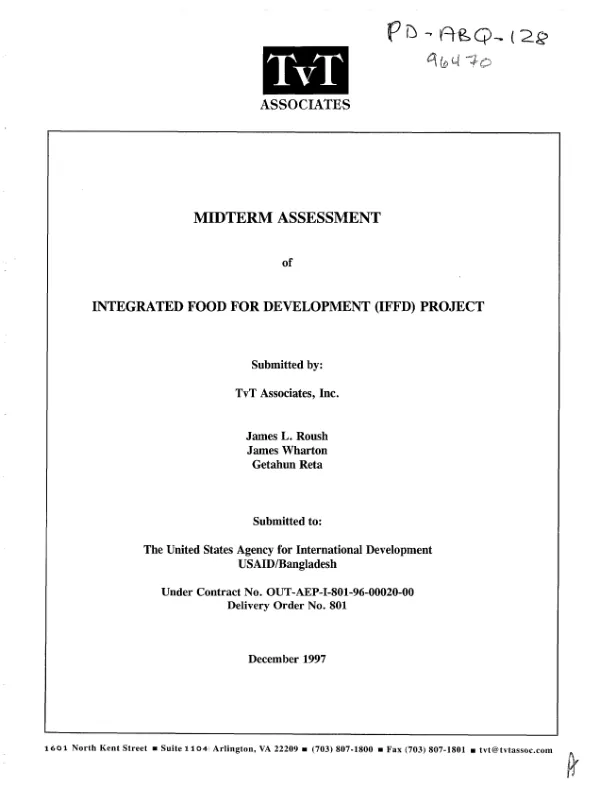
Midterm assessment of integrated food for development (IFFD) project
Evaluates the Integrated Food for Development (IFFD) project, designed to upgrade the rural road network and promote disaster preparedness in Bangladesh.
Roush, James L.; Wharton, James +1 more · 1997
Sign in to readA free account is required to download.
Abstract
Mid-term evaluation covers the period 1994- 12/97. The project is being implemented by CARE and the Local Government Engineering Department (LGED). The project target for rehabilitated roads was decreased from over 13,040 kilometers to 11,000 so that the project could ensure that already completed roads would remain passable. About 8,000 kilometers have been accomplished to date in over 1,400 roads. At all sites visited, CARE and LGED staffs demonstrated an impressive understanding of -- and resolved -- the major environmental issues connected with the rural road network. On average, the results of road improvements have been positive, with passenger volume on the sample roads increasing by 35% and freight volume by 71%. However, the average masks positive results in some areas (e.g., increases in overall rickshaw traffic in four suboffices) and discouraging results in others (e.g., reduced overall truck traffic in all suboffices, even though some alignments are showing healthy increases). As a result of the road improvements, new shops have appeared on a number of alignments or in pre- existing markets, some farmers have shifted from one to three crops per year, and smaller farms have been able to set up a small shop along the alignment or rent/buy a rickshaw/van to enter the transport business. Baseline studies by Helen Keller International (HKI) have shown positive outcome of the IFFD roads -- when well selected, constructed, and maintained -- in general and on food security (food access and food availability) specifically. Flood-proofing pilot activities, which took longer to initiate than planned, have included 431 (vs. the target of 501) homestead ground raisings, completion of a flood shelter, and the raising of tube wells to improve drinking water. Other activities have targeted latrines, evacuation boats, road rehabilitation, tree plantations, home gardening, flood preparedness, health education, erosion and mound protection, and village planning. On the down side, the project has made insufficient use of economic and food security criteria in selecting the thanas in which to operate and the specific roads chosen within a thana; also, a significant percentage of IFFD roads do not remain passable after rehabilitation, reflecting the types of soils and the levels of rainfall in some areas, quality of construction, and the project"s lack of a repair and maintenance budget. Efforts during the remaining 2 years should focus on these areas. It is also recommended that the project: improve data collection and use; stop taking land without compensation; pay contractors for work completed in a more timely fashion; and expand the geographic information system activity to include the entire land area of Bangladesh as well as hydrologic and flood plain data. Most importantly, the project should begin now to design a local-level maintenance program that could be a part of a follow-on program. Finally, continuing the rural infrastructure program, including a significant road component, can make a strong contribution to economic development and rural food security in Bangladesh. USAID should authorize a follow-on Title II program for such a program.
Related documents