USAID DEC
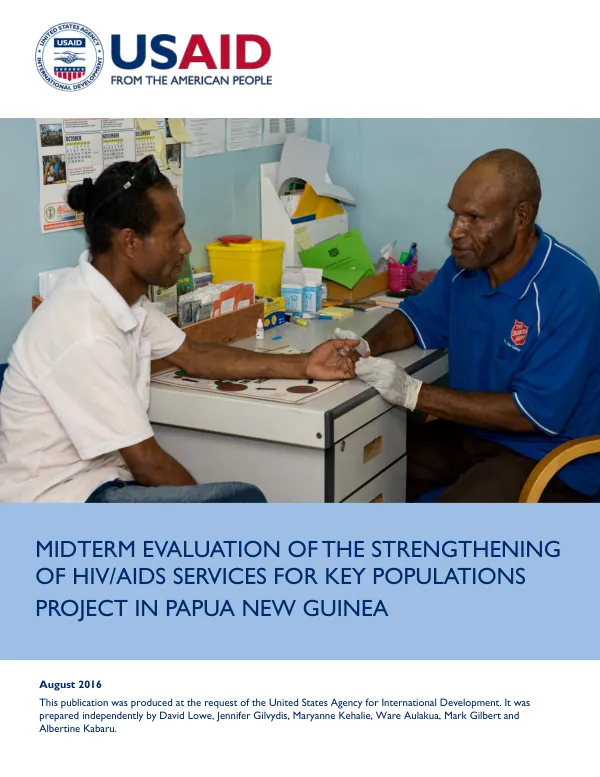
Midterm Evaluation of the Strengthening of HIV/AIDS Services for Key Populations Project in Papua New Guinea
Sign inECO CONSULTING GROUP
Midterm Evaluation of the Strengthening of HIV/AIDS Services for Key Populations Project in Papua New Guinea
The Strengthening of HIV/AIDS Services for Key Populations Project in Papua New Guinea was initiated to improve access to HIV/AIDS services for key populations, including men who have sex with men, sex workers, and people who inject drugs.
2016 · 131 pages
Sign in to readA free account is required to download.
Abstract
The project was launched in 2014 and is funded by the United States Agency for International Development (USAID). The project's primary objective is to reduce the spread of HIV/AIDS among key populations and improve their overall health and well-being. The project is implemented by FHI 360, a non-governmental organization with extensive experience in HIV/AIDS programming. The project's scope includes prevention, clinical services, facility- and community-based gender and GBV programs, and health systems strengthening. The project's geographic focus is on Papua New Guinea, with a particular emphasis on urban areas where key populations are concentrated. The midterm evaluation of the project was conducted in August 2016 to assess its progress and effectiveness. The evaluation team used a mixed-methods approach, combining both quantitative and qualitative data collection and analysis methods. The evaluation team conducted key informant interviews and focus group discussions with project stakeholders, including project staff, community leaders, and key population members. The evaluation found that the project has made significant progress in achieving its objectives. The prevention component of the project has been effective in increasing awareness and knowledge about HIV/AIDS among key populations. The project's clinical services program has expanded coverage to increase service uptake among key populations, with a particular focus on men who have sex with men and sex workers. The project's facility- and community-based gender and GBV program has been effective in reducing gender-based violence and improving access to HIV/AIDS services for women and girls. The evaluation also identified several strengths, weaknesses, constraints, and gaps in the project. One of the project's strengths is its strong partnerships with local organizations and community groups, which have enabled the project to reach key populations and provide them with essential services. However, the project faces several challenges, including limited resources, inadequate infrastructure, and resistance from some community members. The evaluation team made several recommendations to improve the project's effectiveness and sustainability. These recommendations include increasing funding to support the project's activities, improving the project's monitoring and evaluation systems, and strengthening the project's partnerships with local organizations and community groups. The evaluation team also recommended that the project focus on building the capacity of local health workers and community leaders to provide HIV/AIDS services and support key populations. Overall, the midterm evaluation of the Strengthening of HIV/AIDS Services for Key Populations Project in Papua New Guinea found that the project has made significant progress in achieving its objectives and has the potential to make a lasting impact on the lives of key populations in Papua New Guinea. However, the project faces several challenges that must be addressed to ensure its long-term sustainability and effectiveness.