USAID DEC
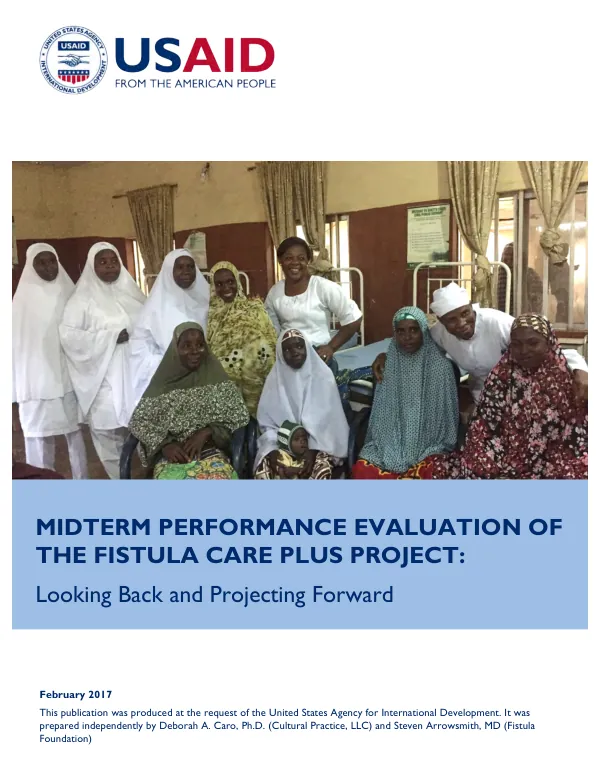
Midterm Performance Evaluation of the Fistula Care Plus Project: Looking Back and Projecting Forward
Sign inUSAID
Midterm Performance Evaluation of the Fistula Care Plus Project: Looking Back and Projecting Forward
The Fistula Care Plus (FC+) Project is a five-year global project supported by the USAID Offices of Comprehensive and Reproductive Health, and Maternal and Child Health and Nutrition.
2017 · 115 pages
Sign in to readA free account is required to download.
Abstract
The project is designed to prevent, detect, and treat obstetric fistula. The project's purpose is to identify strengths and weaknesses, as well as opportunities for fistula programming beyond the current project. The evaluation used a mixed-methods approach, including document and indicator data review, surveys of USAID Mission staff and post-operative fistula care providers, interviews with stakeholders, and focus groups with post-operative fistula patients. The evaluation found that the project has contributed significantly to country ownership, particularly related to detection, treatment, and treatment of fistula. The project plays a key role in global leadership on safe surgery, with a focus on reducing iatrogenic fistula and improving surgical outcomes. The project has experienced smooth transitions despite changes in personnel, and is on track to meet its objectives. However, the project could expand its focus on causes and treatment of incontinence in women more broadly. The project has contributed to country ownership, particularly in detection, treatment, and treatment of fistula. The project has also played a key role in global leadership on safe surgery, with a focus on reducing causes and treatment of incontinence in women more broadly. The project has implemented a range of interventions, including farmer training, infrastructure development, and market linkage facilitation. The project has also established a network of community health volunteers to provide support to women affected by fistula. The project has made significant progress in reducing the incidence of fistula, and has improved access to treatment and care for women affected by fistula. The project has also made significant contributions to global leadership on safe surgery, with a focus on reducing iatrogenic fistula and improving surgical outcomes. The project has played a key role in advancing research and innovation in the field of fistula care, and has transferred new technologies to the field. The project has also contributed to the development of new guidelines and standards for fistula care. The project has experienced smooth transitions despite changes in personnel, and is on track to meet its objectives. However, the project could expand its focus on causes and treatment of incontinence in women more broadly. The project has also made significant progress in reducing the incidence of fistula, and has improved access to treatment and care for women affected by fistula. im
Related documents