USAID DEC
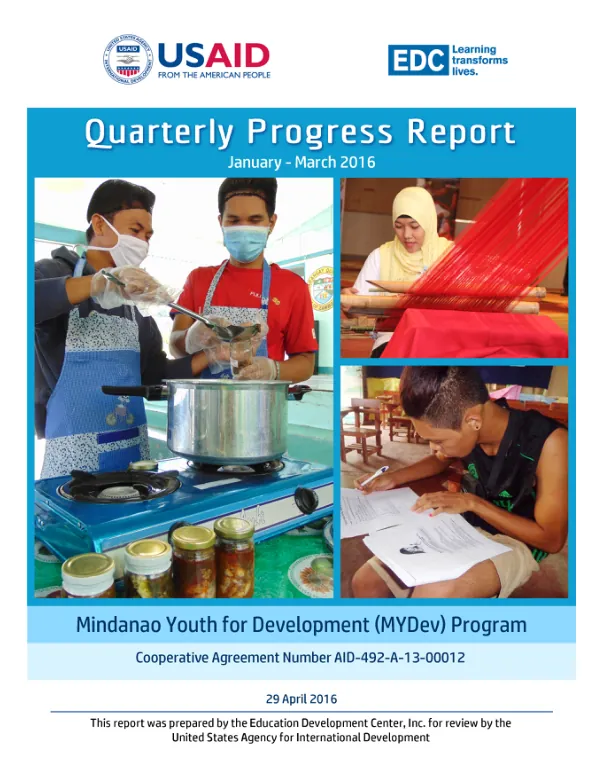
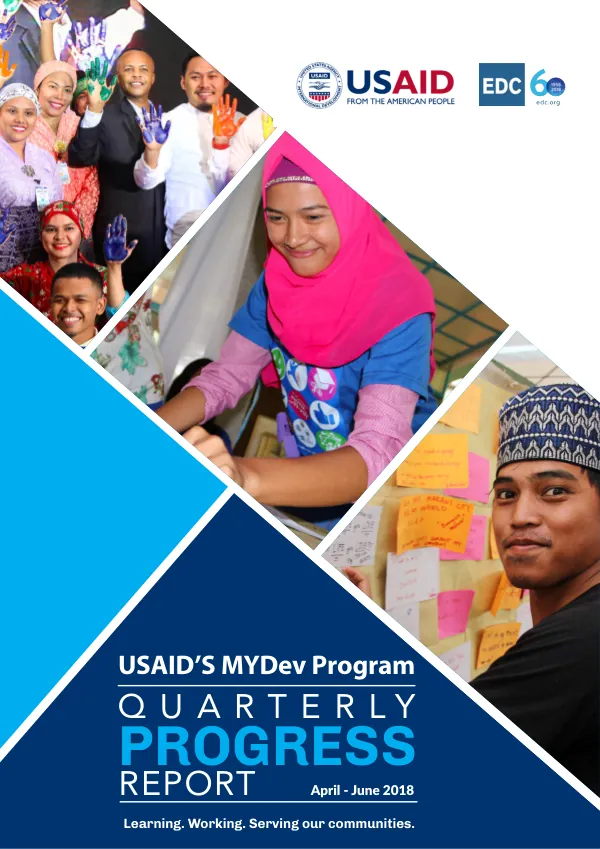
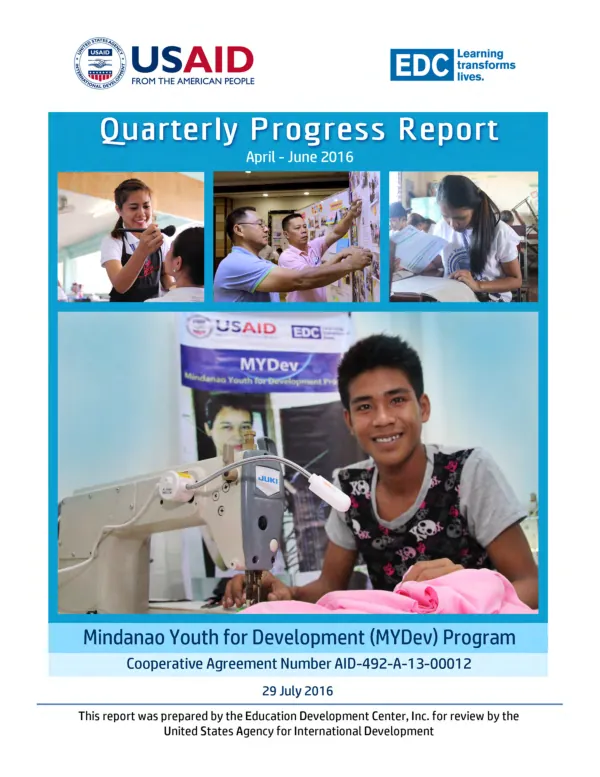
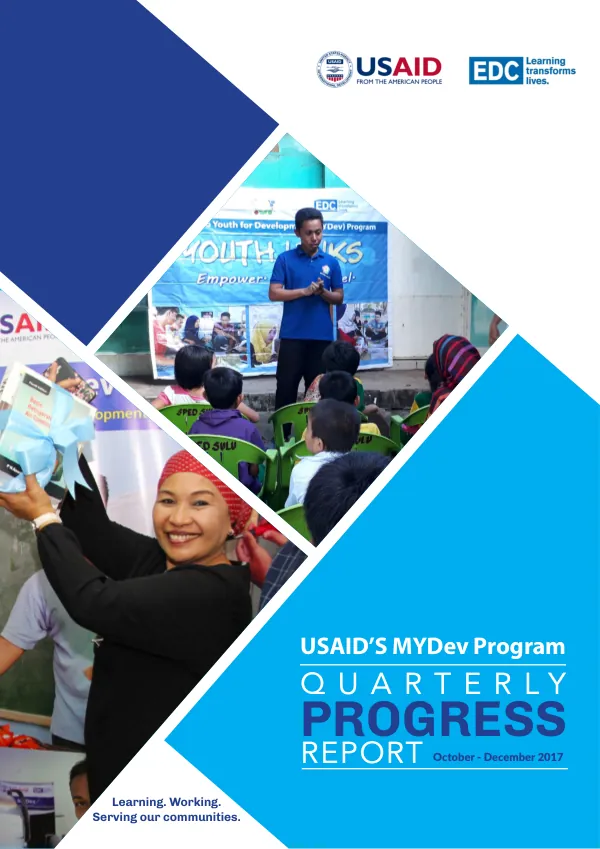
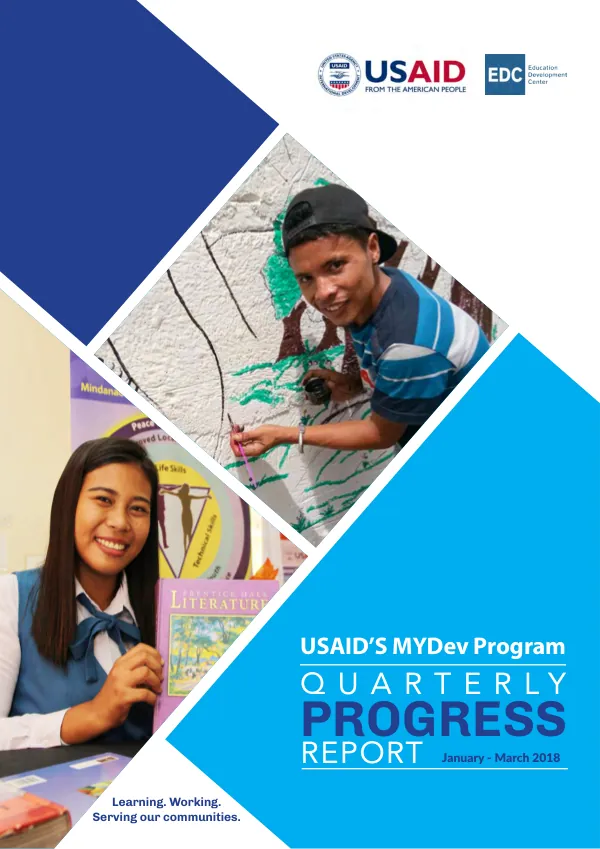
Mindanao Youth for Development (MYDev) Program's Quarterly Progress Report (QPR) covering the period January - March 2018 (FY18Q2)
Sign inCENTER FOR EDUCATIONAL DEVELOPMENT
Mindanao Youth for Development (MYDev) Program's Quarterly Progress Report (QPR) covering the period January - March 2018 (FY18Q2)
The Mindanao Youth for Development (MYDev) Program is a USAID-funded initiative aimed at supporting the development of out-of-school youth in the Autonomous Region in Muslim Mindanao (ARMM).
2018 · 33 pages
Sign in to readA free account is required to download.
Abstract
The program's primary objective is to strengthen local governance in delivering out-of-school youth services and increase out-of-school youth engagement for community development. MYDev has made significant progress in achieving its objectives, with the program exceeding its targets for all 21 performance indicators. The program has trained 59 new Technical Education and Skills Development Authority (TESDA) XI partners who will bring the MYDev learning approach to the field level. In addition, MYDev has worked with the Department of Education's Alternative Learning System (ALS) to identify next steps in nationalizing the MYDev Life Skills curriculum. The program has also made progress in deepening post-training support, with MYDev staff and Out-of-School Youth Development Alliances (OSYDA) supporting a broad range of MYDev Youth Network activities. These activities include participation in national and local conferences, youth-led community service activities, and participation in multiple job fairs and trade fairs. MYDev has also made significant progress in advancing the integration of the youth skills development approach and OSYDA interventions into government systems. The program has encouraged local government units (LGUs), the Department of Education (DepED), and the Technical Skills and Development Authority (TESDA) to incorporate the MYDev Life Skills curriculum, OSYDA market assessment tool, and other tools into their form systems. As a result, all OSYDAs have adopted the practices and tools into their monthly activities, and six sites have developed legislation to formalize the OSYDA. The program has also contributed to two Intermediate Results that support USAID's Development Objective 2: Supporting Peace and Stability in Mindanao. The Intermediate Results include Local Governance Strengthened in Delivering Out-of-School Youth Services and Out-of-School-Youth Engagement for Community Development Increased. In terms of progress towards the accomplishment of the 5-year Project, MYDev has generally exceeded the LoP targets of the performance indicators. However, the program will report additional accomplishments based on the impact assessment data analysis for Cohort FY17 to be completed by June 2018. The program has also initiated the one-year extension, which will reach at least 5,100 youths in 11 project sites, including the eight initial sites and three additional sites in the Lanao Region. The extension activities are just initiating, and no accomplishment is reported for this quarter. MYDev's fifth year of implementation has shifted priorities to ensuring sustainability, institutionalizing materials and best practices, and increasing the quality of post-training support. The program has also begun implementation of the extension activities supporting the youth and partners affected by the Marawi siege. The Technical Programs during this quarter focused on developing and advancing sustainability efforts and developing scalability opportunities as described in six specific tasks relating to the two main intermediate results. The program has made significant progress in institutionalizing OSYDAs as a program delivery mechanism within LGUs, developing youth as champions for civic engagement and community development, and developing OSYDAs as partners in ensuring the quality of program delivery. The program has also expanded the level of MYDev engagement in MYDev program offering and expanded participation in MYDev program activities. Overall, MYDev has made significant progress in achieving its objectives and has contributed to the development of out-of-school youth in the ARMM. The program's focus on sustainability, institutionalization, and quality post-training support has ensured that the program's impact will be sustained beyond the project's lifespan.
Related documents