FUTURES GROUP INTERNATIONAL, LLC
Minimum Required Standards for Private Health Centers
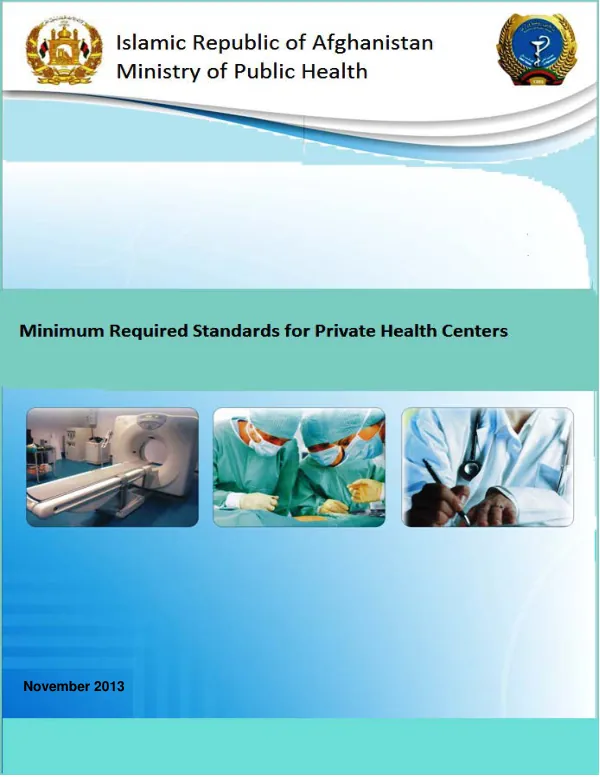
Minimum Required Standards for Private Health Centers in November 2013 emphasize the importance of essential and minimum services for private health facilities.
2013 · 76 pages
Sign in to readA free account is required to download.
Abstract
Emergency/First Aid services are required, including general medicine, general surgery, maternity facilities, and other specialized services such as otolaryngology, orthopedic surgery, eye care, pediatric medicine, and vaccinations. Support services are also crucial, including laboratory, X-rays, pharmacy, ECG, health education, and notifiable diseases reporting. Standard hygiene practices, infection prevention and control, and education and continued professional development are also mandatory. Utility services such as ambulance, diet, kitchen, waste disposal, and mortuary or cold chamber for keeping corpses are also required. Private health facilities must have a qualified and trained staff, including medical professionals, nurses, and other support personnel. The qualifications and job descriptions of personnel are outlined in Chapter 2, along with the availability of personnel and required security measures. Medical ethics and workplace safety of healthcare providers are also emphasized. Instruments and equipment for private health facilities are detailed in Chapter 3, including those for various areas of the hospital such as entrance area, registration and reception, waiting area, nursing station, dressing room, emergency room, examination and consultation rooms, pharmacy, diagnostic labs, ICU and CCU, recovery room, physiotherapy room, operating theater, delivery room, inpatient ward, and equipment for services zone. The standards also cover laboratory equipment, X-rays, and other diagnostic tools. Private health facilities must adhere to these minimum required standards to ensure the provision of quality healthcare services to patients.