USAID
Miradi User Guide: Getting Started
The Adaptive Management Software for Conservation Projects, known as Miradi, is designed to support program design and adaptive management practices.
2016 · 4 pages
Sign in to readA free account is required to download.
Abstract
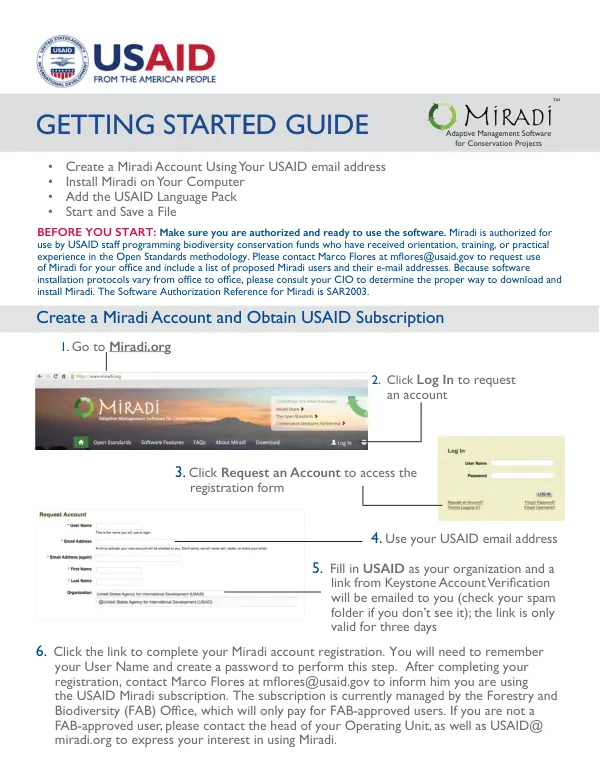
Miradi is authorized for use by USAID staff programming biodiversity conservation funds who have received orientation, training, or practical experience in the Open Standards methodology. To create a Miradi account, users must be authorized and ready to use the software, and must contact Marco Flores at [email protected] to request use of Miradi for their office. The process of creating a Miradi account involves registering on the Miradi.org website, using a USAID email address, and filling in USAID as the organization. A link from Keystone Account Verification will be emailed to the user, which must be clicked to complete the registration. After completing the registration, the user must contact Marco Flores to inform him that they are using the USAID Miradi subscription. Once the account registration is completed, users can download and install Miradi on their computer. The software is available for both PC and MAC operating systems, and users must select the correct installer file for their operating system. After installation, users will be prompted to install a Marine Example file as a future training resource and reference. In addition to installing the software, users must also add the USAID Language Pack to their Miradi program. This involves downloading the language pack, moving the downloaded .jar file into the Miradi folder, and opening or relaunching the program to select the USAID language option. Once the language pack is installed, users can continue to the Project File page, where they can create, import, or open a file. Miradi automatically saves all work, and users can use the "undo" feature to discard changes. New users will not have any files displayed on the Project File page unless the Marine Example file has been downloaded. Miradi supports program design and adaptive management practices that are part of the Measuring Impact initiative of E3/FAB and are based on the Open Standards for the Practice of Conservation.