USAID DEC
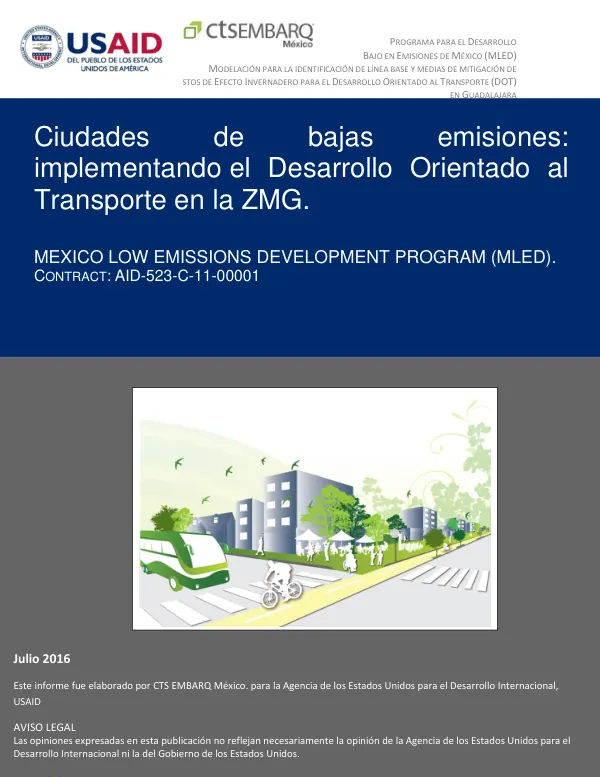
Modelación para la identificación de línea base y medias de mitigación de emisiones de compuestos de efecto invernadero para el desarrollo orientado al transporte (DOT) en Guadalajara
Sign inTETRA TECH ESI, INC.
Modelación para la identificación de línea base y medias de mitigación de emisiones de compuestos de efecto invernadero para el desarrollo orientado al transporte (DOT) en Guadalajara
The Mexico Low Emissions Development Program (MLED) is a project aimed at reducing greenhouse gas emissions in Mexico.
2016 · 6 pages
Sign in to readA free account is required to download.
Abstract
The program is implemented by CTS EMBARQ México, in collaboration with the Secretaría de Desarrollo Agrario, Territorial y Urbano (SEDATU) and the Secretaría de Medio Ambiente y Recursos Naturales (SEMARNAT). The project focuses on the development of a model to identify a baseline and mitigation measures for emissions of compounds with greenhouse effect for the Development Oriented to Transport (DOT) in Guadalajara. The project was conducted in the Zona Metropolitana de Guadalajara (ZMG), which is a region with a high population density and a significant transportation sector. The project aimed to identify the main sources of emissions and to develop strategies to reduce them. The project was funded by the Agencia de los Estados Unidos para el Desarrollo Internacional (USAID) through the contract "AID-523-C-11-00001" implemented by Tetra Tech ES Inc. The project involved a series of activities, including the development of a model to estimate emissions, the identification of mitigation measures, and the analysis of their costs and benefits. The project also included a public forum where the results were presented to stakeholders, including representatives of the ZMG, the Government of Jalisco, and other relevant institutions. The project identified several key findings, including the fact that the transportation sector is a significant source of emissions in the ZMG, and that the use of fossil fuels is a major contributor to these emissions. The project also identified several mitigation measures, including the promotion of the use of alternative fuels, the improvement of public transportation, and the development of non-motorized transportation infrastructure. The project also highlighted the importance of involving stakeholders in the decision-making process and the need for a coordinated approach to reduce emissions. The project recommended the development of a comprehensive plan to reduce emissions in the ZMG, which would involve the implementation of a range of measures, including the promotion of sustainable transportation, the reduction of energy consumption, and the protection of natural habitats. The project was presented at a public forum, which was attended by representatives of the ZMG, the Government of Jalisco, and other relevant institutions. The forum provided an opportunity for stakeholders to discuss the results of the project and to identify areas for further action. The project's findings and recommendations were also presented to the public through the MLED program's website. The project's results were also presented to the public through a report, which was published on the MLED program's website. The report provided a detailed analysis of the project's findings and recommendations, and it highlighted the importance of reducing emissions in the ZMG. The report also provided an overview of the project's methodology and results, and it identified areas for further research and action. The project's findings and recommendations were also presented to the public through a series of presentations and workshops, which were conducted by the project team. The presentations and workshops provided an opportunity for stakeholders to discuss the project's results and to identify areas for further action. The project's findings and recommendations were also presented to the public through a series of articles and press releases, which were published in local and national media outlets. The project's results were also presented to the public through a series of infographics and visualizations, which were published on the MLED program's website. The infographics and visualizations provided a visual representation of the project's findings and recommendations, and they highlighted the importance of reducing emissions in the ZMG. The project's results were also presented to the public through a series of videos and podcasts, which were published on the MLED program's website. The project's findings and recommendations were also presented to the public through a series of policy briefs, which were published on the MLED program's website. The policy briefs provided a detailed analysis of the project's findings and recommendations, and they highlighted the importance of reducing emissions in the ZMG. The policy briefs also identified areas for further research and action, and they provided recommendations for policymakers and stakeholders. The project's results were also presented to the public through a series of academic papers, which were published in peer-reviewed journals. The academic papers provided a detailed analysis of the project's findings and recommendations, and they highlighted the importance of reducing emissions in the ZMG. The academic papers also identified areas for further research and action, and they provided recommendations for policymakers and stakeholders. The project's findings and recommendations were also presented to the public through a series of reports, which were published on the MLED program's website. The reports provided a detailed analysis of the project's findings and recommendations, and they highlighted the importance of reducing emissions in the ZMG. The reports also identified areas for further research and action, and they provided recommendations for policymakers and stakeholders. The project's results were also presented to the public through a series of presentations and workshops, which were conducted by the project team. The presentations and workshops provided an opportunity for stakeholders to discuss the project's
Related documents
Documents in this collection
 2015
2015USAID DEC
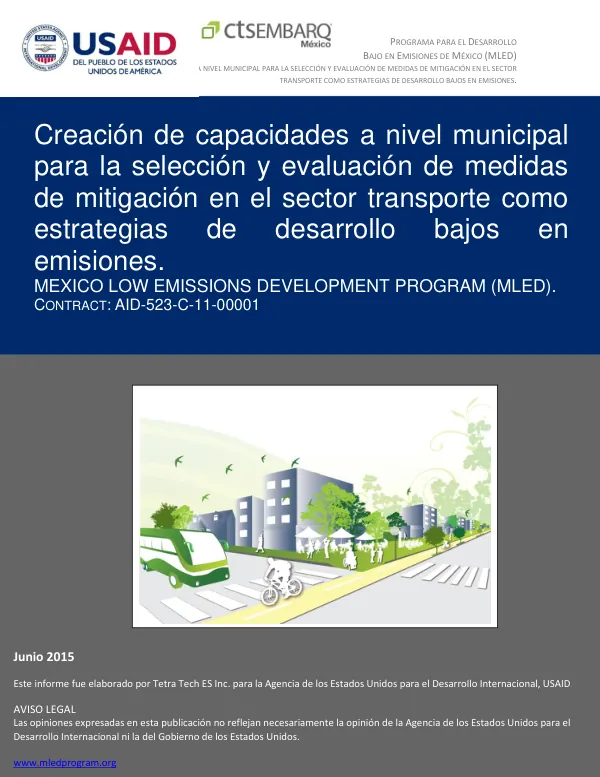
Creación de capacidades a nivel municipal para la selección y evaluación de medidas de mitigación en el sector transporte como estrategias de desarrollo bajos en emisiones
Open record 2015
2015USAID DEC