USAID DEC
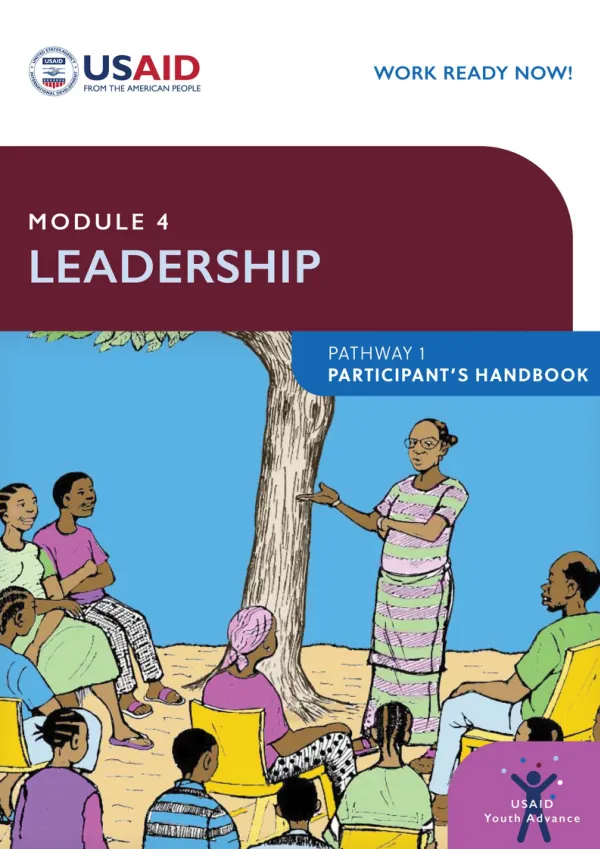
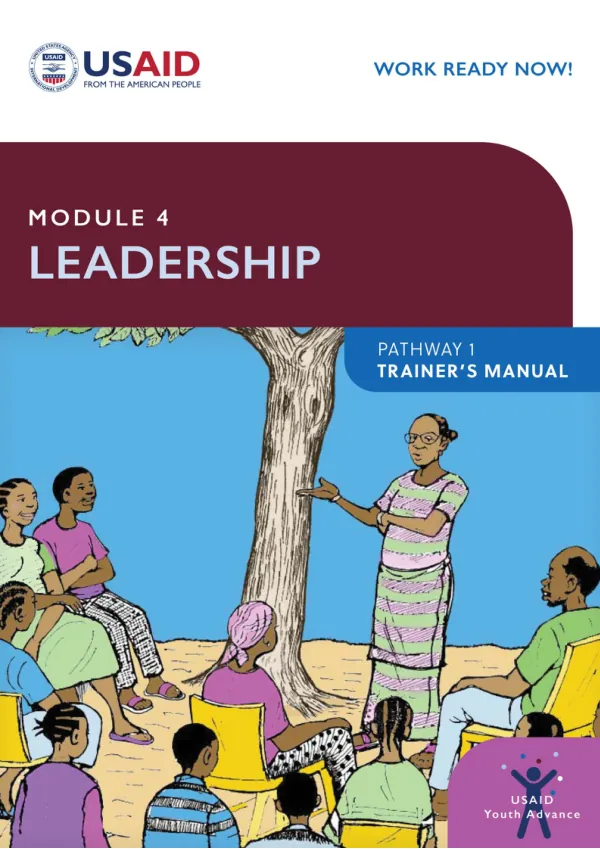
Module 4: Leadership Trainer’s Manual for USAID Youth Advance – Pathway 1 in Liberia
Sign inCENTER FOR EDUCATIONAL DEVELOPMENT
Module 4: Leadership Trainer’s Manual for USAID Youth Advance – Pathway 1 in Liberia
Leadership is a crucial aspect of personal and professional development, and it is essential to understand the qualities and characteristics of effective leaders.
59 pages
Sign in to readA free account is required to download.
Abstract
The USAID Youth Advance Program in Liberia focuses on developing the basic education and foundational skills of youth, strengthening employment skills for improved livelihoods, and supporting the creation of an enabling environment for improved youth productivity. The program aims to improve the lives of youth in Pathway 1, and Module 4: Leadership is a key component of this initiative. The module is designed to equip participants with the knowledge, skills, and attitudes necessary to become effective leaders. The objectives of the module include defining the qualities of an effective leader, demonstrating characteristics and behaviors of an effective leader, clarifying one's own leadership style, motivating and organizing others, guiding sound problem-solving and decision-making processes, leading a team in accomplishing a goal, and interviewing a manager about their approach to leadership. The module consists of three sessions, each with a specific focus and set of activities. Session 1: We Are All Leaders introduces the concept of leadership and explores the qualities and characteristics of effective leaders. Participants are encouraged to reflect on their own leadership styles and identify areas for improvement. The session includes activities such as the Sight Word Puzzle, Introductory Activity, Inspiring Leaders, and Leadership Styles. Session 2: Leading Teamwork / Group Cooperation focuses on the importance of teamwork and group cooperation in achieving common goals. Participants learn about effective communication skills, conflict resolution, and problem-solving strategies. The session includes activities such as Blind Shapes – Communication Skills, Rattan Stick – Working Together, and Leadership at Real Workplaces. Session 3: Problem Solving & Decision Making emphasizes the importance of sound problem-solving and decision-making processes in leadership. Participants learn about the steps involved in problem-solving, including identification, information gathering, generating, choosing, and evaluating solutions. The session includes activities such as The Human Knot – Group Problem Solving, Problem-Solving Steps, and Leadership in the Workplace. Throughout the module, participants are encouraged to reflect on their own leadership styles and identify areas for improvement. The module includes a Pre-Module Self-Assessment, which helps participants identify their strengths and weaknesses in leadership. The assessment is repeated at the end of the module to track progress and identify areas for further development. The module also includes a range of materials and preparation activities to support the trainer in delivering the program. These include basic training materials, interactive audio instruction, and handouts on topics such as leadership styles, teamwork, and problem-solving steps. Overall, Module 4: Leadership is a comprehensive program designed to equip participants with the knowledge, skills, and attitudes necessary to become effective leaders. The program is tailored to the needs of youth in Liberia and is designed to support the development of leadership skills in a variety of contexts.