USAID
Module Seed Seller_Lalteer
The initiative's Accompaniment Support program provided ongoing technical assistance and capacity building to farmers, community leaders, and local government officials.
58 pages
Sign in to readA free account is required to download.
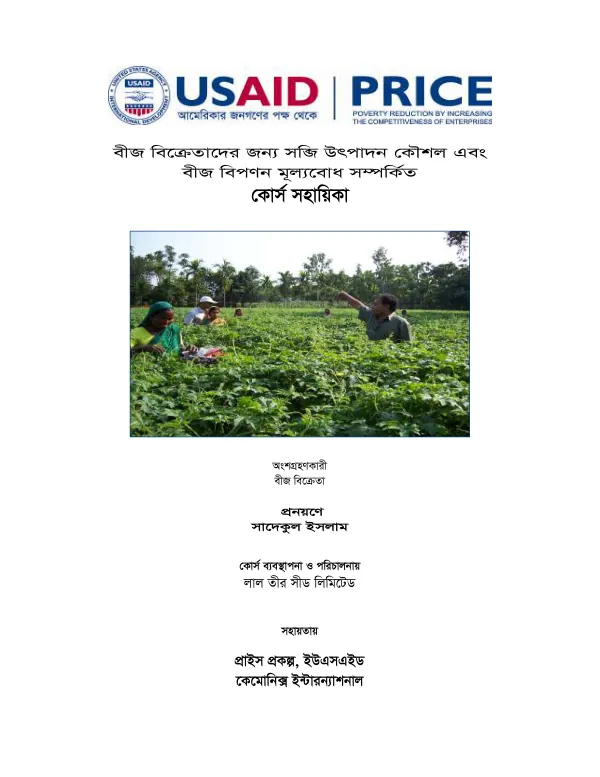
Abstract
This support helped to address challenges and build on successes, ultimately contributing to the program's overall impact. A key component of the initiative was the establishment of a network of community-based organizations, which played a crucial role in promoting sustainable agriculture practices and improving market access. These organizations also served as a platform for farmers to share knowledge, resources, and best practices. The initiative's geographic focus was on Eastern Province, where the majority of Rwanda's agricultural production takes place. The program's timeframes were divided into several phases, with the first phase focusing on initial assessments and program design, followed by implementation and evaluation phases. The initiative's recommendations emphasized the importance of continued support for farmers and community-based organizations, as well as the need for further investment in infrastructure development and market linkage facilitation. The program's overall goal was to improve food security and promote sustainable agriculture practices in Rwanda, with a focus on the most vulnerable and marginalized communities. The initiative's evaluation revealed a number of key findings, including the importance of community-based organizations in promoting sustainable agriculture practices and improving market access. The evaluation also highlighted the need for continued support for farmers and community-based organizations, as well as the importance of further investment in infrastructure development and market linkage facilitation.
Related documents