FHI 360
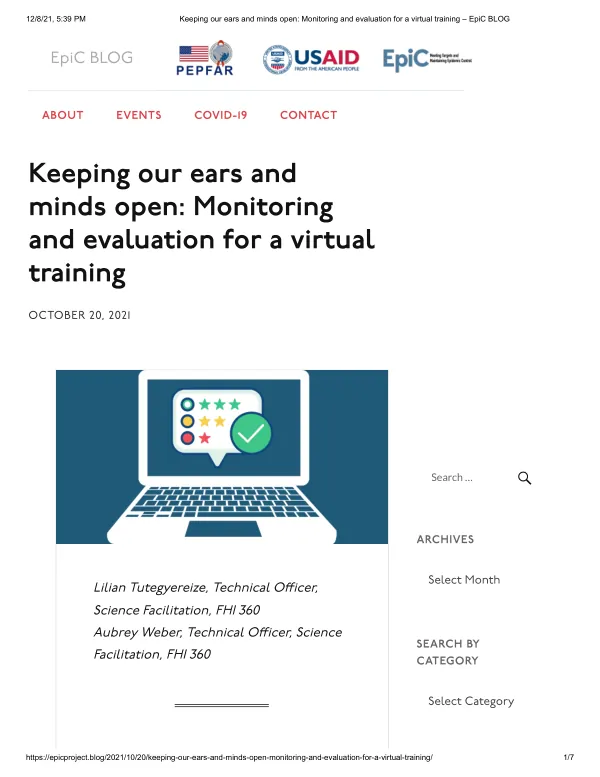
Monitoring and evaluation for a virtual training
The CHOICE Collaboration has conducted three virtual HIV Prevention Ambassador Trainers' Workshops with more than 75 trainers from four countries, and a fourth workshop is planned later this fall.
2021 · 7 pages
Sign in to readA free account is required to download.
Abstract
The workshops aimed to prepare HIV Prevention Ambassador trainers to conduct their own trainings with adolescent girls and young women (AGYW) in their communities. Monitoring and evaluation (M&E) of the training-of-trainer workshops was crucial, especially in a virtual setting, to understand whether the training methods were resulting in real impact. The CHOICE Collaboration chose the Kirkpatrick Model for training evaluation as a framework for their M&E plan. This model, developed over 50 years ago, provides a comprehensive approach to evaluating training effectiveness. The M&E plan involved conducting pre- and post-tests, facilitator debriefs, participant feedback surveys, and interviews to learn what was working and what was not working in the training program. The plan also included post-training follow-ups with trainers, their supervisors, and program managers to gather information about post-training activities, skills trainees were using or wished to develop, and ongoing support activities. During the debriefs, it was identified that participant performance was negatively affected, especially during the teach-back activities, by the short time participants were given to prepare. Participants expressed a need for greater support, guidance, and orientation to the HIV Prevention Ambassador Toolkit package. To address these issues, a robust mentorship component, a package overview section, and more detail about expectations for the teach-backs were added to the training program. Based on feedback from participants and pre- and post-test results, the curriculum was shifted toward training delivery and facilitation skills, managing gender-based violence, increasing self-care, and handling challenging participants and situations. The post-training follow-up revealed that all trainers carried out ambassador trainings after the workshop. Trainers made further recommendations, including the need for post-training follow-ups to be the most robust in the first quarter after the workshop, as trainers were not yet confident in their skills. Trainers also expressed a need for support from master trainers during the ambassador trainings and suggested increasing sustainability by including district trainers in the training of trainers. Simple visual job aids were also suggested to help ambassadors better understand the program and their roles. Determining the impact of the trainings on HIV prevention for AGYW has been the most challenging to evaluate, as it is difficult to draw a direct line from the training program activities to the larger objective of reduced levels of HIV transmission among AGYW. Nonetheless, the CHOICE Collaboration plans to continue capturing activities and outputs, such as the number of ambassadors trained, ambassador training events that have occurred post-training, program impact/output, and outcomes such as increased skills and confidence of ambassador trainers, on a quarterly basis. The M&E plan will help to identify inevitable challenges so that quick and effective solutions can be implemented.
Related documents