USAID DEC
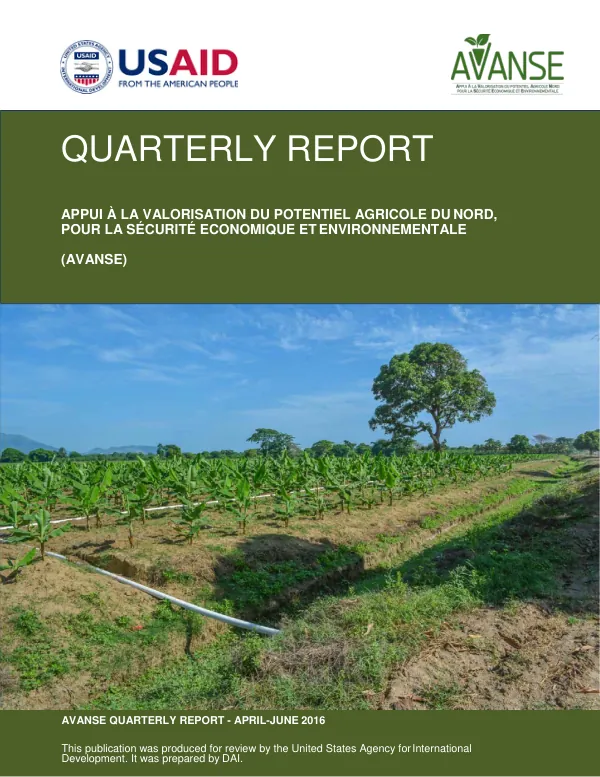
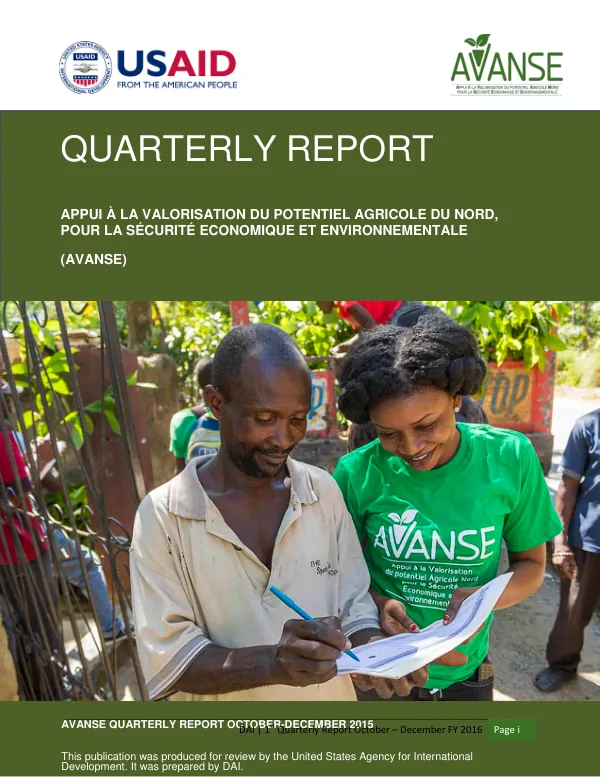
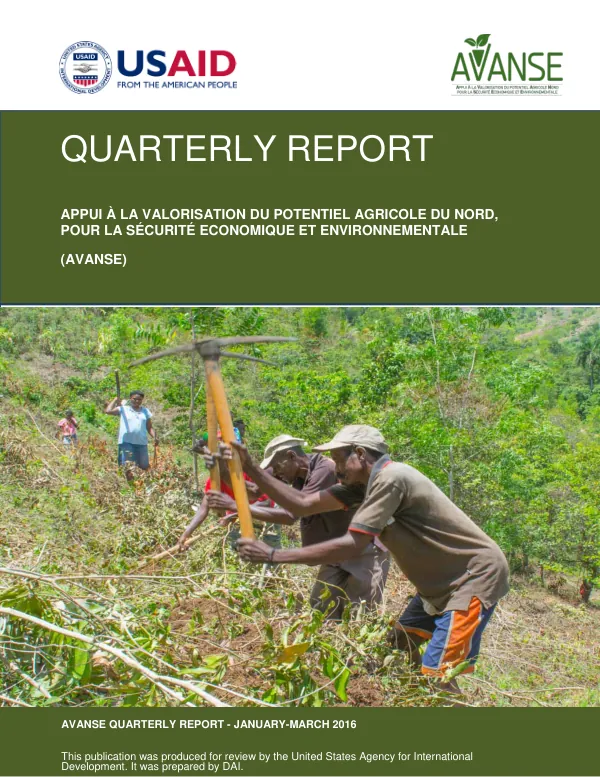
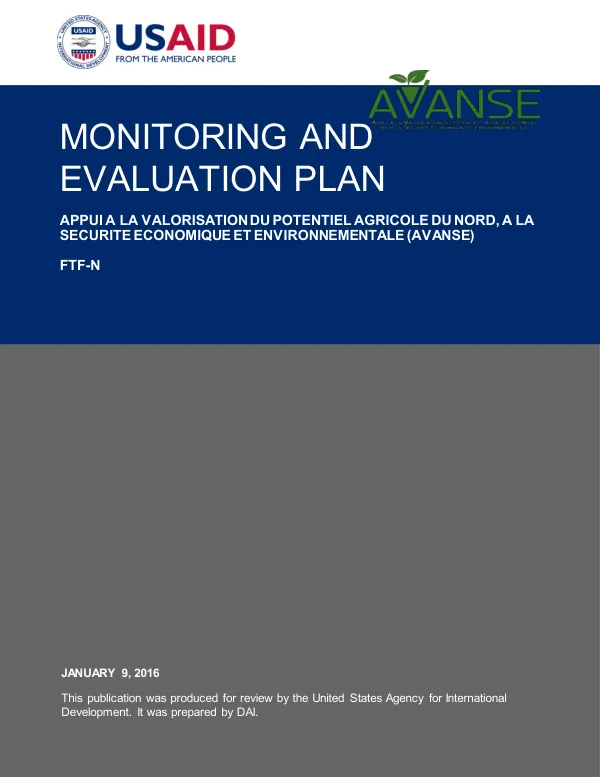
Monitoring and Evaluation Plan for Appui à la Valorisation du potentiel Agricole du Nord, à la Sécurité Economique et environnementale (AVANSE)
Sign inDAI
Monitoring and Evaluation Plan for Appui à la Valorisation du potentiel Agricole du Nord, à la Sécurité Economique et environnementale (AVANSE)
The Appui à la Valorisation du potentiel Agricole du Nord, à la Sécurité Economique et environnementale (AVANSE) project is a USAID-funded initiative aimed at promoting agricultural development, economic security, and environmental sustainability in Haiti.
2016 · 135 pages
Sign in to readA free account is required to download.
Abstract
The project began in 2015 and is implemented by DAI. The project's primary objective is to increase agricultural productivity, improve watershed stability, and strengthen agricultural markets in the North region of Haiti. The project targets smallholder farmers, with a focus on women-headed households, who are considered vulnerable to poverty and food insecurity. The project's monitoring and evaluation plan is designed to track progress toward its objectives and assess the impact of its interventions. The plan outlines a range of performance indicators, including agricultural productivity, market access, and economic benefits for beneficiary households. The indicators are grouped into three categories: agricultural productivity, market access, and economic benefits. Agricultural productivity indicators include the value of exports of targeted agricultural commodities, the volume of cacao exports, and the average increase in agricultural income for beneficiary households. Market access indicators include the gross margin per hectare, the value of incremental sales, and the number of farmers who have applied improved technologies or management practices. Economic benefits indicators include the number of beneficiary households with increased agricultural income, the yield per hectare for target crops, and the number of rural households benefiting directly from USG interventions. The project's monitoring and evaluation plan also includes a range of data collection instruments, including a beneficiary database, baseline surveys, post-harvest surveys, and special surveys. The plan outlines a schedule for data collection and reporting, as well as procedures for ensuring data quality and integrity. The project's environmental mitigation and monitoring plan is designed to minimize the project's environmental impact and ensure that its interventions do not harm the environment. The plan outlines procedures for monitoring and mitigating the project's environmental impact, including the use of georeferencing to track the project's activities and identify areas of high environmental risk. The project's performance evaluation will assess its progress toward its objectives and identify areas for improvement. The evaluation will be conducted using a range of methods, including surveys, interviews, and analysis of project data. The evaluation will provide recommendations for improving the project's effectiveness and sustainability. The project's impact evaluation will assess the long-term impact of its interventions on agricultural productivity, market access, and economic benefits for beneficiary households. The evaluation will be conducted using a range of methods, including surveys, interviews, and analysis of project data. The evaluation will provide recommendations for scaling up the project's interventions and ensuring their sustainability. Overall, the AVANSE project's monitoring and evaluation plan is designed to ensure that the project is meeting its objectives and achieving its intended impact. The plan provides a framework for tracking progress, identifying areas for improvement, and making data-driven decisions to optimize the project's effectiveness and sustainability.
Related documents