USAID DEC
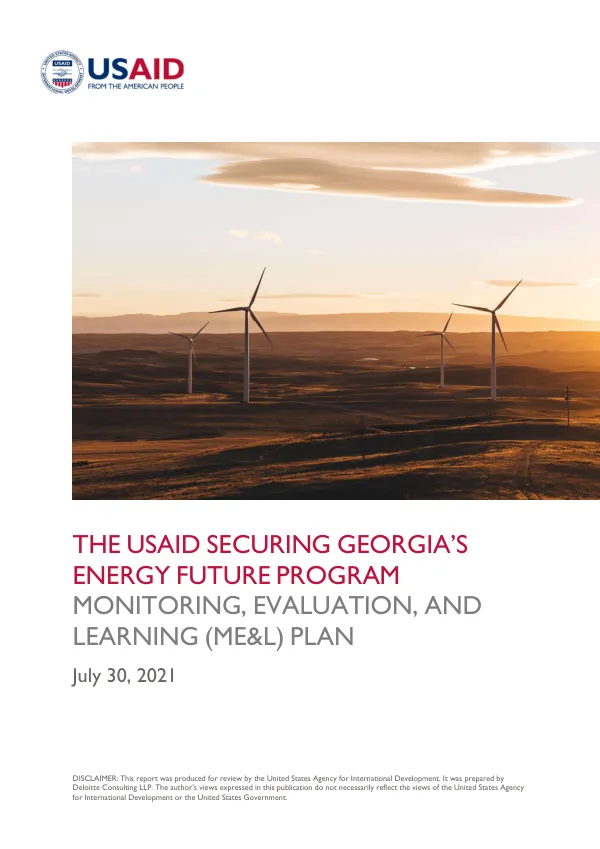
Monitoring, Evaluation, and Learning Plan for USAID Securing Georgia’s Energy Future Program
Sign inDELOITTE CONSULTING, LLP
Monitoring, Evaluation, and Learning Plan for USAID Securing Georgia’s Energy Future Program
The USAID Securing Georgia's Energy Future Program aims to improve Georgia's energy security and reduce its vulnerability to malign influence.
2021 · 51 pages
Sign in to readA free account is required to download.
Abstract
The program's objectives are to improve energy system planning, increase investment in the energy sector, enhance governance and operations of the Georgian energy market, and reduce cybersecurity vulnerabilities. The program's theory of change is based on the idea that increased credible private investment in the energy sector, combined with a more effectively planned and resilient energy system, will enable Georgia to achieve long-term energy security and economic growth. The program's results framework guides the technical activities through four objectives: improved energy system planning, increased investment in the energy sector, improved governance and operations of the Georgian energy market, and reduced cybersecurity vulnerabilities. The program's monitoring, evaluation, and learning (ME&L) plan is designed to track progress toward these objectives and identify areas for improvement. The plan includes a data collection and management system, a performance indicator reference sheet (PIRS), and a collaborating, learning, and adapting (CLA) approach to address emerging issues and ensure programmatic planning and practices. The program's activities are focused on building the capacity of the Government of Georgia (GoG) and energy sector institutions to develop and implement effective energy policies and regulations. The program also aims to increase private investment in the energy sector and enhance the resilience of the energy system to cyber threats. The program's results framework includes four objectives: 1. Improved Energy System Planning: The program aims to improve the planning and coordination of energy sector activities, including the development of a long-term energy plan and the implementation of energy efficiency measures. 2. Increased Investment to Promote Energy Sector Resilience: The program aims to increase private investment in the energy sector, including the development of new energy infrastructure and the promotion of renewable energy sources. 3. Improved Governance and Operations of Well-Functioning Georgian Energy Market: The program aims to improve the governance and operations of the Georgian energy market, including the development of a well-functioning market and the promotion of competition. 4. Reduced Cybersecurity Vulnerabilities: The program aims to reduce the vulnerability of the energy system to cyber threats, including the implementation of cybersecurity measures and the development of a cybersecurity strategy. The program's ME&L plan includes a data collection and management system, a PIRS, and a CLA approach to address emerging issues and ensure programmatic planning and practices. The plan also includes a performance indicator reference sheet (PIRS) to track progress toward the program's objectives. The program's results framework is guided by the following indicators: * Improved energy system planning * Increased investment in the energy sector * Improved governance and operations of the Georgian energy market * Reduced cybersecurity vulnerabilities The program's ME&L plan is designed to track progress toward these indicators and identify areas for improvement. The plan includes a data collection and management system, a PIRS, and a CLA approach to address emerging issues and ensure programmatic planning and practices. The program's results framework is based on the following assumptions: * Increased credible private investment in the energy sector will lead to improved energy security and economic growth. * Improved energy system planning and governance will lead to increased investment in the energy sector and improved energy efficiency. * Reduced cybersecurity vulnerabilities will reduce the vulnerability of the energy system to cyber threats. The program's results framework is guided by the following principles: * Collaboration and coordination among stakeholders * Transparency and accountability in program implementation * Continuous learning and adaptation to emerging issues * Focus on results and impact The program's results framework is based on the following indicators: The program's results framework is guided by the following assumptions: The program