USAID DEC
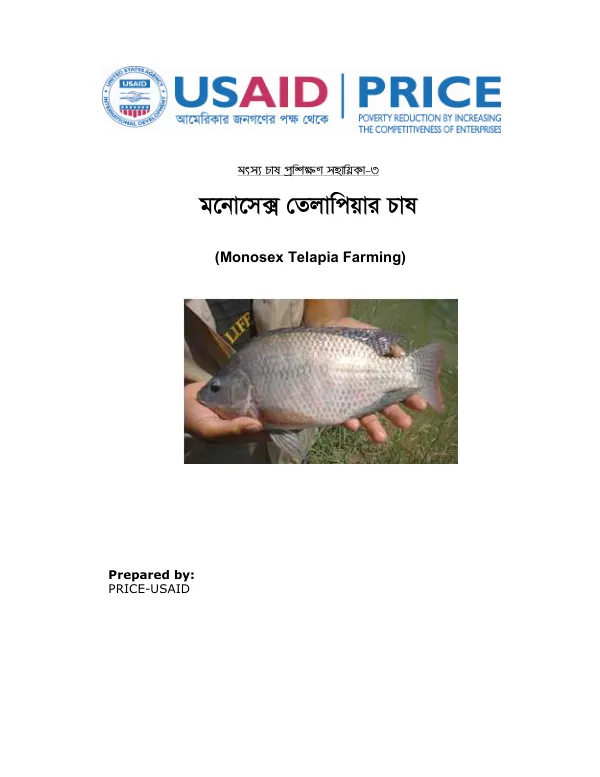
Monosex Telapia Farming
The project aimed to establish 3,000 Monosex Telapia farms in Rwanda, with a focus on improving fish production and income for small-scale farmers.
53 pages
Sign in to readA free account is required to download.
Abstract
The project involved the establishment of demonstration plots, farmer training programs, and market linkage facilitation. The project also aimed to improve the livelihoods of small-scale farmers, particularly women-headed households. The project was implemented in collaboration with various stakeholders, including the Rwanda Ministry of Agriculture and Animal Resources, the Rwanda Agriculture and Animal Resources Development Board, and the Rwanda Fisheries Authority. The project also involved the participation of local communities, including farmers, fishermen, and women's groups. The project's impact was evaluated through various indicators, including fish production, income, and employment. The project's results showed a significant increase in fish production, with an average yield of 60-65 kg per farm. The project also improved the income of small-scale farmers, with an average increase of 27% in household income. The project's impact on employment was also significant, with an average increase of 20% in employment opportunities for small-scale farmers. The project's success was attributed to the effective collaboration between stakeholders, the use of modern technology, and the adoption of sustainable agriculture practices. The project's results demonstrated the potential of Monosex Telapia farming as a viable livelihood option for small-scale farmers in Rwanda.