USAID DEC
Morocco Cross-Sectoral Youth Assessment Brief
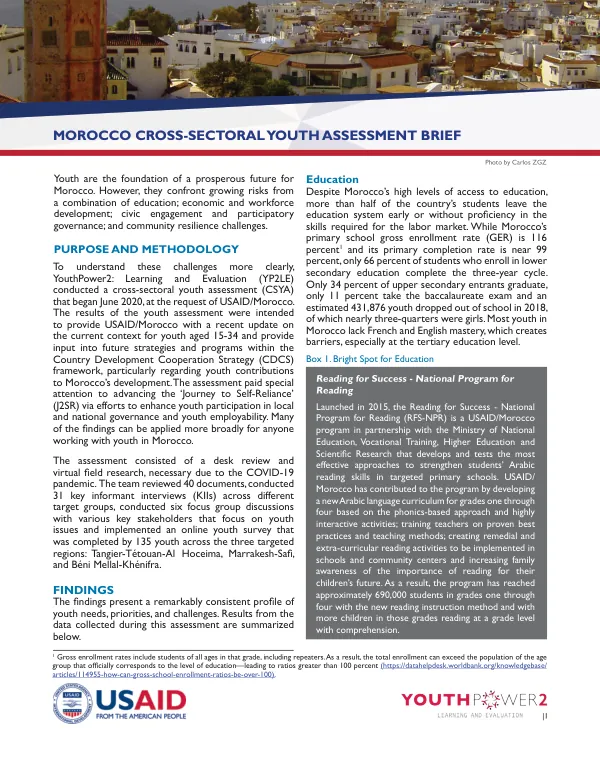
In Morocco, a cross-sectoral youth assessment was conducted by YouthPower2: Learning and Evaluation (YP2LE) in June 2020, at the request of USAID/Morocco.
2021 · 4 pages
Sign in to readA free account is required to download.
Abstract
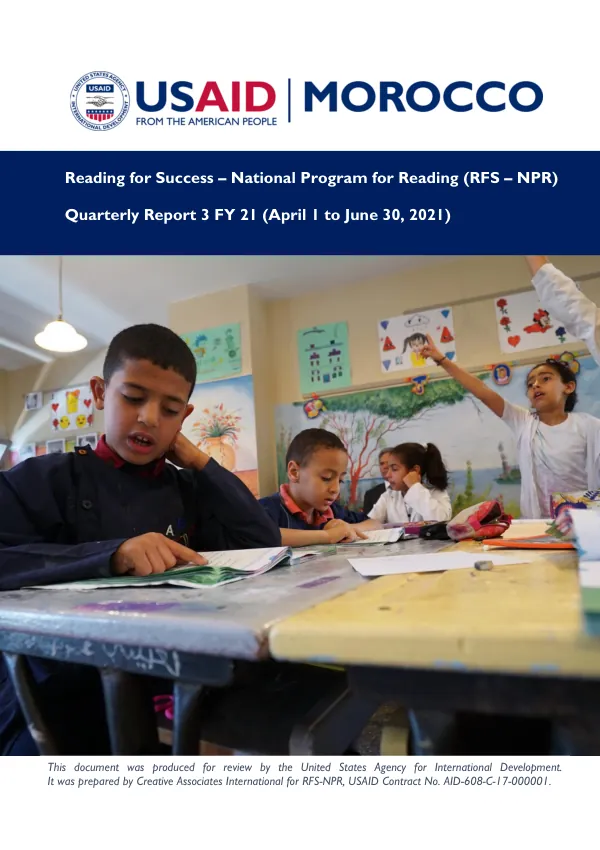
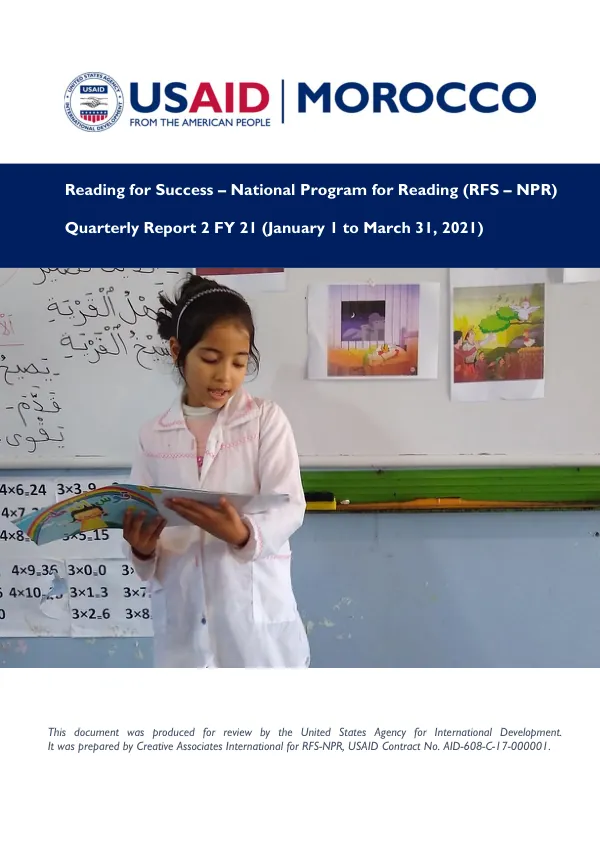
The assessment aimed to provide a recent update on the current context for youth aged 15-34 and provide input into future strategies and programs within the Country Development Cooperation Strategy (CDCS) framework. The assessment focused on advancing the 'Journey to Self-Reliance' (J2SR) via efforts to enhance youth participation in local and national governance and youth employability. The assessment consisted of a desk review and virtual field research, necessary due to the COVID-19 pandemic. The team reviewed 40 documents, conducted 31 key informant interviews across different target groups, conducted six focus group discussions with various key stakeholders that focus on youth issues, and implemented an online youth survey that was completed by 135 youth across the three targeted regions: Tangier-Tétouan-Al Hoceima, Marrakesh-Safi, and Béni Mellal-Khénifra. Despite Morocco's high levels of access to education, more than half of the country's students leave the education system early or without proficiency in the skills required for the labor market. Education challenges in Morocco include a high dropout rate, particularly among girls, and a lack of mastery of French and English, which creates barriers, especially at the tertiary education level. The primary school gross enrollment rate is 116 percent, but only 66 percent of students who enroll in lower secondary education complete the three-year cycle. Youth employment in Morocco is precarious and fragile, with 73.3 percent of active 15- to 29-year-olds having no medical coverage, and 80 percent working without a contract. Over 50 percent of working youth are employed in commerce, other market services, and administration and nonmarket services, principally in urban areas. Almost 82 percent of active youth earn salaries under 3,000 Moroccan dirham (MAD) per month, while 93 percent of young women earn less. The assessment findings present a remarkably consistent profile of youth needs, priorities, and challenges. Results from the data collected during this assessment are summarized below. The assessment identified several challenges facing youth in Morocco, including a lack of engaging political platforms and resources, a lack of opportunities for youth to engage in civic activities, and cultural challenges around being taken seriously. The assessment made several recommendations to address the findings, including promoting quality education for youth, scaling up existing programs that link schools, higher education institutions, and technical and vocational education and training to the job market, and promoting youth entrepreneurship by supporting business development services to increase the chances for youth business start-up. The Career Center's Project established six career development centers linked to universities and the vocational training system, and it also incorporates workforce readiness training into the Moroccan tertiary education system, vocational training system, and workplaces. The assessment also highlighted several bright spots for education and economic and workforce development, including the Reading for Success - National Program for Reading, which has reached approximately 690,000 students in grades one through four with the new reading instruction method, and the Career Center's Project, which has benefitted over 200,000 youth and over 1,283,000 users have visited the Virtual Career Center.