USAID DEC
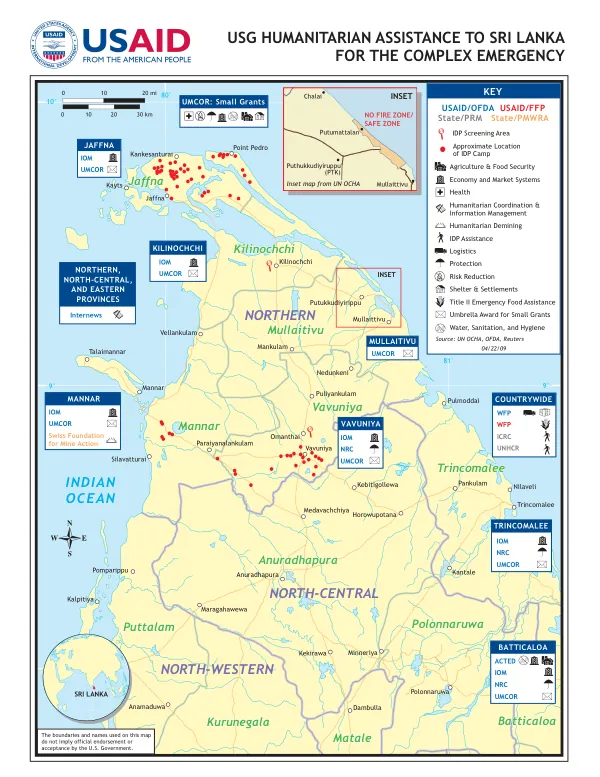
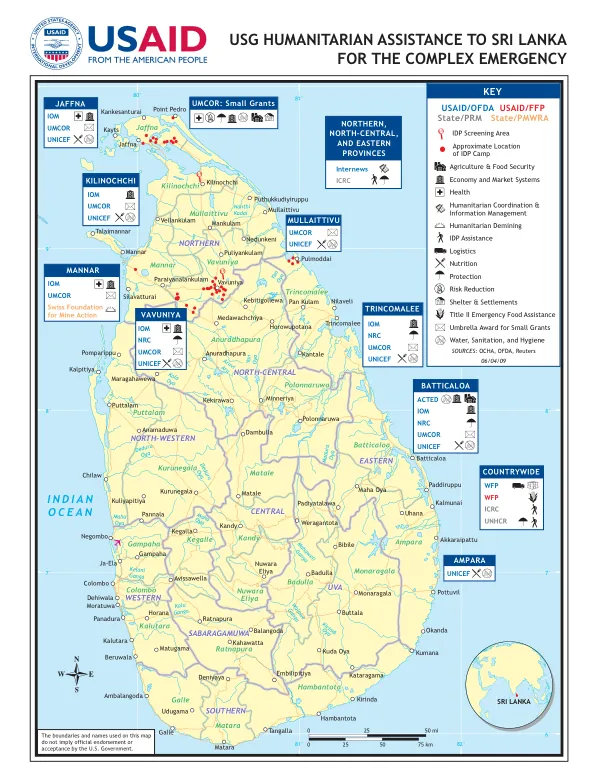
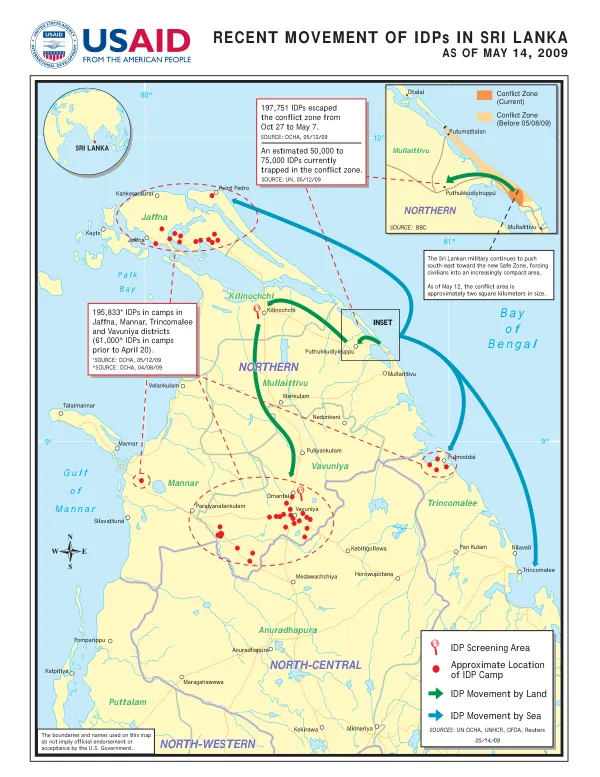
Movement of Internally Displaced Persons (IDPs) in Sri Lanka as of May 14, 2009
The Sri Lankan conflict zone is located in the northern and northwestern regions of the country.
2009 · 1 pages
Sign in to readA free account is required to download.
Abstract
The area is bounded by the Mullaittivu District to the north, the Mannar District to the west, and the Trincomalee District to the east. The conflict zone is approximately two square kilometers in size as of May 12, 2009. The conflict has resulted in a significant displacement of civilians, with an estimated 50,000 to 75,000 internally displaced persons (IDPs) currently trapped in the conflict zone. Between May 27 to May 27, 197,751 IDPs escaped the conflict zone. The IDPs are being forced to move south-east toward the new Safe Zone due to the military's advance. The IDPs are being relocated to various districts in Sri Lanka. As of May 12, 2009, there are 195,833 IDPs in camps in the Jaffna, Mannar, Trincomalee, and Vavuniya districts. The IDPs are being provided with food, shelter, and other essential services by various organizations, including the United Nations High Commissioner for Refugees (UNHCR) and the United Nations Office for the Coordination of Humanitarian Affairs (UN OCHA). The conflict has resulted in significant human suffering, with civilians being forced to live in an increasingly compact area. The situation is being closely monitored by the international community, with various organizations providing humanitarian assistance to the affected population. The conflict zone is a major concern for the international community, with the international community calling for an end to the conflict and the protection of civilians. The Sri Lankan military's advance has resulted in the displacement of civilians, with many IDPs being forced to move to various districts in Sri Lanka. The IDPs are being provided with humanitarian assistance, including food, shelter, and medical care. The situation in the conflict zone is being closely monitored by the international community, with various organizations providing assistance to the affected population.