ACDI/VOCA
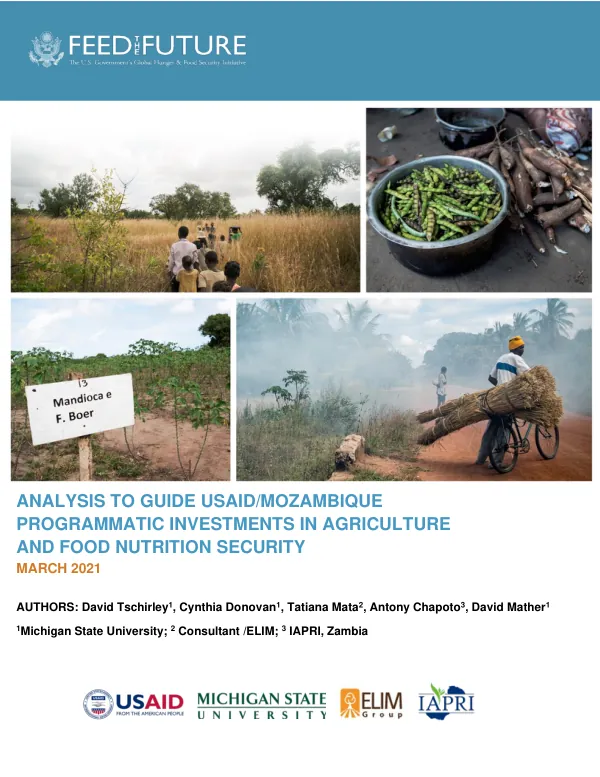
Mozambique Agricultural Value Chain Analysis
Mozambique Agricultural Value Chain Analysis began in 2016 with funding from USAID/E3's Leveraging Economic Opportunities (LEO) project.
2016 · 81 pages
Sign in to readA free account is required to download.
Abstract
The analysis focused on six key agricultural commodities: soybean, sesame, groundnut, common bean, pigeon pea, and cowpea. These commodities were selected due to their relevance to USAID objectives and their potential for economic growth in Mozambique. The analysis identified several key challenges facing farmers in Mozambique, including limited access to markets, inadequate infrastructure, and lack of technical knowledge. At the farm level, constraints such as soil degradation, limited water availability, and inadequate storage facilities hindered productivity. Post-farm gate constraints, including transportation costs and lack of market information, also affected farmers' ability to sell their produce. The analysis also highlighted the importance of gender in agricultural value chains. Women played a significant role in farming and marketing, but faced several challenges, including limited access to credit and market information. Nutrition was another critical aspect of the analysis, with many Mozambican households struggling to access nutritious food. The value chain analysis identified several opportunities for upgrading in each of the six commodities. For soybean, upgrading strategies included improving seed quality, increasing irrigation, and developing new markets. For sesame, upgrading strategies focused on improving storage facilities, increasing market access, and developing new products. Groundnut upgrading strategies included improving irrigation, increasing market access, and developing new products. The analysis also highlighted the importance of cashew production in Mozambique. Cashew production was a significant contributor to the country's economy, with the majority of production being exported. However, the industry faced several challenges, including limited access to markets and inadequate infrastructure. Upgrading strategies for cashew production included improving storage facilities, increasing market access, and developing new products. In addition to the six commodities, the analysis also examined the banana and vegetable value chains. The banana value chain was characterized by limited access to markets and inadequate infrastructure. Upgrading strategies included improving storage facilities, increasing market access, and developing new products. The vegetable value chain was also characterized by limited access to markets and inadequate infrastructure. Upgrading strategies included improving storage facilities, increasing market access, and developing new products. The analysis provided several recommendations for improving the agricultural value chains in Mozambique. These included improving access to markets, increasing market information, and developing new products. The analysis also highlighted the importance of gender and nutrition in agricultural value chains and recommended strategies to address these challenges. The production statistics for the six commodities were also examined in the analysis. Common bean production in Mozambique averaged 120,000 metric tons per year between 2010 and 2014. Pigeon pea production averaged 60,000 metric tons per year during the same period. Cowpea production averaged 40,000 metric tons per year, while soybean production averaged 20,000 metric tons per year. Sesame production averaged 10,000 metric tons per year, and groundnut production averaged 30,000 metric tons per year. The analysis concluded that improving the agricultural value chains in Mozambique required a comprehensive approach that addressed the challenges facing farmers, including limited access to markets, inadequate infrastructure, and lack of technical knowledge. The analysis provided several recommendations for improving the value chains, including improving access to markets, increasing market information, and developing new products.