ACDI/VOCA
ENERGY OPPORTUNITIES FOR AGRICULTURAL SYSTEMS AND FOOD SECURITY
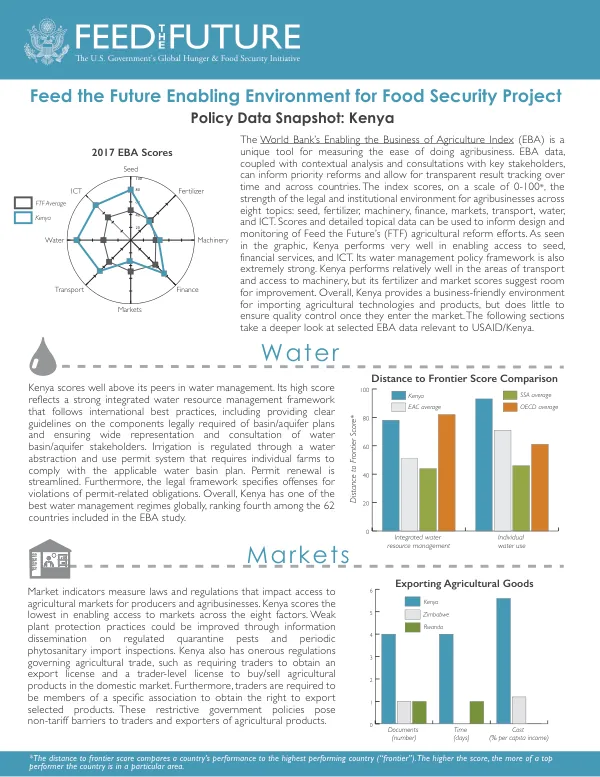
The Energy Opportunities for Agricultural and Food Security Systems Project (E4AS) in Kenya aims to improve energy efficiency and renewable energy opportunities for medium and large-scale dairy processors.
2018 · 1 pages
Sign in to readA free account is required to download.
Abstract
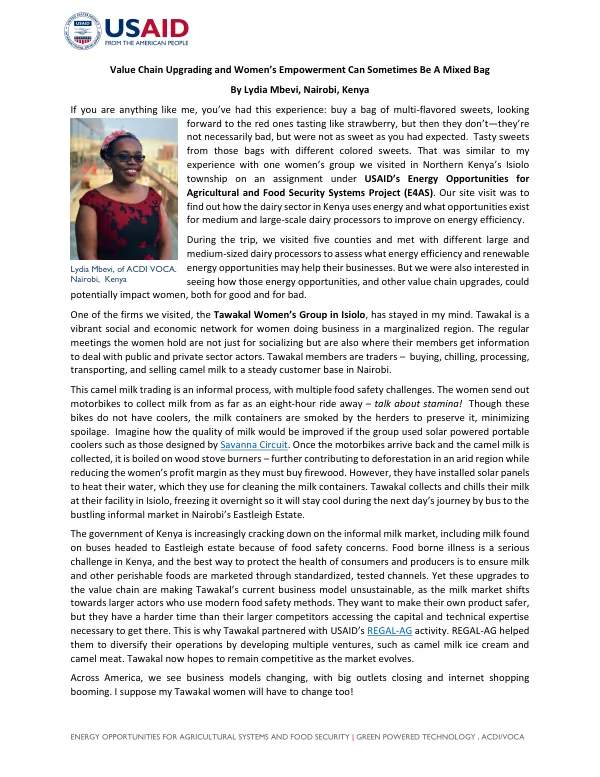
The project assesses the current energy usage and identifies potential areas for improvement, with a focus on women's empowerment and value chain upgrading. A key aspect of the project is to understand how energy opportunities and value chain upgrades can impact women, both positively and negatively. In Northern Kenya's Isiolo township, the Tawakal Women's Group is a social and economic network for women doing business in a marginalized region. The group consists of traders who buy, chill, process, transport, and sell camel milk to a steady customer base in Nairobi. However, the informal process of camel milk trading poses multiple food safety challenges. The women use motorbikes to collect milk from distant locations, often without coolers, and boil the milk on wood stove burners, contributing to deforestation and reducing their profit margin. The Tawakal Women's Group has installed solar panels to heat their water for cleaning milk containers, but they face challenges in accessing capital and technical expertise to improve their business model. The group has partnered with USAID's REGAL-AG activity to diversify their operations by developing multiple ventures, such as camel milk ice cream and camel meat. This partnership aims to help Tawakal remain competitive as the market evolves. The dairy sector in Kenya is a significant contributor to the country's economy, and the E4AS project seeks to improve energy efficiency and renewable energy opportunities for medium and large-scale dairy processors. The project's focus on women's empowerment and value chain upgrading is critical in addressing the challenges faced by women in the dairy sector, such as limited access to capital and technical expertise. By supporting women-led businesses like Tawakal, the project aims to promote sustainable and equitable development in the dairy sector. The E4AS project's assessment of energy usage and opportunities for dairy processors in Kenya highlights the need for innovative solutions to address the challenges faced by women in the dairy sector. The project's focus on value chain upgrading and women's empowerment is critical in promoting sustainable and equitable development in the dairy sector. By supporting women-led businesses like Tawakal, the project aims to improve energy efficiency, promote renewable energy, and enhance food security in Kenya.
Related documents