USAID DEC
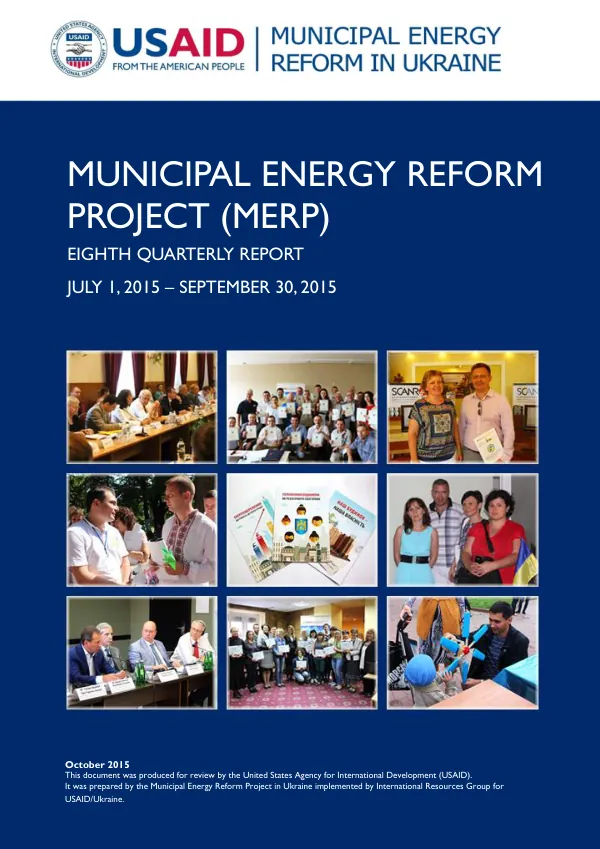
Municipal Energy Reform Project (MERP) Eighth Quarterly Report July 1, 2015 – September 30, 2015
Sign inINTERNATIONAL RESOURCES GROUP
Municipal Energy Reform Project (MERP) Eighth Quarterly Report July 1, 2015 – September 30, 2015
The Municipal Energy Reform Project (MERP) aims to enhance Ukraine's energy security by increasing end-use energy efficiency and clean energy production in large towns and cities.
2015 · 97 pages
Sign in to readA free account is required to download.
Abstract
The primary purpose of the project is to reduce the consumption of conventional energy, particularly imported natural gas from Russia, while cutting greenhouse gas emissions and energy expenditures. The project has four main tasks: improving clean energy regulatory and legislative enabling environment, promoting investment in clean energy technologies and applications, strengthening capacity building and dissemination, and enhancing capacity for the Government of Ukraine (GOU) in Low Emission Development Strategies (LEDS). The GOU is engaged in reforming the municipal energy sector and addressing challenges identified in the GOU Program of Economic Reforms for 2020, with an emphasis on clean energy and energy efficiency through price signals and improving the competitiveness and reliability of municipal services. During the reporting period from July 1, 2015, through September 30, 2015, the project continued supporting the GOU and the Verkhovna Rada (VR) to approve key legislation related to municipal energy reform. This included the ESCO and home owners association (HOA) related regulatory acts, the Law on Energy Efficiency in Buildings, the Law on Housing and Communal Services (and related metering legislation), the Law on the National Regulatory Commission on Energy and Communal Services, and other clean energy legislation. The project also continued assisting the Ministry of Regional Development, Construction, Housing and Communal Services (MinRegion) and the State Agency for Energy Efficiency (SAEE) in developing energy standards. In close cooperation with the World Bank and the Swedish International Development Cooperation Agency (SIDA) and the European Bank for Reconstruction and Development (EBRD), the project continued supporting the National Energy and Communal Services Regulatory Commission (NECSRC) in bringing tariff regulations in line with best international practice. Project experts continued building the capacity of the Regulatory Commission, assisted with the introduction of incentive tariff regulation, a benchmarking system, and a new quality of services monitoring system. In close cooperation with the World Bank social assistance team, the project continued assisting the Ministry of Social Policy to support the development of a social assistance program for vulnerable populations affected by energy price increases. The project's overall objective is to enhance Ukraine's energy security by increasing end-use energy efficiency and clean energy production in large towns and cities. The project's progress and achievements are evaluated through the use of performance indicators, which are set by the Monitoring and Evaluation Plan. The project's work plan for project year three is outlined in Attachment 1. The project's activities are focused on introducing energy efficiency and clean energy in cities by assisting municipalities with planning, preparing, and financing clean energy projects, introducing energy management systems, supporting the implementation of development of DCA loan guarantees, supporting mechanisms that mobilize private sector investment, particularly performance contracts by energy services companies (ESCOs), and preparing sustainable energy public awareness plans. The project's progress and achievements are summarized in the following sections: A. Summary of Progress and Accomplishments, B. Detailed Description of Progress/Accomplishments During the Reporting Period, C. Deliverables, D. Schedules and Milestones, E. Problems, F. Performance Indicators, and G. Plans.