GOVERNMENT OF UKRAINE
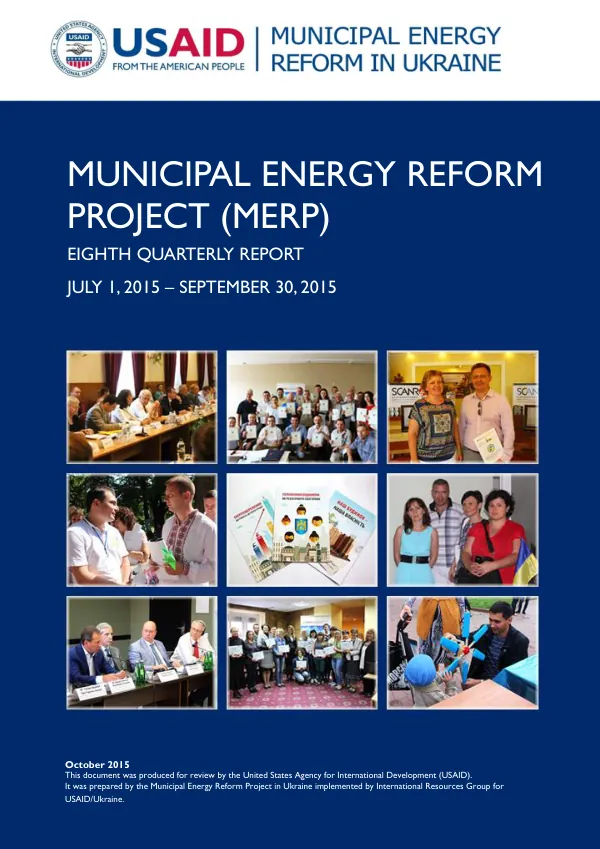
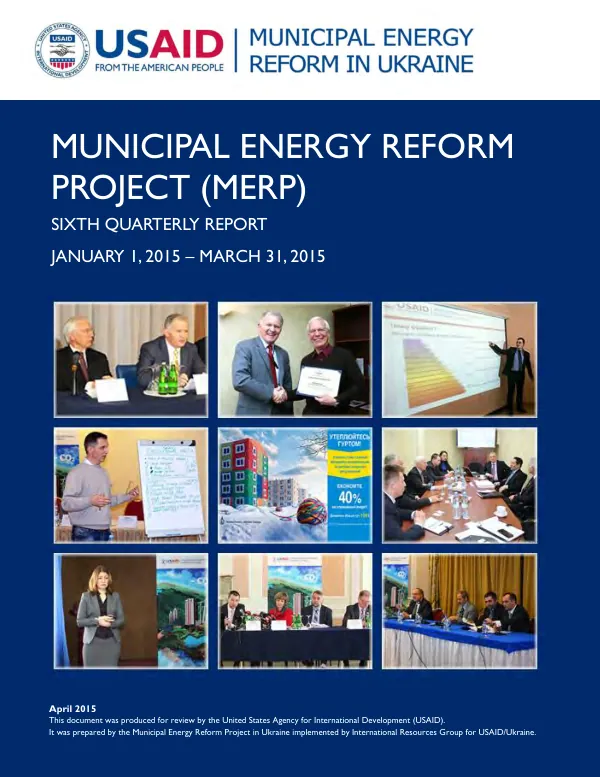
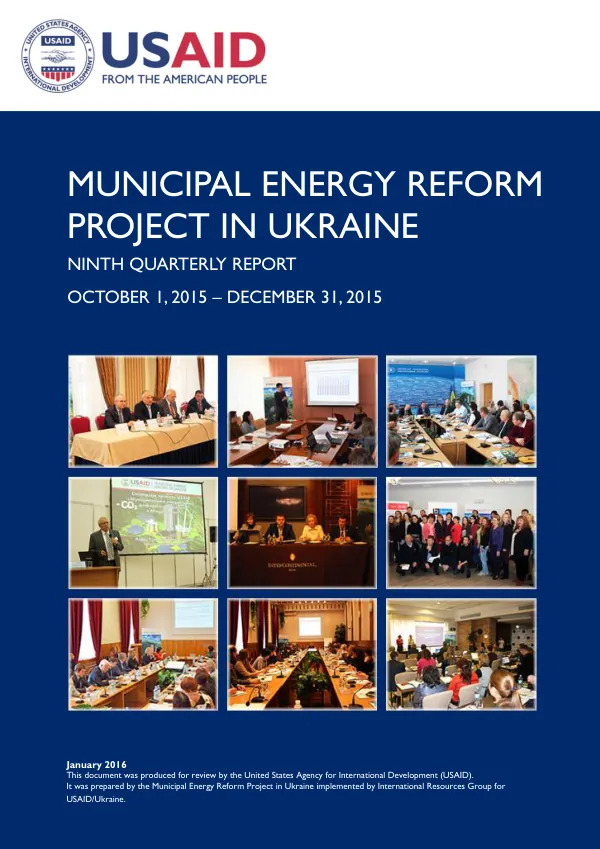
USAID Municipal Energy Reform Project – Ninth Quarterly Report
The Municipal Energy Reform Project in Ukraine aims to enhance the country's energy security by increasing end-use energy efficiency and clean energy production in large towns and cities.
2015 · 59 pages
Sign in to readA free account is required to download.
Abstract
The project has four main activities: improving clean energy regulatory and legislative enabling environment, promoting investment in clean energy technologies and applications, capacity building and dissemination, and enhancing capacity for the Government of Ukraine (GOU) in low emission development strategies (EC LEDS). Under Activity 1, the project continued supporting the GOU and the Ukrainian parliament to approve key legislation related to municipal energy reform. Regulatory acts on energy services companies (ESCOs) were approved, including a sample Energy Performance Contract (EPC) necessary for wide-scale energy efficiency (EE) modernization in the public building sector. In cooperation with the State Agency on Energy Efficiency and Energy Saving of Ukraine (SAEE), the project started developing methodological recommendations to define baseline consumption of energy resources (heat energy), which is necessary for EPC implementation in Ukraine. The Cabinet of Ministers of Ukraine (CMU) published an official resolution approving Ukraine's National Energy Efficiency Action Plan (NEEAP) for the period through 2020. The project contributed significantly to NEEAP development during 2015, including multiple discussions and comments, a briefing note, and the revision of the draft NEEAP. Under Activity 2, the project promoted investment in clean energy technologies and applications. The project supported the development of a template of the minutes of the homeowners association (HOA) meeting, which was approved and came into force during the ninth quarter. This template is expected to facilitate the implementation of energy efficiency measures in residential buildings. The project also supported the development of a sustainable energy public awareness plan, which aims to raise awareness among the public about the benefits of clean energy and energy efficiency. The plan includes a public service advertisement (PSA) campaign to promote energy-efficient practices and the use of clean energy sources. Under Activity 3, the project focused on capacity building and dissemination. The project provided training to municipal officials and energy experts on energy efficiency and clean energy technologies. The project also disseminated information on energy efficiency and clean energy best practices through workshops, seminars, and publications. Under Activity 4, the project enhanced capacity for the GOU in low emission development strategies (EC LEDS). The project supported the development of a low emission development strategy for Ukraine, which aims to reduce greenhouse gas emissions and promote sustainable development. The project also provided technical assistance to the GOU to develop a technology needs assessment (TNA) for the energy sector. The project's progress and achievements during the ninth quarter are summarized in the following key performance indicators (KPIs): 1) the number of regulatory acts approved, 2) the number of energy efficiency and clean energy projects implemented, 3) the number of municipal officials and energy experts trained, and 4) the number of public awareness campaigns conducted. The project's plans for the next quarter include continuing to support the GOU in approving key legislation related to municipal energy reform, promoting investment in clean energy technologies and applications, and enhancing capacity for the GOU in low emission development strategies (EC LEDS). The project will also continue to disseminate information on energy efficiency and clean energy best practices through workshops, seminars, and publications. The project's overall objective is to enhance Ukraine's energy security by increasing end-use energy efficiency and clean energy production in large towns and cities. The project's progress and achievements during the ninth quarter demonstrate its commitment to achieving this objective.