FHI 360
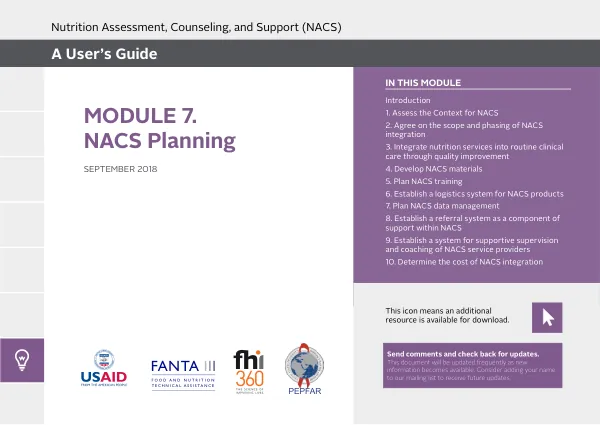
NACS User's Guide Module 7: NACS Planning
NACS is a patient-centered programmatic approach to integrating a set of priority nutrition interventions into routine health care systems and community services.
2018 · 51 pages
Sign in to readA free account is required to download.
Abstract
It includes nutrition screening and assessment, nutrition education and counseling, prescription of specialized food products for acutely malnourished patients, sometimes provision of micronutrient supplements and point-of-use water purification products, and referral to further medical management and government or community support services to prevent malnutrition and maintain improved nutritional and health status. The NACS approach has been integrated into health systems in more than a dozen countries, with various names such as Nutrition Care, Support, and Treatment (NCST) in Malawi and the Nutrition Rehabilitation Program (Programa de Reabilitaçao Nutricional [PRN]) in Mozambique. This approach has improved overall health system capacity, including counseling, links to clinical care, quality assurance and improvement, monitoring and evaluation (M&E), health facility-community linkages, and patient outcomes. NACS planning involves 10 key elements, including assessing the context for NACS, agreeing on the scope and phasing of NACS interventions, integrating nutrition services into routine clinical care through quality improvement, developing NACS materials, planning NACS training, establishing a logistics system for NACS supplies and equipment, planning NACS data management, establishing a referral system as a component of support within NACS, establishing a system for supportive supervision and coaching of NACS service providers, and determining the cost of NACS integration. Quality NACS implementation requires national support for developing policy, guidelines, training materials, and job aids, credentialing of service providers, quality assurance and quality improvement, including coaching and supervision of trained providers according to performance standards, managing NACS data and integrating NACS indicators into the national health management information system (HMIS), and including NACS equipment and supplies in commodity management systems. A country's approach to NACS implementation depends on its political, economic, social, and cultural context. The first step in planning for the integration of nutrition services using a quality improvement approach is to answer the questions outlined below, including what nutrition-related problems affect the country. This information will inform the development of a comprehensive NACS plan that addresses the specific needs of the country and its population. The plan should be tailored to the country's context and should include a clear description of the NACS approach, the scope and phasing of NACS interventions, and the resources required to implement the plan. NACS planning also involves the use of various tools and resources, including the NACS Planning and Costing Tool, the NACS Facility Assessment Tool, and the Tool for Rapid Evaluation of Facility-Level Nutrition Assessment, Counseling, and Support. These tools can help program managers determine whether the minimum elements needed to implement NACS are in place, identify gaps in service delivery, and prioritize interventions to strengthen programming. In addition, NACS planning requires the involvement of various stakeholders, including governments, international agencies, community service organizations, and other health programmers and implementers. These stakeholders should work together to develop a comprehensive NACS plan that addresses the specific needs of the country and its population. The plan should be based on a thorough assessment of the country's context and should include a clear description of the NACS approach, the scope and phasing of NACS interventions, and the resources required to implement the plan.