USAID DEC
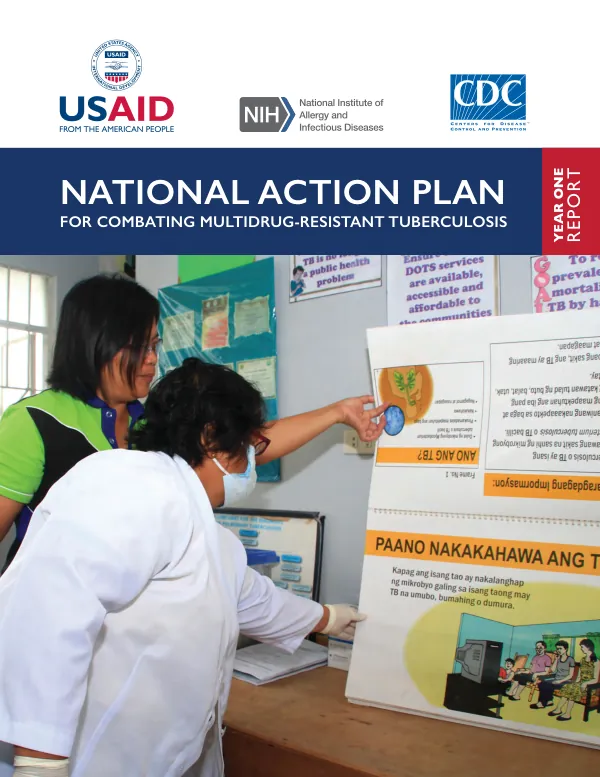
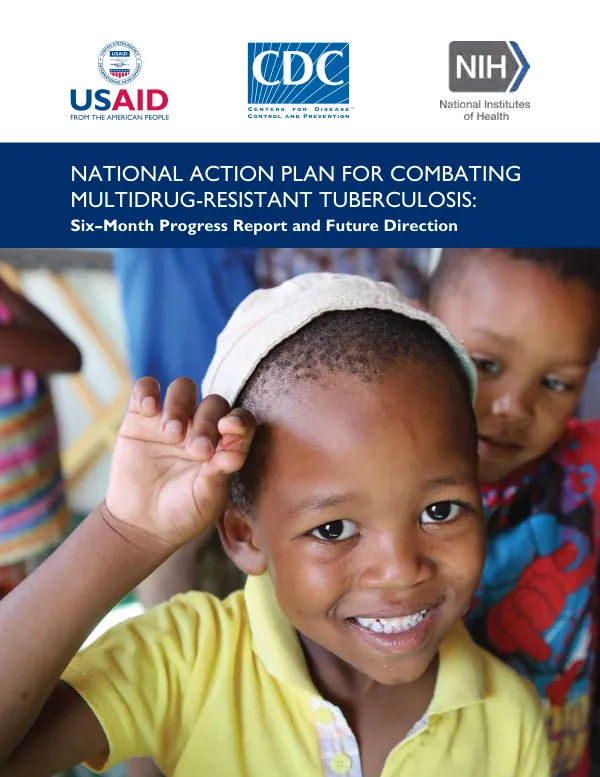
National Action Plan for Combating Multidrug-Resistant Tuberculosis: Six–Month Progress Report and Future Direction
Sign inCDC
National Action Plan for Combating Multidrug-Resistant Tuberculosis: Six–Month Progress Report and Future Direction
The National Action Plan for Combating Multidrug-Resistant Tuberculosis (MDR-TB) was released on December 22, 2015, by the White House.
2016 · 12 pages
Sign in to readA free account is required to download.
Abstract
The plan aims to address MDR-TB domestically and internationally, building on the World Health Organization's (WHO) END TB Strategy and the U.S. Government's (USG) domestic and global tuberculosis (TB) strategies. The plan has three goals and corresponding objectives, which are aligned with current needs and take into account the resources, capabilities, and expertise of each agency involved. Goal 1: Strengthen Domestic Capacity to Combat Multidrug-Resistant Tuberculosis focuses on upgrading TB surveillance to ensure complete and accurate detection of drug-resistant TB. The Centers for Disease Control and Prevention (CDC) is upgrading surveillance systems for tracking drug-resistant TB cases in the United States to capture molecular test results and more detailed clinical information about each case. This will enable better tracking of disease burden, targeting of resources, and linkages to care and contact investigations. Objective 1.2 aims to strengthen state and local capacity to prevent transmission of drug-resistant TB. The CDC is finalizing metrics for tracking TB transmission using molecular epidemiology, which will enable epidemiologists to identify related cases of DR-TB and drug-susceptible TB that have been recently transmitted. This will enable targeted intervention to prevent additional transmission. Objective 1.3 ensures that patients with drug-resistant TB receive treatment until cured. Completion of treatment for those with MDR-TB is challenging on many levels. The CDC is supporting a broad range of interventions implemented by state and local health departments, including the development and implementation of strategies to ensure the day-to-day support MDR-TB patients require to successfully complete the long and often debilitating treatment regimen. The USG agencies charged with implementing the National Action Plan have made progress toward achieving its three goals and corresponding objectives. The CDC, USAID, and the National Institute of Allergy and Infectious Diseases (NIAID) at the National Institutes of Health (NIH) have worked together to coordinate plans for achieving the objectives of the NAP, including agreement on roles and responsibilities and pathways for implementation of the NAP. The National Action Plan has also received international attention, with the Review on AntiMicrobial Resistance (AMR) released by Lord Jim O'Neill in May 2016 setting a global blueprint for action, including specific recommendations to counter MDR-TB. The USG agencies are leveraging the investments of the Global Fund and domestic resources to provide technical assistance aimed at ensuring access to high-quality MDR-TB diagnosis, treatment, and prevention services. The interagency group has met several times in person and maintains communication through monthly coordination calls and email updates. In May 2016, the Federal TB Task Force had an in-person meeting focused on research to highlight existing work and coordinate future activities that will contribute to achieving the NAP goals. One key result of this collaboration has been finalization of the monitoring and evaluation framework and initiation of baseline data collection for milestones. The National Action Plan will help to get all the gears in motion to combat MDR-TB, as stated by The Honorable Eliot L. Engel, US Representative from New York State and Chair, Congressional TB Caucus. The plan aims to see a global commitment and collaboration across sectors, enhance detection capabilities, improve diagnostics, and develop less toxic drugs, and make sure these efforts get the funding they need.
Related documents