USAID DEC
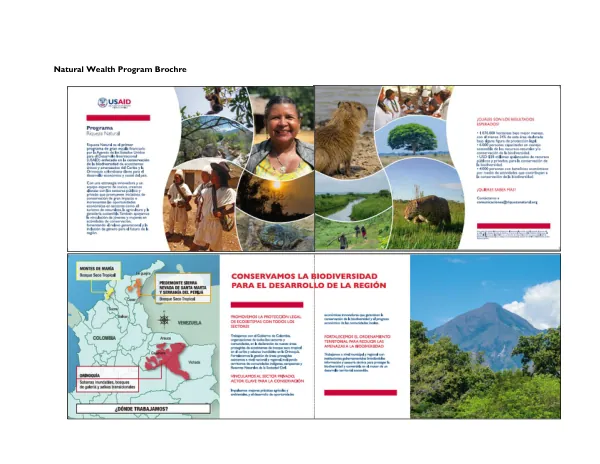
Natural Wealth Program Brochure
The Natural Wealth Program is a comprehensive initiative aimed at promoting sustainable natural resource management and conservation in the Amazon region.
1 pages
Sign in to readA free account is required to download.
Abstract
Launched in 2015, the program focuses on six key countries: Brazil, Peru, Colombia, Ecuador, Bolivia, and Guyana. The program's primary objective is to support the development of a robust and inclusive natural resource management framework, ensuring the long-term sustainability of the region's rich biodiversity and natural wealth. The program's scope encompasses a range of activities, including forest conservation, sustainable forest management, and community-led conservation initiatives. A key component of the program is the establishment of a regional network of protected areas, which will provide a safe haven for threatened and endangered species. The program also supports the development of sustainable forest management practices, including certification and labelling schemes, to promote responsible forestry practices. Implementation of the program is led by a consortium of international organizations, including the World Wildlife Fund (WWF), the International Union for Conservation of Nature (IUCN), and the Amazon Conservation Association (ACA). The program's approach is based on a participatory and inclusive framework, engaging local communities, indigenous peoples, and national governments in the decision-making process. This approach aims to ensure that the program's activities are tailored to the specific needs and priorities of the region. A critical component of the program is the development of a regional monitoring and evaluation system, which will track progress towards the program's objectives and provide insights into the effectiveness of its interventions. The system will also enable the program to identify areas for improvement and adjust its strategies accordingly. The program's timeframes are ambitious, with a target completion date of 2025. The program's geographic focus is on the Amazon region, which spans over 5.5 million square kilometers across nine countries. The region is home to an estimated 10% of all known plant and animal species, making it one of the most biodiverse regions on the planet. The program's recommendations are based on a thorough analysis of the region's natural wealth and the challenges facing its conservation. The program's findings and recommendations are expected to inform national and regional policies, as well as international agreements, aimed at promoting sustainable natural resource management and conservation in the Amazon region.