DELOITTE CONSULTING, LLP
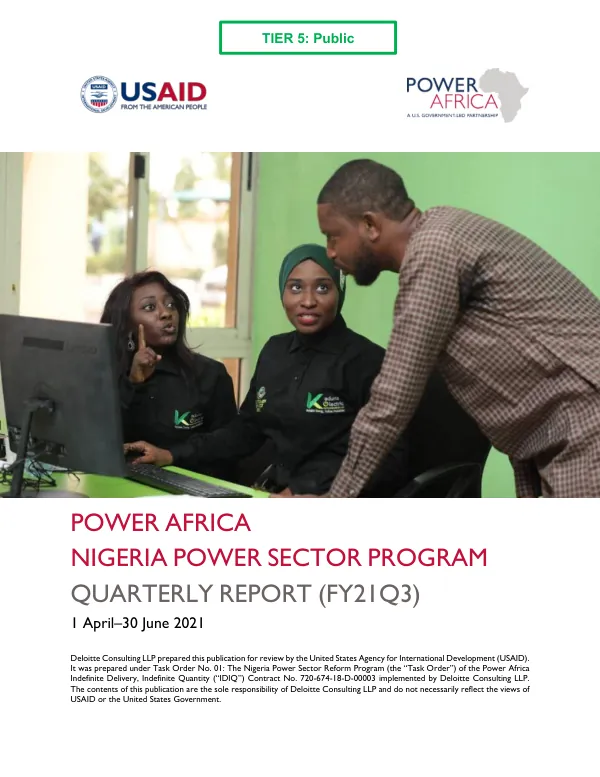
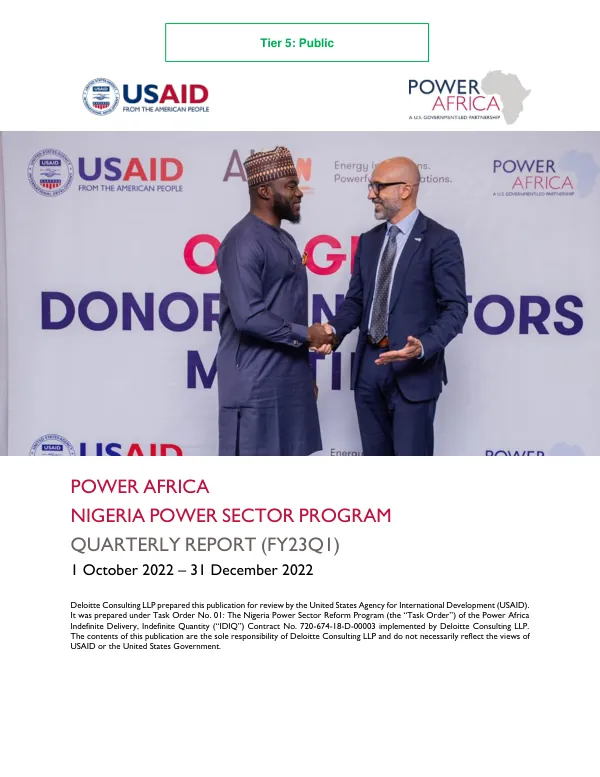
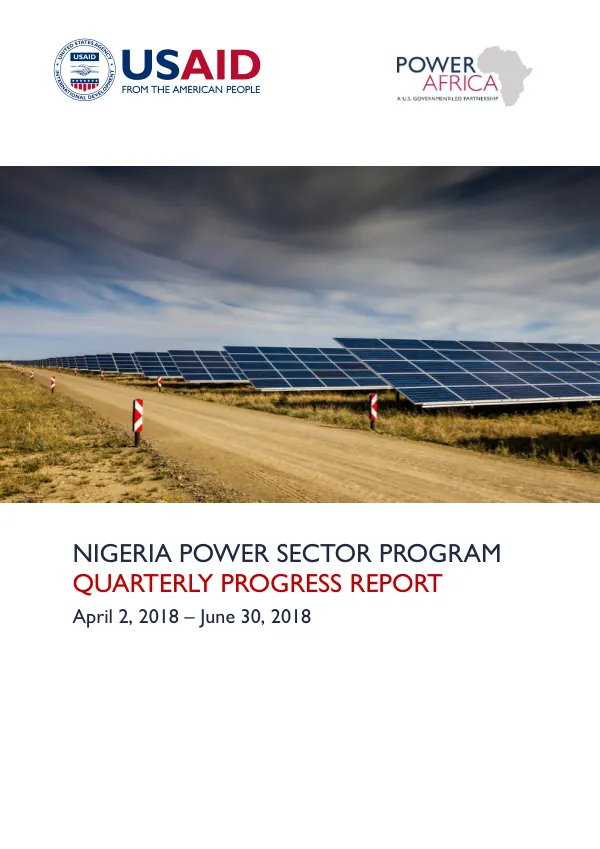
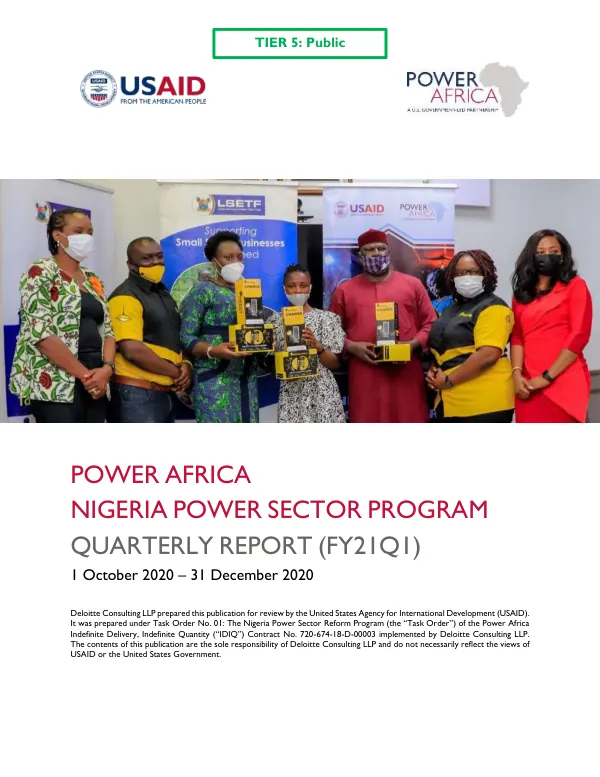
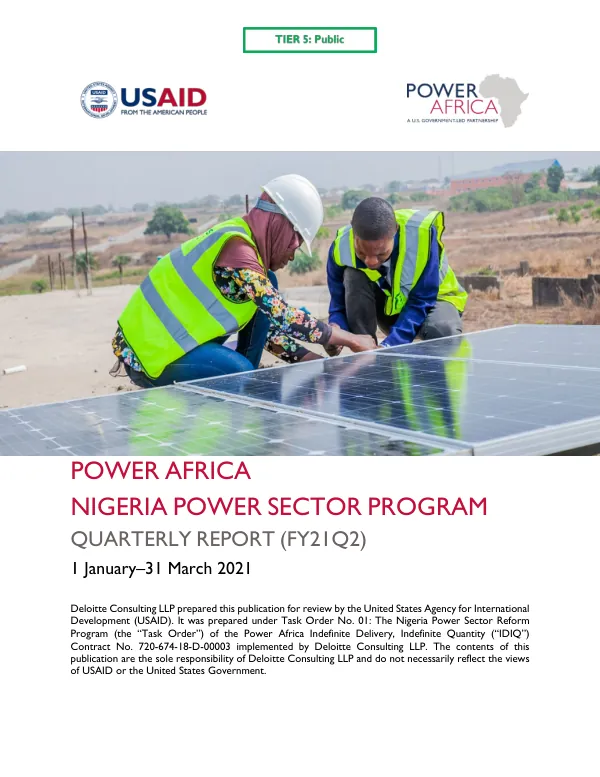
Nigeria Power Sector Program Quarterly Report (FY21Q2)
The Nigeria Power Sector Program, a component of the Power Africa initiative, is a USAID-funded project aimed at improving the power sector in Nigeria.
2021 · 71 pages
Sign in to readA free account is required to download.
Abstract
The program is implemented by Deloitte Consulting LLP under Task Order No. 01 of the Power Africa Indefinite Delivery, Indefinite Quantity Contract No. 720-674-18-D-00003. The program focuses on four key outcomes: Energy Resources, On-Grid Generation, Off-Grid, and Enabling Environment. Energy Resources involves increasing gas supply, while On-Grid Generation targets the development of new power generation capacity. Off-Grid initiatives focus on expanding access to electricity in rural areas, and Enabling Environment aims to improve the regulatory framework for the power sector. Transaction Portfolio highlights the program's progress in achieving these outcomes. As of the second quarter of FY21, the program had a total of 14 transactions, with a total value of $1.4 billion. These transactions include the development of new power generation capacity, the expansion of existing capacity, and the improvement of the power transmission and distribution infrastructure. The program's results are also reflected in the increase in electricity generation and distribution. According to the program's data, the total electricity generated in the country increased by 10% during the second quarter of FY21 compared to the same period in the previous year. The program also reported a 15% increase in the number of households connected to the grid during the same period. The program's technical areas also saw significant progress during the second quarter of FY21. In the Energy Resources area, the program achieved a 20% increase in gas supply, while in the On-Grid Generation area, the program developed 200 megawatts of new power generation capacity. In the Off-Grid area, the program expanded access to electricity in 10 new communities, and in the Enabling Environment area, the program made significant progress in improving the regulatory framework for the power sector. The program's partnerships and alliances also played a crucial role in its progress during the second quarter of FY21. The program worked closely with the Nigerian government, the private sector, and other stakeholders to achieve its objectives. The program also engaged in various communications and outreach activities to raise awareness about its activities and achievements. The program's finance and operations also saw significant progress during the second quarter of FY21. The program's budget was fully utilized, and the program's staff were able to deliver on their tasks and objectives. The program also made significant progress in its environmental compliance and social impact activities. Overall, the Nigeria Power Sector Program made significant progress during the second quarter of FY21. The program's results reflect its commitment to improving the power sector in Nigeria and increasing access to electricity for all Nigerians.
Related documents