USAID DEC
Normes et processus d'agreage qualité maïs
The Projet Croissance Economique focuses on establishing quality standards for maize in agricultural practices.
2 pages
Sign in to readA free account is required to download.
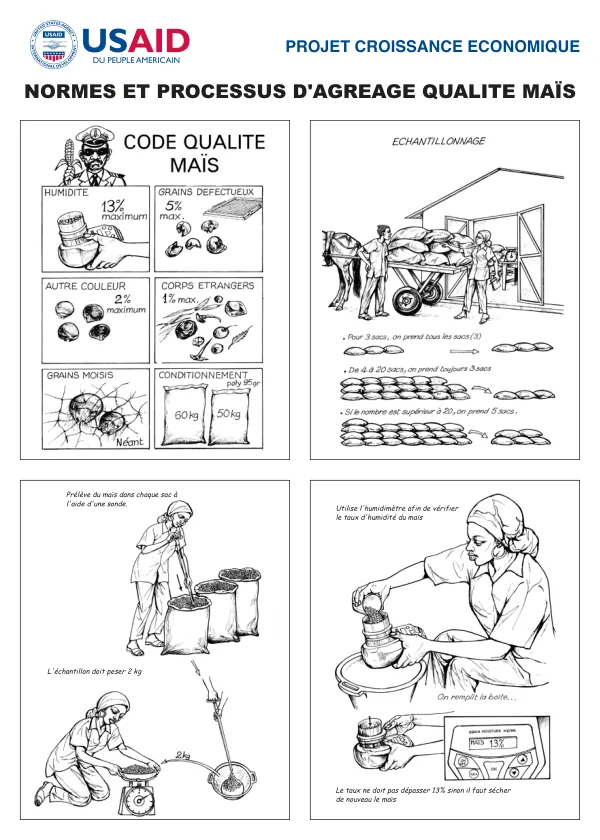
Abstract
A critical step in the process involves the sampling of maize. This is achieved by inserting a probe into each sack to collect a representative sample. The sample is then analyzed using an humidimètre to determine the moisture content of the maize. The moisture level must not exceed 13% to ensure the quality of the maize. If the moisture content is too high, the maize must be dried again to meet the required standards. The sample must weigh 2 kg to ensure accurate analysis. The sample is then subjected to a sieving process to separate the maize from other particles. The first sieve retains the larger particles, while the second sieve retains the maize. The residues that pass through both sieves are weighed and must not exceed 20g, which represents 1% of the total sample weight. This ensures that the sample is representative of the entire batch. The sample is also visually inspected for any signs of mold or spoilage. The presence of moldy grains in the 2 kg sample is a critical factor in determining the quality of the maize. If moldy grains are detected, the entire batch is rejected. This stringent quality control process ensures that only high-quality maize is accepted for further processing or sale. The Projet Croissance Economique aims to establish a robust quality control system for maize in agricultural practices. By implementing these standards and processes, farmers and traders can ensure that their maize meets the required quality standards, thereby increasing its value and marketability. The project's focus on quality control is critical in promoting economic growth and development in the agricultural sector. The quality control process for maize involves a combination of physical and analytical methods to ensure that the maize meets the required standards. The use of humidimètres and sieves allows for accurate analysis and separation of the maize from other particles. The visual inspection of the sample for mold and spoilage ensures that only high-quality maize is accepted. By implementing these standards and processes, the Projet Croissance Economique aims to promote a culture of quality in the agricultural sector, thereby contributing to economic growth and development.