ABT ASSOCIATES
Nosebleed Management and Prevention
The Primary Health Care Initiatives (PHCI) Project, Contract No.
3 pages
Sign in to readA free account is required to download.
Abstract
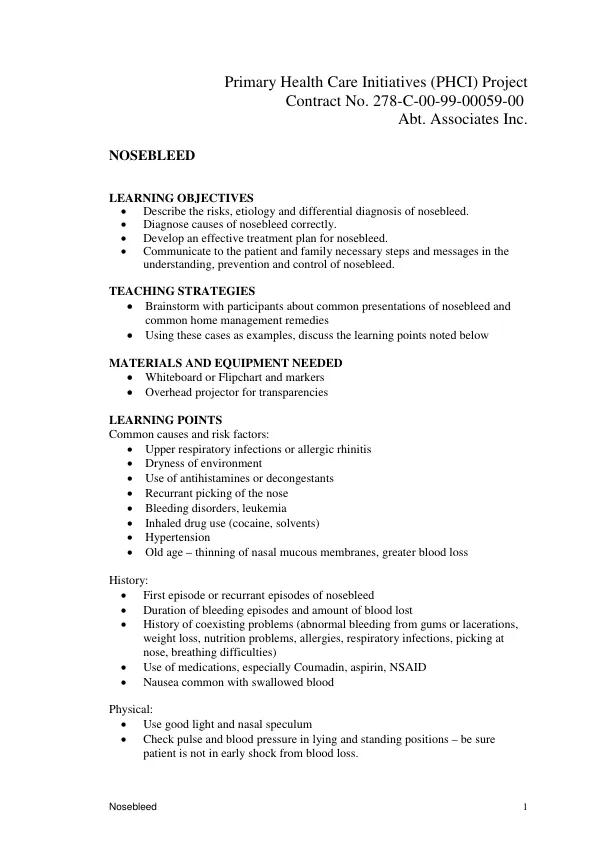
278-C-00-99-00059-00, is a comprehensive guide to managing nosebleeds. The project aims to educate healthcare professionals on the risks, etiology, and differential diagnosis of nosebleeds, as well as develop effective treatment plans and communicate necessary steps to patients and their families. Common causes and risk factors of nosebleeds include upper respiratory infections or allergic rhinitis, dryness of the environment, use of antihistamines or decongestants, recurrent picking of the nose, bleeding disorders, leukemia, inhaled drug use, hypertension, and old age. A thorough medical history is essential in diagnosing the cause of nosebleeds, including the duration and amount of blood lost, coexisting problems, and use of medications. Physical examination of the anterior portion of the nasal septum is crucial in identifying the bleeding point, particularly in cases of anterior nosebleeds, which account for 90-95% of all nosebleeds. The examination should involve the use of a nasal speculum, good lighting, and a thorough check of the pulse and blood pressure in lying and standing positions. Management of nosebleeds involves several steps, including cleaning the nose of clots, identifying the bleeding point, and applying pressure to the nose. For anterior nosebleeds, the patient should be seated with their head tilted forward, and the nose should be pinched firmly directly over the bleeding point for 5 minutes. If bleeding recurs, the process should be repeated. For posterior nosebleeds, immediate transfer to a hospital and specialist consultation are recommended. In cases where bleeding continues or recurs despite nasal compression, referral to a specialist for chemical or electrocautery of the bleeding source may be necessary. Packing the nose with cotton strips covered in Vaseline is also an option, but it should be done with caution and under the guidance of a healthcare professional. Patients should be counseled on preventive measures, such as avoiding nose-picking or rubbing, humidifying the air, and using intranasal Vaseline in dry environments. Critical elements for referral include shock or hemodynamic compromise, elderly patients with heart or respiratory disease, posterior bleeding sources, and continued bleeding in spite of nasal compression. Evaluation of competence in managing nosebleeds should include proper evaluation of the condition and associated risk factors, knowledge of initial measures to control bleeding, preventive measures to control recurrence, and knowledge of when to refer for specialist consultation and hospital management.