USAID DEC
Nourishing Hope? Changes in Malnutrition and Changes in Girls’ Aspirations-Evidence From the Suaahara II Adolescent Girls Panel in Nepal
Sign inELSEVIER LTD.
Nourishing Hope? Changes in Malnutrition and Changes in Girls’ Aspirations-Evidence From the Suaahara II Adolescent Girls Panel in Nepal
Adolescent malnutrition persists as a public health challenge in low-income contexts like South Asia.
2021 · 8 pages
Sign in to readA free account is required to download.
Abstract
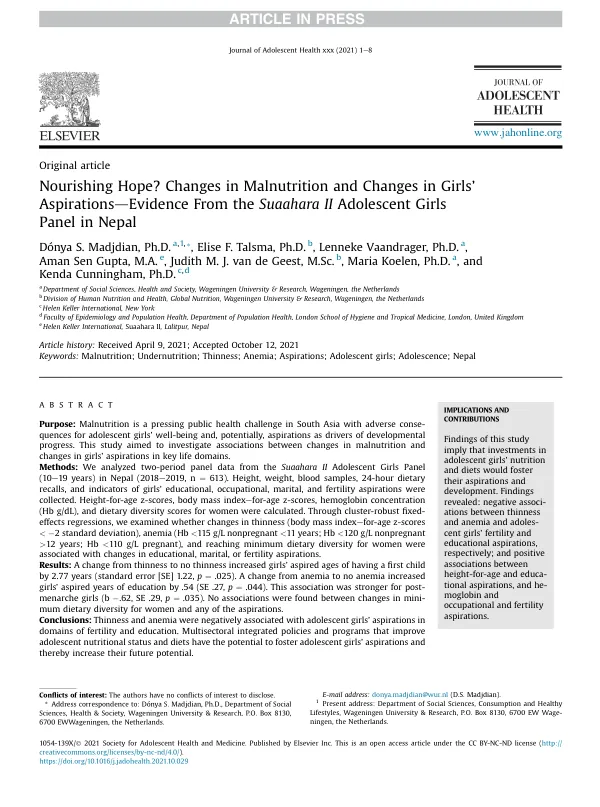
Adolescent girls are particularly vulnerable, yet largely overlooked in nutrition programming. About one in 10 is stunted, one in three is underweight, and more than half are anemic. Adolescent malnutrition has been associated with adverse outcomes in cognition, human capital, schooling, earnings, and economic productivity. However, little attention has been paid to its connection with well-being and noncognitive outcomes. Adolescence is a pivotal time for the formation of aspirations. Aspirations, future-oriented desires for one's possible self, steer behavior and intentions, and have been shown to be of vital importance for future outcomes and human potential. A lack of aspirations can lower investment in one's future-oriented behavior or, when the gap between one's aspirations and current status becomes too wide, can foster a fatalistic attitude, that in turn serves to sustain or reinforce poverty. The study aimed to investigate associations between changes in malnutrition and changes in girls' aspirations in key life domains. Data were collected from the Adolescent Girls Panel, a USAID-funded integrated nutrition program in Nepal. The surveyed areas represent 42 program districts of Nepal's 77 districts. In 2017, multistage cluster sampling was used for the Suaahara II monitoring survey, in which 1,093 adolescent girls and mothers participated. For this study, the 2018 and 2019 panel data were used. The study found that a change from thinness to no thinness increased girls' aspired ages of having a first child by 2.77 years. A change from anemia to no anemia increased girls' aspired years of education by 0.54. This association was stronger for post-menarche girls. No associations were found between changes in minimum dietary diversity for women and any of the aspirations. The study suggests that investments in adolescent girls' nutrition and diets would foster their aspirations and development. The findings of this study imply that multisectoral integrated policies and programs that improve adolescent nutritional status and diets have the potential to foster adolescent girls' aspirations and thereby increase their future potential. The study highlights the importance of addressing adolescent malnutrition and its impact on aspirations, particularly in low-income contexts like South Asia. By investing in adolescent girls' nutrition and diets, policymakers and program implementers can potentially generate a triple dividend for today's adolescents, their future, and the next generations through social, economic, and demographic benefits.
Related documents