USAID DEC
NSSK Training Checklist
NSSK Training Checklist is a comprehensive document outlining the requirements for conducting training sessions in Neonatal and Stillbirth Knowledge (NSSK).
5 pages
Sign in to readA free account is required to download.
Abstract
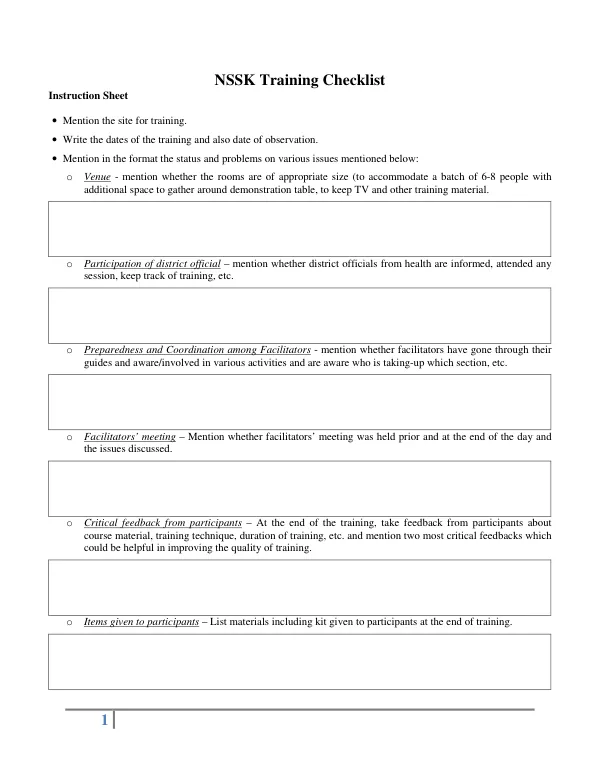
The document emphasizes the importance of a well-structured training program, adequate resources, and effective facilitation to ensure the success of the training. The training site is a critical component, and it is essential to ensure that the rooms are of appropriate size to accommodate a batch of 6-8 people with additional space to gather around the demonstration table, keep the TV, and other training materials. The facilitators must be aware of the venue's layout and the availability of necessary equipment. District officials from the health department must be informed and attend the training sessions to track progress and provide necessary support. The facilitators must also conduct a planning session before the start of the training to ensure that they are aware of their roles and responsibilities. The facilitators' meeting is a crucial aspect of the training, and it is essential to hold meetings prior to and at the end of each day to discuss issues and address any concerns. The facilitators must also be aware of the course material, training techniques, and duration of the training to ensure that they are adequately prepared. Critical feedback from participants is essential to improve the quality of the training. The facilitators must collect feedback from participants at the end of the training and address any concerns or suggestions. The feedback must be constructive and actionable, and the facilitators must be willing to make changes to improve the training program. The training materials, including the kit given to participants, must be adequate and of good quality. The facilitators must ensure that all necessary equipment, such as baby mannequins, self-inflating bags, and suction devices, are available and in working condition. The facilitators must also conduct skill demonstrations, including preparation of birth, routine care, and initial steps, and ensure that the participants are able to perform these skills correctly. The facilitators must also use performance checklists to assess the participants' skills and provide individual feedback. The training program must include good quality videos, such as those on thermal protection and feeding, and the facilitators must ensure that the videos are used effectively to enhance the training experience. The mega code score must be conducted correctly, and the facilitators must ensure that all participants are assessed correctly. The NSSK Training Checklist provides a comprehensive framework for conducting high-quality training sessions in Neonatal and Stillbirth Knowledge. By following this checklist, facilitators can ensure that their training programs are well-structured, effective, and meet the needs of the participants. The scoring process for the training program is outlined in the document, and it is essential to follow this process to ensure that the training program meets the required standards. The facilitators must ensure that they meet the minimum score requirements and strive to achieve the maximum score of 100. Overall, the NSSK Training Checklist is a valuable resource for facilitators conducting training sessions in Neonatal and Stillbirth Knowledge. By following this checklist, facilitators can ensure that their training programs are of high quality and meet the needs of the participants.