USAID DEC
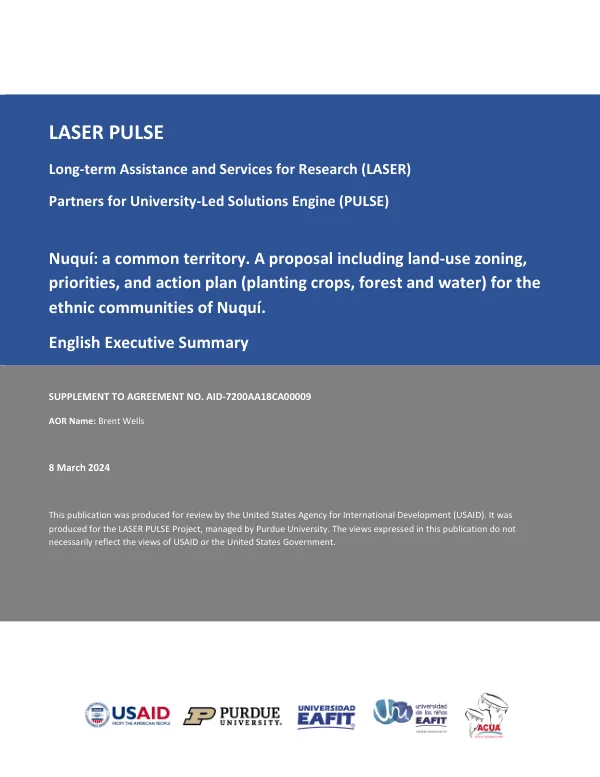
Nuquí: a common territory. A proposal including land-use zoning, priorities, and action plan (planting crops, forest and water) for the ethnic communities of Nuquí.
Sign inCATHOLIC RELIEF SERVICES ORGANIZATION
Nuquí: a common territory. A proposal including land-use zoning, priorities, and action plan (planting crops, forest and water) for the ethnic communities of Nuquí.
The Nuquí municipality, located in Colombia's Chocó department, is a biodiversity hotspot with a rich cultural heritage.
2024 · 22 pages
Sign in to readA free account is required to download.
Abstract
The area is home to 6,295 inhabitants, with 77% of the population identifying as Afro-descendant, 21.5% as indigenous, and 1.5% as mestizo. The municipality is characterized by its unique geography, with a mix of sea, jungle, and coastal ecosystems. The Saberes de Monte project aimed to understand the most important types of land use for indigenous and Afro-descendant communities in Nuquí. The project used a community-based approach, involving discussions and knowledge-sharing sessions with local residents. The project's objectives were to describe the current use of the region, set out cooperative plans, and determine community and educational tools that favor the preservation of traditional cultures and biodiversity. The project identified several key areas of focus, including agricultural, forestry, and water livelihoods. The team developed a land use zoning proposal for the Nuquí municipality, which includes recommendations for sustainable land use practices. The proposal prioritizes the protection of biodiversity hotspots and the preservation of traditional cultures. The project also developed a community plan, which outlines the priorities and action plans of the indigenous and Afro-descendant communities. The plan includes strategies for sustainable agriculture, forestry, and water management, as well as initiatives for community development and education. The Saberes de Monte project has several key recommendations, including: 1. Land use zoning proposal: The project recommends a zoning system that prioritizes the protection of biodiversity hotspots and the preservation of traditional cultures. 2. Sustainable agriculture: The project recommends sustainable agriculture practices that prioritize the use of organic fertilizers and the preservation of traditional crops. 3. Forest management: The project recommends the establishment of community-managed forests that prioritize the preservation of biodiversity and the protection of traditional cultures. 4. Water management: The project recommends the establishment of community-managed water systems that prioritize the preservation of traditional water sources and the protection of biodiversity. 5. Community development: The project recommends the establishment of community development programs that prioritize the preservation of traditional cultures and the promotion of community-led initiatives. The Saberes de Monte project has several key outcomes, including: 1. Land use zoning proposal: The project has developed a land use zoning proposal that prioritizes the protection of biodiversity hotspots and the preservation of traditional cultures. 2. Community plan: The project has developed a community plan that outlines the priorities and action plans of the indigenous and Afro-descendant communities. 4. Forest management: The project has established community-managed forests that prioritize the preservation of biodiversity and the protection of traditional cultures. 5. Water management: The project has established community-managed water systems that prioritize the preservation of traditional water sources and the protection of biodiversity. The Saberes de Monte project has several key implications for policy and practice, including: 1. Land use zoning proposal: The project's land use zoning proposal has implications for policy and practice, as it prioritizes the protection of biodiversity hotspots and the preservation of traditional cultures. 2. Sustainable agriculture: The project's sustainable agriculture practices have implications for policy and practice, as they prioritize the use of organic fertilizers and the preservation of traditional crops. 3. Forest management: The project's community-managed forests have implications for policy and practice, as they prioritize the preservation of biodiversity and the protection of traditional cultures. 4. Water management: The project's community-managed water systems have implications for policy and practice, as they prioritize the preservation of traditional water sources and the protection of biodiversity. 5. Community development: The project's community development programs have implications for policy and practice, as they prioritize the preservation of traditional cultures and the promotion of community-led initiatives. Overall, the Saberes de Monte project has several key outcomes and implications for policy and practice, including the development of a land use zoning proposal, sustainable agriculture practices, community-managed forests, community-managed water systems, and community development programs.