USAID DEC
NUTRITION INNOVATION LAB RESEARCH BRIEFING PAPER, OCTOBER 2013: Predictors of Anemia in Children 6-23 Months in Nepal
Sign inUSAID
NUTRITION INNOVATION LAB RESEARCH BRIEFING PAPER, OCTOBER 2013: Predictors of Anemia in Children 6-23 Months in Nepal
The changing dynamics of maternal nutrition in urban Nepal are characterized by a coexistence of undernutrition and overnutrition.
2013 · 4 pages
Sign in to readA free account is required to download.
Abstract
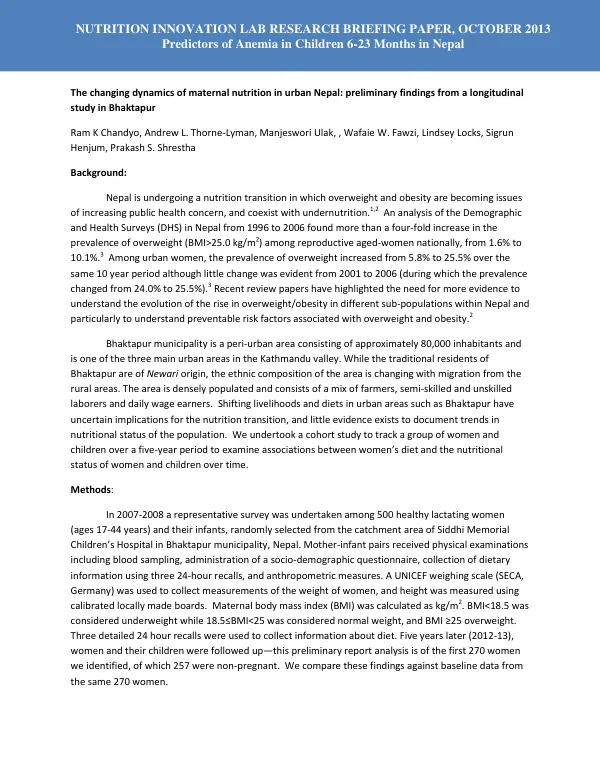
An analysis of the Demographic and Health Surveys (DHS) in Nepal from 1996 to 2006 found a four-fold increase in the prevalence of overweight among reproductive-aged women nationally, from 1.6% to 10.1%. In urban areas, the prevalence of overweight increased from 5.8% to 25.5% over the same 10-year period. Bhaktapur municipality, a peri-urban area in the Kathmandu valley, is experiencing a nutrition transition. The area is densely populated and consists of a mix of farmers, semi-skilled and unskilled laborers, and daily wage earners. Shifting livelihoods and diets in urban areas such as Bhaktapur have uncertain implications for the nutrition transition. A cohort study was undertaken to track a group of women and children over a five-year period to examine associations between women's diet and the nutritional status of women and children over time. The study involved a representative survey among 500 healthy lactating women (ages 17-44 years) and their infants, randomly selected from the catchment area of Siddhi Memorial Children's Hospital in Bhaktapur municipality, Nepal. Mother-infant pairs received physical examinations, including blood sampling, administration of a socio-demographic questionnaire, collection of dietary information using three 24-hour recalls, and anthropometric measures. Five years later, women and their children were followed up, and the preliminary report analysis is of the first 270 women identified, of which 257 were non-pregnant. The follow-up survey conducted in 2012-13 included more extensive information about the socioeconomic status of households than the baseline survey. Trends in the proportion of women renting vs. owning a house and living in a single room suggest that there was an improvement in the socioeconomic status of some households in the sample. Despite being a peri-urban population, the majority of households were on agricultural land, and ¾ of households planted rice the previous year. Five years after the original survey, the prevalence of overweight among the women increased markedly, from 17% to 41%. The prevalence of low body mass index (<18.5), which affected only 4% of women at baseline, decreased to 2%. In apparent contrast to the increase observed in maternal overweight, the prevalence of women with anemia (defined using both non-altitude-adjusted and altitude-adjusted thresholds) increased in this population while mean hemoglobin slightly declined. The rise in the prevalence of anemia over time is likely to be at least partially explained by the fact that during the baseline survey many women were still taking or had recently discontinued taking iron supplements. Analysis of the nutritional and other factors contributing to anemia in the baseline survey is ongoing and will be reported shortly. Over the course of a five-year period, more than a two-fold increase in the risk of overweight among a cohort of women was observed. The overweight prevalence of 41% was higher than that previously reported in the 2011 DHS, although the average age of women in the cohort is also older. It is essential to consider the potential role of selection bias in explaining these preliminary findings. At the time data was analyzed, the entire cohort had not yet been followed up, and these findings represent only about half of the original women included in the baseline survey. However, comparison of the baseline characteristics of women included in this analysis vs. the full sample found only slight differences in the prevalence of overweight and other factors, suggesting that selection bias is unlikely to be the main cause of the increase in overweight. Little is known about the dietary and nondietary factors underlying the increase in the prevalence of overweight in Nepal. The dataset contains extensive data on women's diet at both points in time and will enable characterization of how diets may have changed over the past five years and how dietary patterns may be linked to risk of overweight. Associations between diet, lifestyle factors, and risk of overweight are being analyzed to better understand the dynamics contributing to this growing trend in Nepal, which will be disseminated through peer-reviewed publications and future briefs. Data from the cohort in Bhaktapur suggests that overweight and obesity are rapidly rising among adults in Nepal. More efforts are needed to track the burden of overnutrition in different sub-populations and to identify modifiable risk factors associated with this change. Nutrition and agricultural policies in Nepal should take into account both under and overnutrition.
Related documents
Documents in this collection
 2021
2021USAID DEC
Unravelling adolescent girls’ aspirations in Nepal: Status and associations with individual-, household-, and community-level characteristics
Open record 2017
2017USAID DEC