USAID DEC
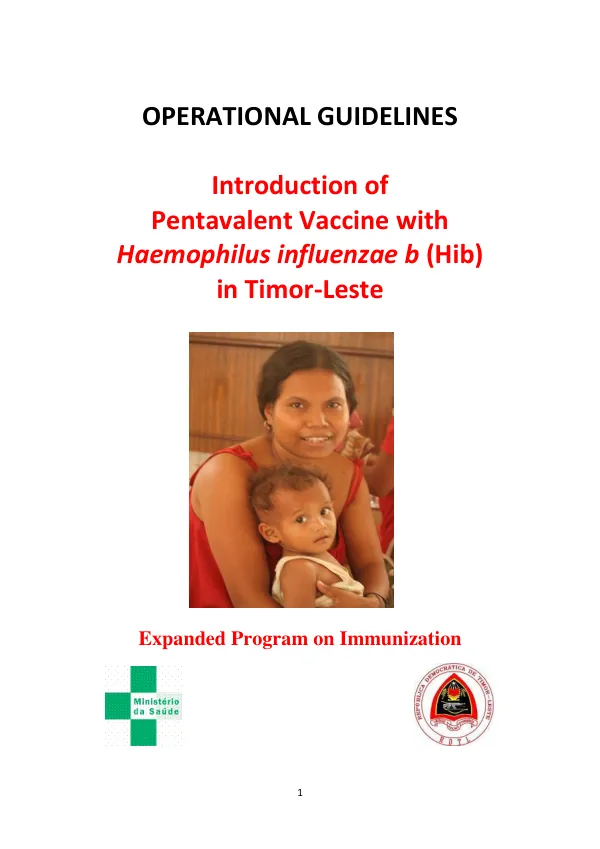
Operational Guidelines for Introduction of Pentavalent Vaccine with Haemophilus influenzae b (Hib) in Timor-Leste
Sign inUNICEF
Operational Guidelines for Introduction of Pentavalent Vaccine with Haemophilus influenzae b (Hib) in Timor-Leste
The introduction of the pentavalent vaccine with Haemophilus influenzae b (Hib) in Timor-Leste is a key component of the country's Expanded Program on Immunization.
2012 · 22 pages
Sign in to readA free account is required to download.
Abstract
The vaccine is designed to protect children against five diseases: diphtheria, pertussis, tetanus, hepatitis B, and Haemophilus influenzae type b. The pentavalent vaccine will replace the existing tetravalent vaccine, which protected against four diseases. The immunization schedule for infants under one year of age includes the pentavalent vaccine, which is administered at 6, 10, and 14 weeks of age. The vaccine is given in combination with other vaccines, including BCG, OPV, and measles. The recommended vaccines for all children under 1 year of age include BCG, OPV, DPT, HepB, TT, measles, and DT. Haemophilus influenzae type b is a bacterium that causes severe childhood diseases, including pyogenic meningitis, pneumonia, sepsis, and infection of other internal organs and bones. Hib is most serious in young children, and one out of 20 children who get Hib meningitis die, while 10-30% of survivors have permanent brain damage. Vaccines are the only public health tool capable of preventing the majority of cases of serious Hib disease. The introduction of the Hib vaccine is part of the government's plan to reduce under-five morbidity and mortality caused by vaccine-preventable diseases in Timor-Leste. The vaccine has been included in routine childhood vaccination programs in more than 150 countries, and its inclusion in the immunization program in Timor-Leste is expected to reduce the incidence of invasive Hib disease and pneumonia in children. The Expanded Program on Immunization serves two target groups: all children under 1 year of age and all women of childbearing age. The program aims to reduce under-five morbidity and mortality caused by vaccine-preventable diseases among children in Timor-Leste. The introduction of the pentavalent vaccine is a key component of this program, and its implementation is planned and led by a Core Committee, chaired by the National Director of Community Health. The Core Committee is responsible for ensuring that the pentavalent vaccine is available for all children in Timor-Leste. The committee has developed a plan to introduce the vaccine, which includes training for health workers, communication and information, education, and community mobilization. The introduction of the pentavalent vaccine is expected to improve the protection of Timorese children against vaccine-preventable diseases and reduce the incidence of pneumonia and meningitis in children. The Ministry of Health, in collaboration with UNICEF and other partners, has developed operational guidelines for the introduction of the pentavalent vaccine. The guidelines provide information on the immunization schedule, the recommended vaccines, and the implementation plan for the vaccine introduction. The guidelines also provide information on the rationale for the Hib vaccine and the expected benefits of its inclusion in the immunization program. The introduction of the pentavalent vaccine is a significant step towards improving the health of children in Timor-Leste. The vaccine is expected to reduce the incidence of pneumonia and meningitis in children and improve the overall health and well-being of the population. The implementation of the vaccine introduction plan is ongoing, and the Ministry of Health, in collaboration with its partners, is working to ensure that the vaccine is available for all children in Timor-Leste.