JOHN SNOW INTERNATIONAL
Program Review Report: Imunizasaun Proteje Labarik (IPL) Project
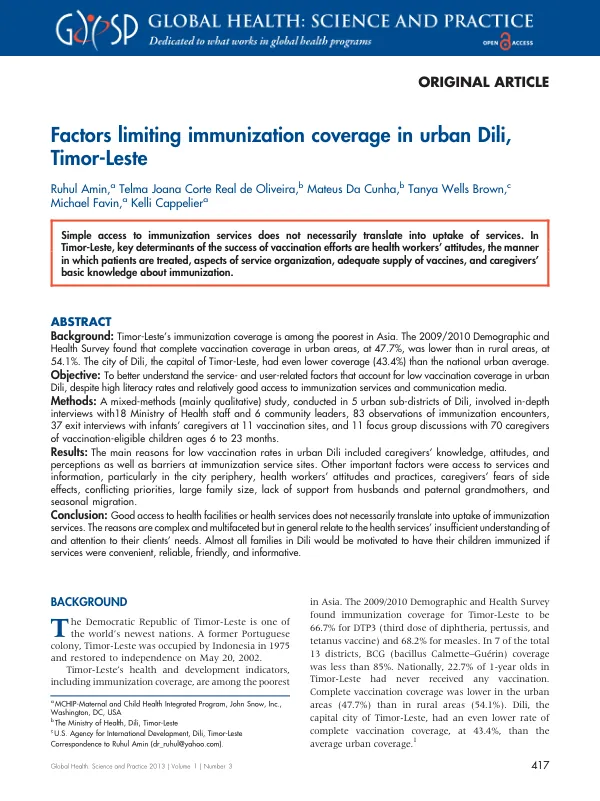
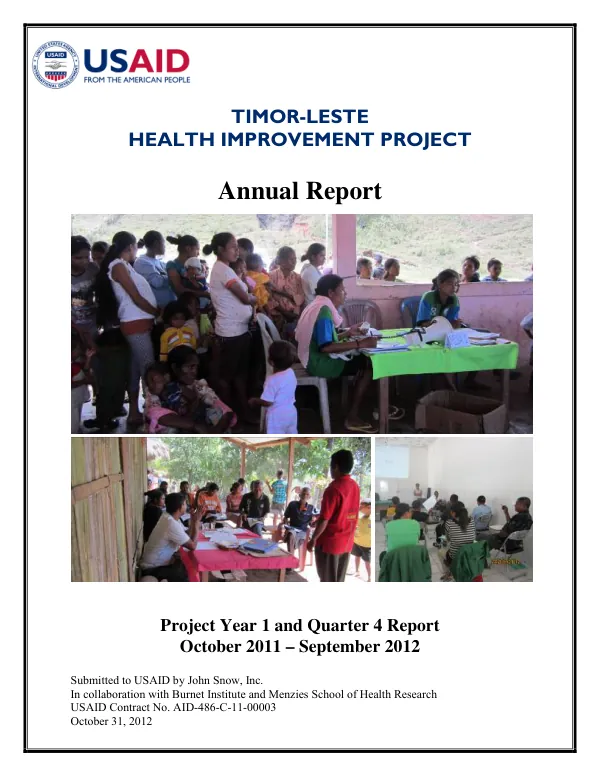
The Imunizasaun Proteje Labarik (IPL) project was implemented in the Democratic Republic of Timor-Leste from April 2011 to October 2013.
2013 · 32 pages
Sign in to readA free account is required to download.
Abstract
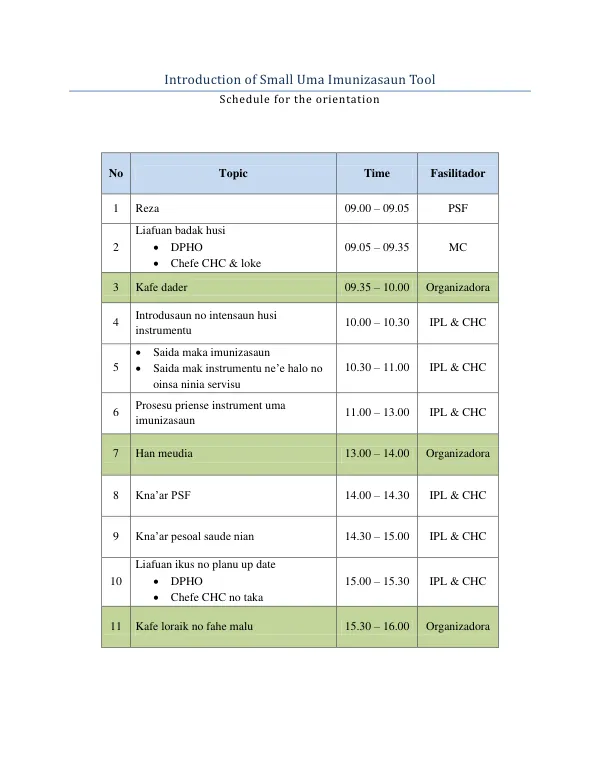
The project was funded by the Millennium Challenge Corporation (MCC) and managed by John Snow, Inc. through the USAID's global Maternal and Child Integrated Program (MCHIP). The project's primary objective was to increase child immunization coverage in Timor-Leste. The IPL project worked in partnership with the Ministry of Health (MOH) at national, district, and local levels to achieve its objectives. The project's interventions included strengthening program management capacity and technical skills, planning, rationalizing, and expanding immunization services, and monitoring and reporting of program performance. The project also implemented an immunization orientation program for schools and provided training to community leaders and health workers. The project's effectiveness was evaluated through a program review, which was conducted by a team of Timorese consultants and an international consultant. The review aimed to extract lessons learned and recommendations for continuing and expanding IPL's tools and approaches. The review found that the project had made significant contributions to strengthening service delivery, particularly in the areas of planning, rationalizing, and expanding immunization services. The review also identified several strengths of the IPL program, including its ability to engage with community leaders and health workers, its effective use of micro-planning, and its strong supportive supervision. However, the review also noted several challenges and constraints faced by the project, including limited resources, inadequate infrastructure, and lack of technical skills among health workers. The review concluded that the IPL project had made significant progress in increasing child immunization coverage in Timor-Leste. The project's interventions had resulted in improved immunization coverage, particularly in the areas of DPT3 and measles vaccination. The review also noted that the project's tools and approaches had been effective in strengthening service delivery and improving the quality of care provided to children. The review made several recommendations for continuing and expanding the IPL project's tools and approaches. These recommendations included strengthening program management capacity and technical skills, improving the quality of training provided to health workers, and increasing the use of supportive supervision. The review also recommended that the project continue to engage with community leaders and health workers to ensure that immunization services are delivered effectively and efficiently. The IPL project's success was attributed to its strong partnership with the MOH and other national partners, as well as its effective use of micro-planning and supportive supervision. The project's ability to engage with community leaders and health workers was also a key factor in its success. The review concluded that the IPL project had made a significant contribution to improving child immunization coverage in Timor-Leste and that its tools and approaches could be replicated in other countries to achieve similar results. The project's impact was also evident in the improvements in immunization coverage, particularly in the areas of DPT3 and measles vaccination. The review noted that the project's interventions had resulted in a significant increase in the number of children vaccinated, with a 27% increase in the number of children vaccinated with DPT3 and a 25% increase in the number of children vaccinated with measles. The review also highlighted the importance of continued support for the IPL project's tools and approaches. The project's ability to engage with community leaders and health workers was a key factor in its success, and continued support for this approach was essential to ensure that immunization services are delivered effectively and efficiently. The review concluded that the IPL project had made a significant contribution to improving child immunization coverage in Timor-Leste and that its tools and approaches could be replicated in other countries to achieve similar results.