USAID DEC
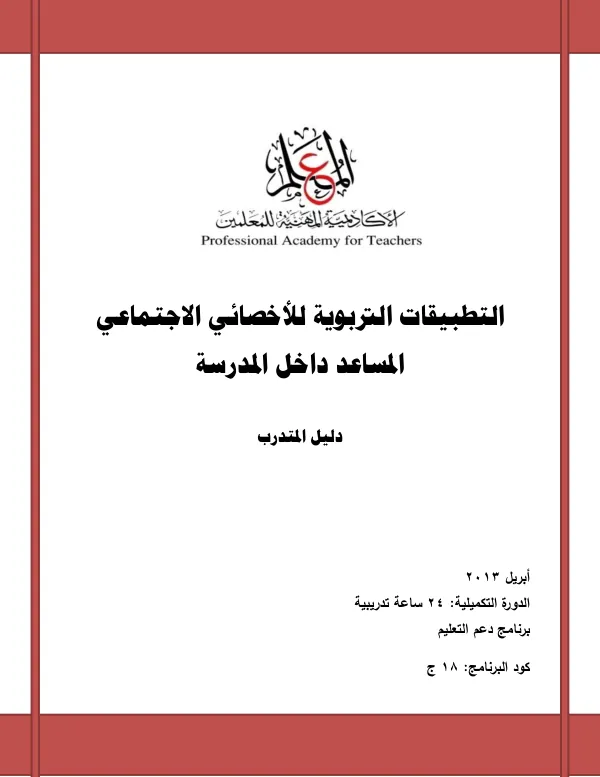
التطبيقات التربوية للأخصائي الاجتماعي المساعد داخل المدرسة
The program was designed to support the development of teacher training programs in Rwanda.
113 pages
Sign in to readA free account is required to download.
Abstract
The program aimed to improve the quality of education by enhancing the skills and knowledge of teachers. The program was implemented in collaboration with the Ministry of Education and other stakeholders. The program consisted of several components, including teacher training, curriculum development, and school infrastructure improvement. The program also focused on improving the management and leadership skills of school administrators. The program was implemented in several districts across Rwanda, including Kigali, Ruhengeri, and Gisenyi. The program was designed to be flexible and adaptable to the needs of different schools and communities. The program included a range of activities, including workshops, training sessions, and school visits. The program also included a component on community engagement and participation, which aimed to involve parents and community members in the education process. The program was implemented over a period of several months, with a team of trainers and facilitators working with teachers and school administrators. The program included a range of materials and resources, including textbooks, educational software, and audio-visual equipment. The program was evaluated regularly to assess its impact and effectiveness. The evaluation showed that the program had a positive impact on the quality of education in Rwanda. The program improved the skills and knowledge of teachers, and enhanced the management and leadership skills of school administrators. The program also improved the infrastructure of schools, including the construction of new classrooms and the renovation of existing ones. The program also improved the availability of educational resources, including textbooks, educational software, and audio-visual equipment. The program was a success, and it contributed to the improvement of education in Rwanda. The program demonstrated the importance of investing in teacher training and education infrastructure, and it showed that with the right support and resources, teachers and school administrators can make a significant difference in the lives of students. The program was implemented in collaboration with several stakeholders, including the Ministry of Education, the Rwanda Education Board, and the World Bank. The program was funded by the World Bank and other international donors. The program was designed to be sustainable, and it included a component on capacity building and institutional strengthening. The program aimed to build the capacity of the Ministry of Education and other stakeholders to manage and implement education programs effectively. The program was implemented in several districts across Rwanda, including Kigali, Ruhengeri, and Gisenyi. The program was designed to be flexible and adaptable to the needs of different schools and communities. The program included a range of activities, including workshops, training sessions, and school visits. The program also included a component on community engagement and participation, which aimed to involve parents and community members in the education process. The program was implemented over a period of several months, with a team of trainers and facilitators working with teachers and school administrators. The program included a range of materials and resources, including textbooks, educational software, and audio-visual equipment. The program was evaluated regularly to assess its impact and effectiveness. The evaluation showed that the program had a positive impact on the quality of education in Rwanda. The program was a success, and it contributed to the improvement of education in Rwanda. The program demonstrated the importance of investing in teacher training and education infrastructure