POWER AFRICA
PA_COVID_Response_January 24, 2024
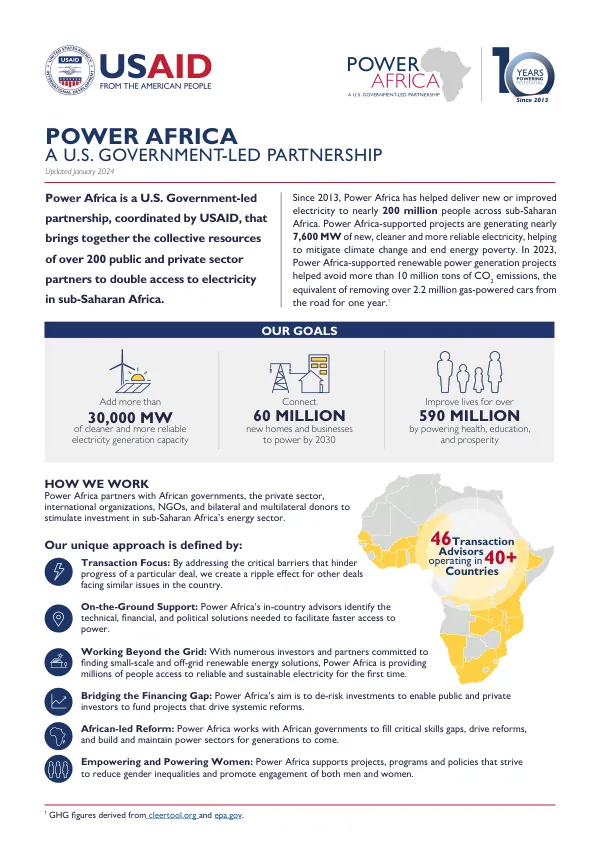
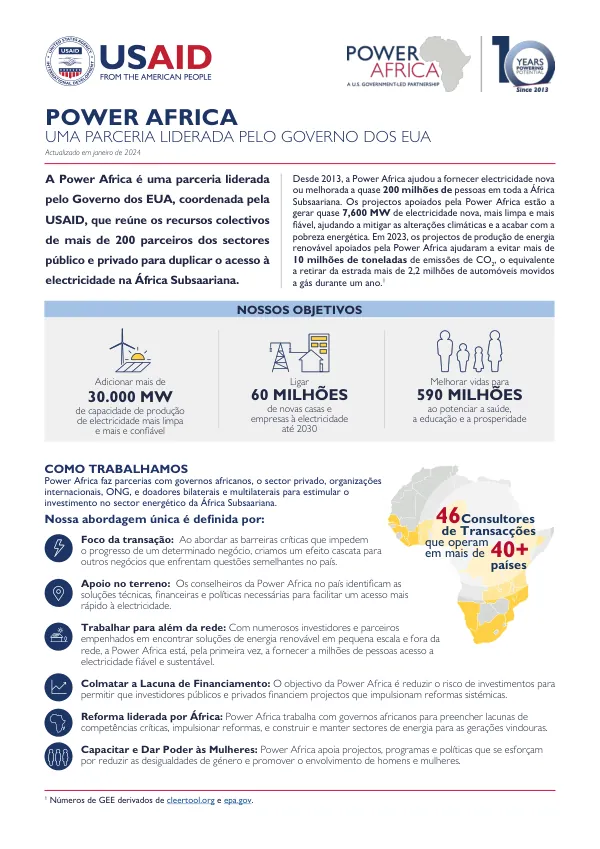
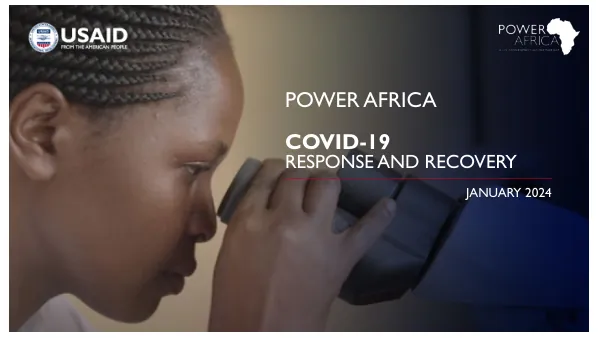
The Power Africa initiative redirected $7.2 million to support off-grid energy, assess healthcare power needs, and build sector capacity in response to the COVID-19 pandemic.
2024 · 11 pages
Sign in to readA free account is required to download.
Abstract
This funding was allocated to support the electrification of healthcare facilities, particularly in rural and remote areas. The initiative also convened partners and donors through a $1 million grant to the Sustainable Energy for All (SEforAll) organization to drive energy access and healthcare facility electrification. Power Africa's efforts to provide on-the-ground technical expertise included utilizing established in-country networks to ensure business continuity, mobilize relief funding, and advocate for energy access as an essential service. This expertise was leveraged to support the electrification of healthcare facilities, including clinics, hospitals, COVID-19 testing centers, isolation quarters, and cold storage services. The initiative also redirected $2.8 million in grants to off-grid companies for rural and peri-urban health clinic electrification. Power Africa awarded grants to accelerate health facility electrification in rural and remote areas across the continent using off-grid solar technologies. These grants were designed to support the electrification of healthcare facilities, disseminate public health information, and pursue other forms of revenue generation. The initiative also provided targeted assistance to off-grid companies on business operations continuity and liquidity planning, as well as support to investors to develop new relief facilities for companies with working capital shortages during the COVID-19 pandemic. The Power Africa initiative also focused on strengthening power sector ecosystems by facilitating investment in transmission infrastructure to strengthen national grids and promote cross-border power trade. This effort aimed to modernize electricity distribution services to improve operations and increase energy access. The initiative supported national government responses to COVID-19 by keeping medical facilities, homes, and essential services electrified. Specific examples of this work include supported smart engineering solutions in Tanzania to reduce outages and ensure reliable power supply to healthcare facilities, and connecting Monrovia's Central Medical Store to the grid in Liberia to keep vaccines cool.