CATHOLIC RELIEF SERVICES ORGANIZATION
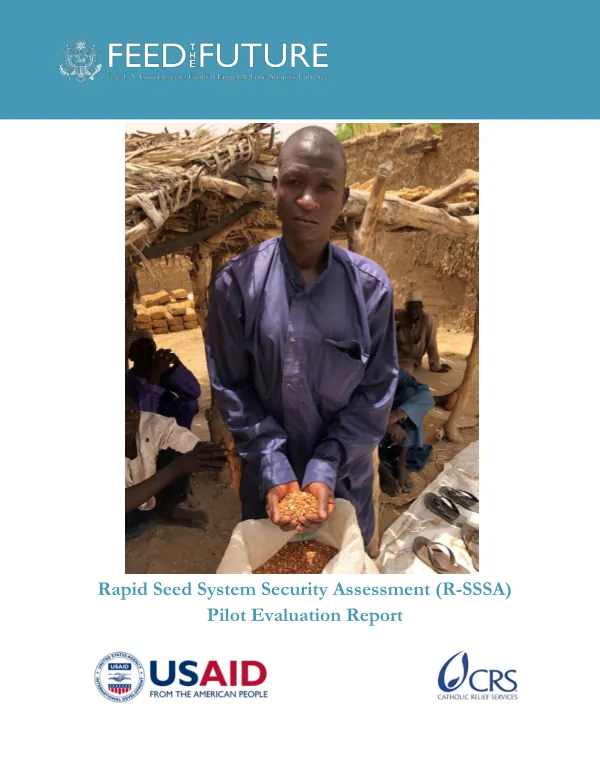
Rapid Seed System Security Assessment (R-SSSA) - Pilot Evaluation Report
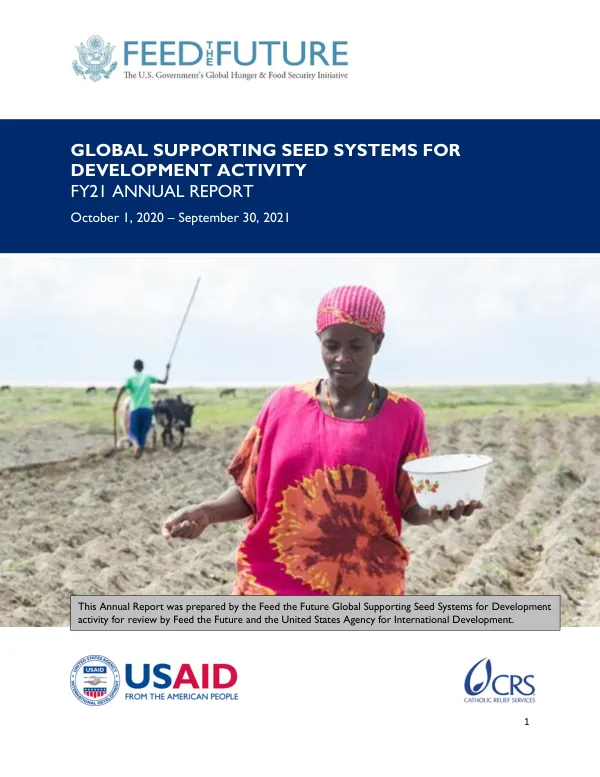
The Rapid Seed System Security Assessment (R-SSSA) pilot evaluation report was conducted from August 24, 2018, to August 23, 2023, under the Feed the Future Global Supporting Seed Systems for Development activity.
2021 · 44 pages
Sign in to readA free account is required to download.
Abstract
The report aims to assess the effectiveness of the R-SSSA in enhancing organizations' understanding of seed security and seed systems in target zones. The R-SSSA was developed in response to the need for a more rapid and less resource-intensive seed system assessment. The assessment was designed to provide a comprehensive understanding of seed security and seed systems, including the availability, accessibility, and affordability of seeds, as well as the capacity of seed systems to respond to shocks and stresses. The pilot evaluation involved six organizations, including Catholic Relief Services, SP, IRC, Samaritan's Purse, Concern & ACTED, and Food for the Hungry International. Each organization conducted the R-SSSA in a different country, including the Democratic Republic of the Congo, South Sudan, Kenya, Uganda, Myanmar, and Niger. The R-SSSA involved a range of tools and methods, including household interviews, focus group discussions, key informant interviews, and agricultural expert interviews. The assessment also included a workshop component, which brought together stakeholders to discuss the findings and recommendations. The pilot evaluation report presents the results of the R-SSSA, including the key findings and recommendations. The report highlights the strengths and limitations of the R-SSSA, as well as the lessons learned from the pilot evaluation. The report also provides recommendations for future improvements to the R-SSSA, including the need for additional training and support for organizations conducting the assessment. The R-SSSA was found to be a valuable tool for assessing seed security and seed systems, particularly in emergency and crisis situations. The assessment provided a comprehensive understanding of the seed system, including the availability, accessibility, and affordability of seeds, as well as the capacity of seed systems to respond to shocks and stresses. The report also highlights the importance of gender and youth in seed systems, and recommends that future assessments include a focus on these issues. Additionally, the report recommends that the R-SSSA be packaged and marketed as a tool for emergency and crisis situations, and that it be made available to a wider range of organizations and stakeholders. Overall, the R-SSSA pilot evaluation report provides valuable insights into the effectiveness of the R-SSSA in assessing seed security and seed systems. The report highlights the strengths and limitations of the assessment, and provides recommendations for future improvements. The report is a useful resource for organizations and stakeholders working in the field of seed security and seed systems.
Related documents