FAMILY HEALTH INTERNATIONAL
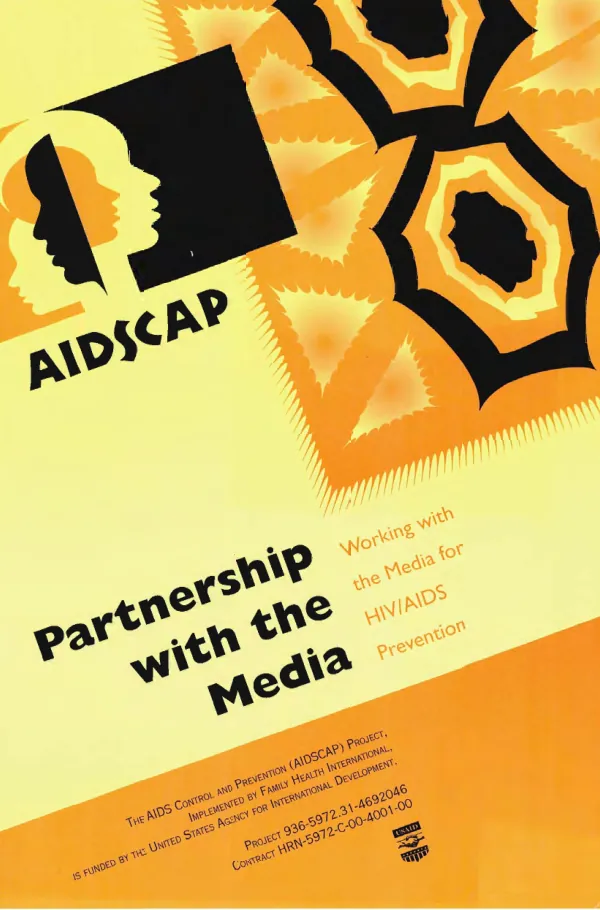
Partnership with the Media
The AIDSCAP BCC unit developed this handbook to provide complementary ways to establish a long-lasting partnership with the media.
2013 · 64 pages
Sign in to readA free account is required to download.
Abstract
A true partnership with the media requires a long-term relationship with people at all levels of the media establishment. This handbook suggests ways to form a partnership with the media, including ideas for four events to be held with media professionals, encouraging the development of a network of media professionals interested in HIV/AIDS and sexually transmitted infections (STI) issues, and providing journalists with incentives for covering HIV/AIDS/STI issues. The handbook provides a comprehensive strategy for improving relationships with local media. Four events are suggested: a sensitization meeting, a discussion seminar, a journalists' workshop, and a school of journalism meeting. These events aim to educate media professionals on HIV/AIDS and STI issues, strengthen their reporting skills, and identify resources and networks for covering these topics. The sensitization meeting is designed to introduce media professionals to HIV/AIDS and STI issues, while the discussion seminar focuses on sharing experiences and best practices in reporting on these topics. The journalists' workshop provides in-depth training on HIV/AIDS and STI reporting, while the school of journalism meeting brings together media professionals together to discuss and share knowledge and resources. The handbook also emphasizes the importance of follow-up steps, including maintaining existing networks and keeping HIV/AIDS/STIs in the news. By implementing these activities, organizations can establish a true partnership with the media and improve their relationships with local media professionals. The handbook is one in a series developed by AIDSCAP's Behavior Change Communication (BCC) unit. Other handbooks that may be useful for developing a media partnership include "How to Create an Effective Communication Project," "Behavior Change Through Mass Communication," and "How to Create an Effective Pretests." Additionally, the handbook recommends ordering the resource book "Developing Health Journalists: A Manual for Improving News Coverage of Reproductive Health" from Family Health International. The AIDSCAP BCC unit's objective is to provide readers with several complementary ways to establish a long-lasting partnership with the media. The handbook suggests ways to form a partnership with the media, including ideas for four events to be held with media professionals, encouraging the development of a network of media professionals interested in HIV/AIDS and STI issues, and providing journalists with incentives for covering HIV/AIDS/STI issues.