FAMILY HEALTH INTERNATIONAL
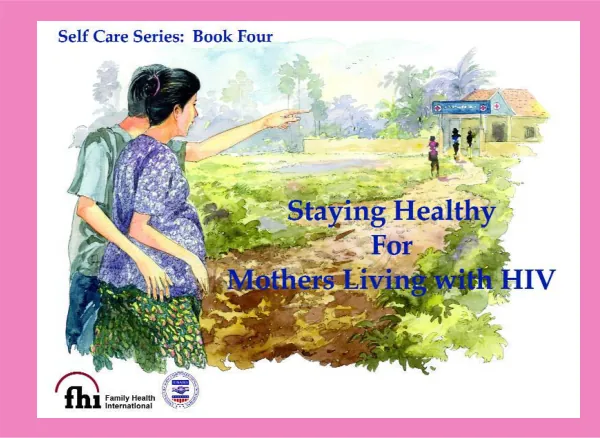
Self Care Series: Book Four - Staying Healthy: For Mothers Living with HIV
The Self Care Series: Book Four, Staying Healthy: For Mothers Living with HIV, is a resource designed to support HIV+ pregnant and newly delivered women in maintaining their health and making informed decisions about the care of their baby.
39 pages
Sign in to readA free account is required to download.
Abstract
Funded by the United States Agency for International Development (USAID) through the IMPACT Project, implemented by Family Health International, this book aims to provide essential information and guidance to reduce the risk of HIV transmission to infants. HIV transmission to infants can occur during pregnancy, labor and delivery, or through breastfeeding. Researchers agree that a baby of an HIV+ mother stands a 1 in 7 chance of becoming HIV+ through breastfeeding. However, this risk is reduced if the baby is exclusively breastfed. Even without special treatment, most babies born to mothers who are HIV+ will not be infected with HIV. To protect their baby from HIV, mothers can take several steps. Attending a government-approved center for voluntary counseling and testing can provide information on protecting themselves and their baby from future HIV infection. Regular attendance at health services in the community that provide care for pregnant women is also essential. Using a condom for sex throughout pregnancy and after delivery can further reduce the risk of HIV transmission. A healthy and safe pregnancy requires regular antenatal care from qualified health staff. At least three check-ups during pregnancy are recommended, and it is essential to inform the health staff about HIV status to receive appropriate care and advice. Pregnant women need extra food to stay healthy and help their baby grow strong and healthy inside the uterus. Nutritious eating can help stay healthy and strengthen the immune system. All pregnant women need daily iron and folic acid supplements, which can be provided by the health center. Nutritious eating includes growing foods, such as meat, fish, eggs, and beans, which provide essential nutrients. Glow foods, like fruits and vegetables, contain vitamins that help the body work well. Go foods, including rice, sugar, bread, and fats, provide energy. Food does not need to be expensive to be nutritious, and eating foods that are easily available and plentiful in the community is recommended. Avoiding unhealthy items, such as cigarettes and alcohol, and using the money to buy nutritious food instead can also support a healthy pregnancy.