USAID DEC
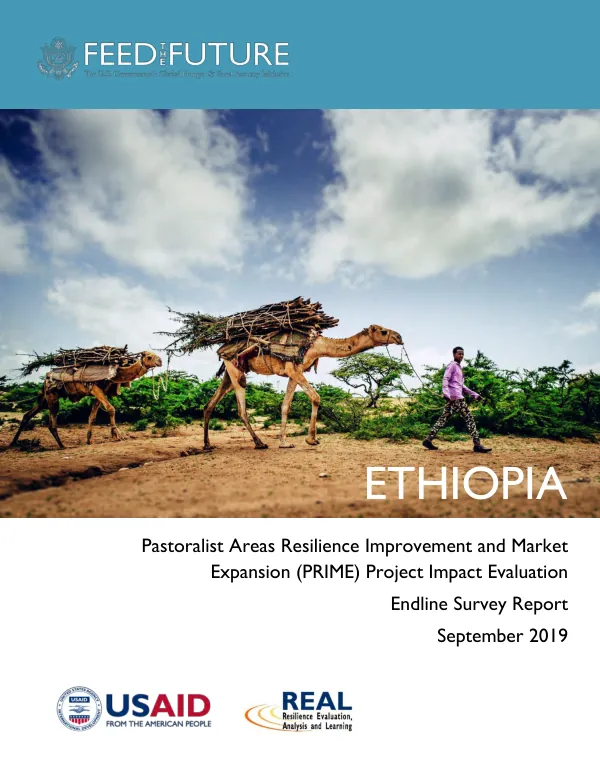
Pastoralist Areas Resilience Improvement and Market Expansion (PRIME) Project Impact Evaluation Endline Survey Report
Sign inFOOD FOR THE HUNGRY, INTERNATIONAL
Pastoralist Areas Resilience Improvement and Market Expansion (PRIME) Project Impact Evaluation Endline Survey Report
The PRIME Project in Ethiopia aimed to improve the resilience of pastoralist communities in the Borena and Jijiga areas.
2019 · 208 pages
Sign in to readA free account is required to download.
Abstract
The project was implemented from 2014 to 2019 and received funding from USAID's Office of Food for Peace. The project's main objective was to enhance the resilience of households to climate, conflict, and economic shocks. The project's methodology involved a comprehensive approach, including quantitative and qualitative data collection and analysis. The quantitative survey collected data from 1,200 households in the Borena and Jijiga areas, while the qualitative survey gathered information from 120 households. The data was analyzed to assess the impact of the project on households' resilience and resilience capacities. The results of the endline survey showed that the project had a positive impact on households' resilience and resilience capacities. The survey found that households that participated in the project's resilience-strengthening interventions experienced a significant reduction in the frequency and severity of shocks. The project also improved households' access to markets, infrastructure, and natural resources, which enhanced their resilience capacities. In terms of livelihoods and livelihood environment, the project had a positive impact on households' income, wealth, and poverty levels. The survey found that households that participated in the project's livestock production and marketing interventions experienced a significant increase in their income and wealth. The project also improved households' access to markets, which enhanced their livelihoods and livelihood environment. The project's impact on households' resilience capacities was also assessed. The survey found that households that participated in the project's resilience-strengthening interventions experienced a significant improvement in their resilience capacities. The project improved households' access to markets, infrastructure, and natural resources, which enhanced their resilience capacities. The project's impact on households' well-being outcomes and resilience to shocks was also assessed. The survey found that households that participated in the project's resilience-strengthening interventions experienced a significant reduction in the frequency and severity of shocks. The project also improved households' access to food, which enhanced their well-being outcomes. The project's impact on households' engagement in resilience-strengthening interventions and receipt of humanitarian assistance was also assessed. The survey found that households that participated in the project's resilience-strengthening interventions experienced a significant increase in their engagement in resilience-strengthening interventions. The project also improved households' access to humanitarian assistance, which enhanced their resilience capacities. Overall, the PRIME Project in Ethiopia had a positive impact on households' resilience and resilience capacities. The project improved households' access to markets, infrastructure, and natural resources, which enhanced their resilience capacities. The project also improved households' income, wealth, and poverty levels, which enhanced their livelihoods and livelihood environment. The project's impact on households' well-being outcomes and resilience to shocks was also positive. The project improved households' access to food, which enhanced their well-being outcomes. The project also reduced the frequency and severity of shocks, which enhanced households' resilience capacities. The project's impact on households' engagement in resilience-strengthening interventions and receipt of humanitarian assistance was also positive. The project improved households' engagement in resilience-strengthening interventions, which enhanced their resilience capacities. The project also improved households' access to humanitarian assistance, which enhanced their resilience capacities. The PRIME Project in Ethiopia was a comprehensive initiative that aimed to improve the resilience of pastoralist communities in the Borena and Jijiga areas. The project's methodology involved a comprehensive approach, including quantitative and qualitative data collection and analysis. The project's impact on households' resilience and resilience capacities was positive, and the project improved households' access to markets, infrastructure, and natural resources, which enhanced their resilience capacities. The project's impact on households' livelihoods and livelihood environment was also positive. The project improved households' income, wealth, and poverty levels, which enhanced their livelihoods and livelihood environment. The project also improved households' access to markets, which enhanced their livelihoods and livelihood environment. The project's impact on households' livelihoods and livelihood environment was also positive. The project improved households' income,
Related documents
Documents in this collection
 2018
2018USAID DEC
Feed the Future Ethiopia Pastoralist Areas Resilience Improvement and Market Expansion (PRIME) Project Impact Evaluation: Report of Recurrent Monitoring Survey 2 (2015/16)
Open record 2018
2018USAID DEC