USAID DEC
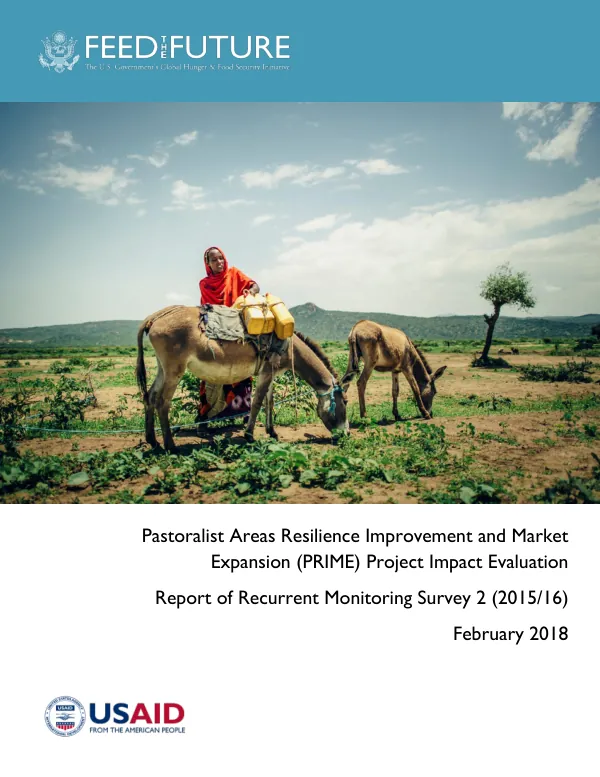
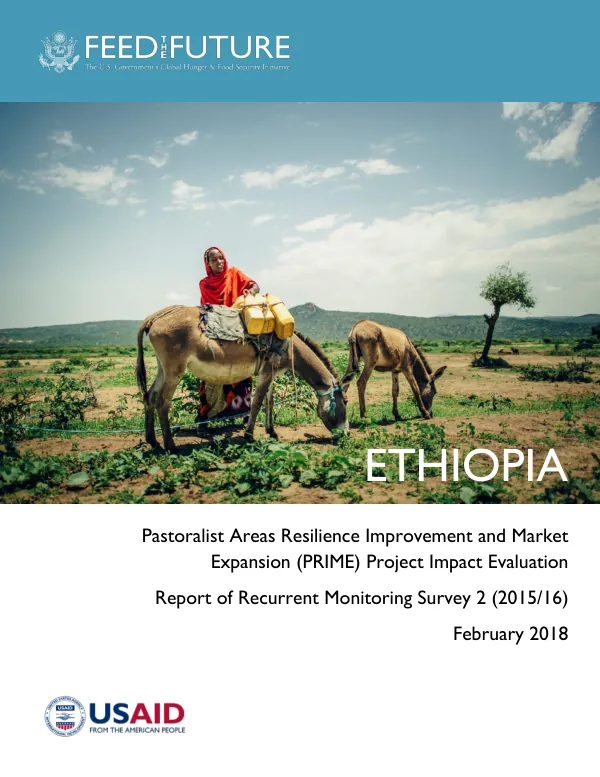
Feed the Future Ethiopia Pastoralist Areas Resilience Improvement and Market Expansion (PRIME) Project Impact Evaluation: Report of Recurrent Monitoring Survey 2 (2015/16)
Sign inFEED THE FUTURE
Feed the Future Ethiopia Pastoralist Areas Resilience Improvement and Market Expansion (PRIME) Project Impact Evaluation: Report of Recurrent Monitoring Survey 2 (2015/16)
The PRIME Project Impact Evaluation Report of Recurrent Monitoring Survey 2 (2015/16) was conducted in the Borena and Jijiga regions of Ethiopia.
2018 · 147 pages
Sign in to readA free account is required to download.
Abstract
The project aimed to improve the resilience of pastoralist communities in these areas through the implementation of the Pastoralist Areas Resilience Improvement and Market Expansion (PRIME) project. The PRIME project was initiated in 2015 with funding from the United States Agency for International Development (USAID). The project focused on improving the resilience of pastoralist communities by enhancing their ability to cope with and recover from shocks, such as droughts. The project implemented various interventions, including farmer training programs, infrastructure development, and market linkage facilitation. The report highlights the importance of understanding the context in which the PRIME project was implemented. The Borena and Jijiga regions are characterized by a high level of drought risk, which has significant impacts on the livelihoods of pastoralist communities. The report notes that the drought of 2015 had a devastating impact on the region, with many households experiencing significant losses in terms of livestock, agricultural production, and income. The report presents the findings of the Recurrent Monitoring Survey 2 (RMS-2), which was conducted in 2015/16. The survey collected data from 1,200 households in the Borena and Jijiga regions, using a combination of quantitative and qualitative methods. The survey found that the drought had a significant impact on household food security and resilience, with many households experiencing food insecurity and reduced resilience. The report highlights the importance of understanding the correlations between different shocks, such as drought, conflict, and price shocks. The survey found that households that experienced multiple shocks were more likely to experience food insecurity and reduced resilience. The report also notes that the PRIME project's interventions had a positive impact on household food security and resilience, particularly in terms of improving access to markets and enhancing the ability of households to cope with shocks. The report identifies resilience positive deviants, which are households that have demonstrated exceptional resilience in the face of the drought. These households were found to have a range of characteristics, including higher levels of asset ownership, better access to markets, and more effective coping strategies. The report notes that these households can serve as a model for other households in the region, and that their experiences and strategies can be replicated to improve the resilience of pastoralist communities. Overall, the report highlights the importance of understanding the context and impacts of the drought on pastoralist communities in the Borena and Jijiga regions of Ethiopia. The report also notes the positive impact of the PRIME project's interventions on household food security and resilience, and identifies resilience positive deviants that can serve as a model for other households in the region.
Related documents
Documents in this collection
 2018
2018USAID DEC
Feed the Future Ethiopia Pastoralist Areas Resilience Improvement and Market Expansion (PRIME) Project Impact Evaluation: Report of Recurrent Monitoring Survey 2 (2015/16)
Open record 2013
2013USAID DEC