USAID DEC
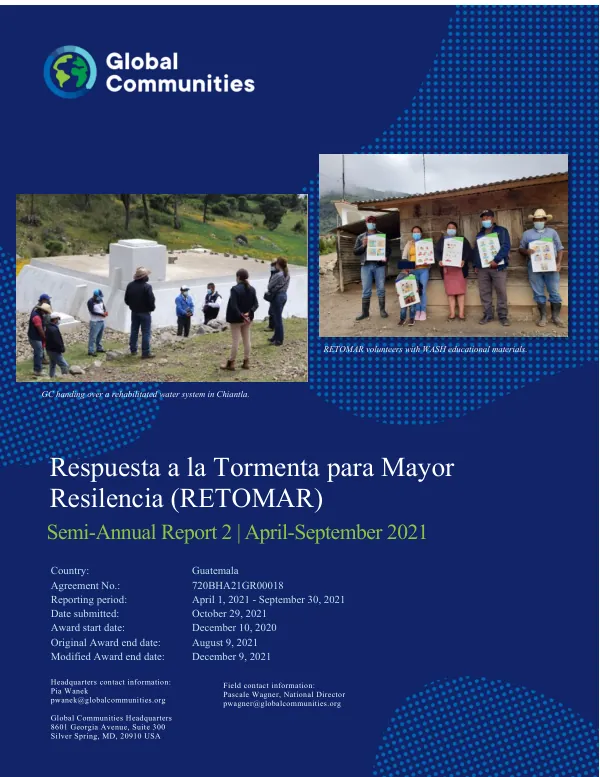
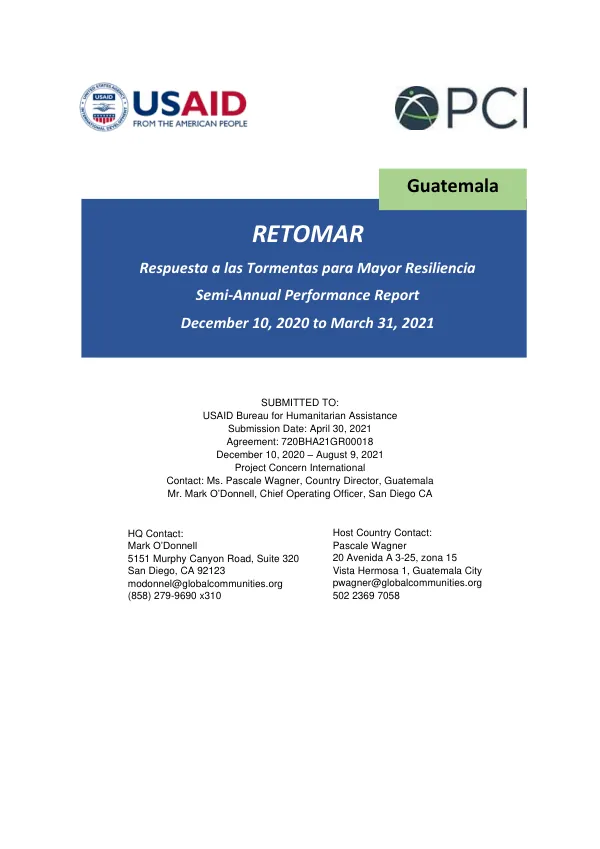
PCI Guatemala, RETOMAR Semi-Annual Performance Report
The RETOMAR project, implemented by Project Concern International (PCI) in Guatemala, aims to address the humanitarian needs of people affected by tropical storms Eta and Iota in 61 communities of five municipalities in the department of Huehuetenango.
2021 · 12 pages
Sign in to readA free account is required to download.
Abstract
The project's objectives focus on improving food security through Multi-Purpose Cash Assistance (MPCA), providing access to shelters and safe settlements, and improving access to water supply and basic Water, Sanitation and Hygiene (WASH) items. During the reporting period, RETOMAR registered 3,183 households, comprising 16,901 individuals in the affected communities. The households were selected based on criteria such as damage to the home, disruption to livelihoods, food insecurity, low-income households, and vulnerability. RETOMAR distributed the first tranche of MPCA to 2,617 households, totaling $355,912, to enable them to access basic household food and non-food items. A post-transfer survey conducted with 335 families showed that the families used 41% of the funds to purchase food, 55% to purchase hygiene items, and 4% for transportation. The field inspection of households has been ongoing, reaching 30% of the target communities. Following the transfer, households have begun rehabilitating their living quarters. RETOMAR has determined the amount of materials required for each household based on specific needs, developed plans and designs, and estimated the investment required for each municipality. Additionally, RETOMAR completed the assessment of 80 water systems in the 61 target communities and identified 109 houses requiring latrines. The community made provisional repairs to 40 water systems, and RETOMAR is currently working on determining the bill of quantities and the cost of rehabilitation materials. RETOMAR has been informing and educating families through audiovisual materials and informational talks in the communities. Key messages have been validated by local leaders to ensure understanding and acceptance by the community. To sensitize the community about cash transfers, RETOMAR uses WhatsApp or SMS, which improve communication and help prevent COVID-19. The main challenge to implementing RETOMAR is the distance and road access to some of the communities, which delays the transportation of program staff and impacts the efficiency of transporting materials. RETOMAR has made changes to its proposal in response to the discovery that there are no families living in community shelters. The majority of families have returned to their houses, while others are staying with family members or have relocated to neighboring communities. In response, RETOMAR will focus on supporting families in their homes and communities. RETOMAR has been working to prioritize projects based on a cost-benefit analysis, considering factors such as cost, access to water, and the number of families that would benefit from repairs. The project aims to complete the majority of projects prior to the rainy season, which starts around mid-year.