USAID DEC
Quarterly Performance Report: Seguridad Alimentaria e Higiene en el Corredor Seco (SAHCS)
Sign inADVENTIST DEVELOPMENT AND RELIEF AGENCY INTERNATIONAL
Quarterly Performance Report: Seguridad Alimentaria e Higiene en el Corredor Seco (SAHCS)
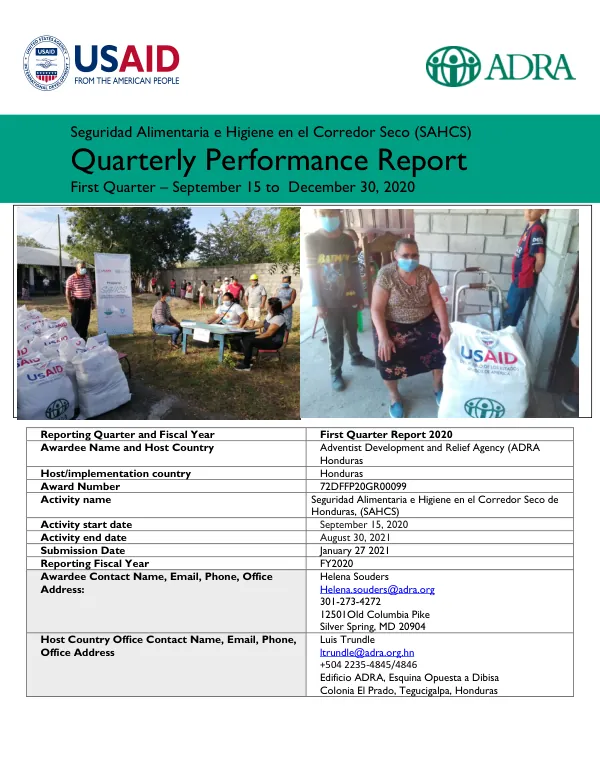
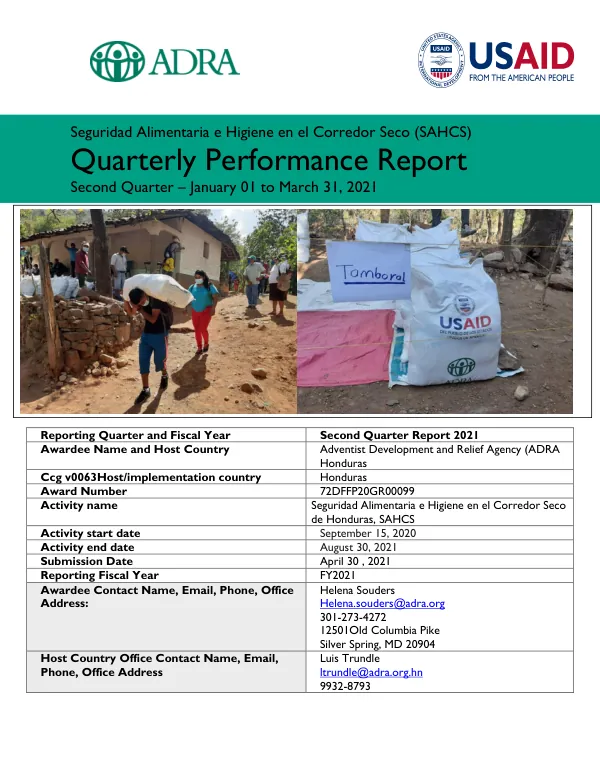
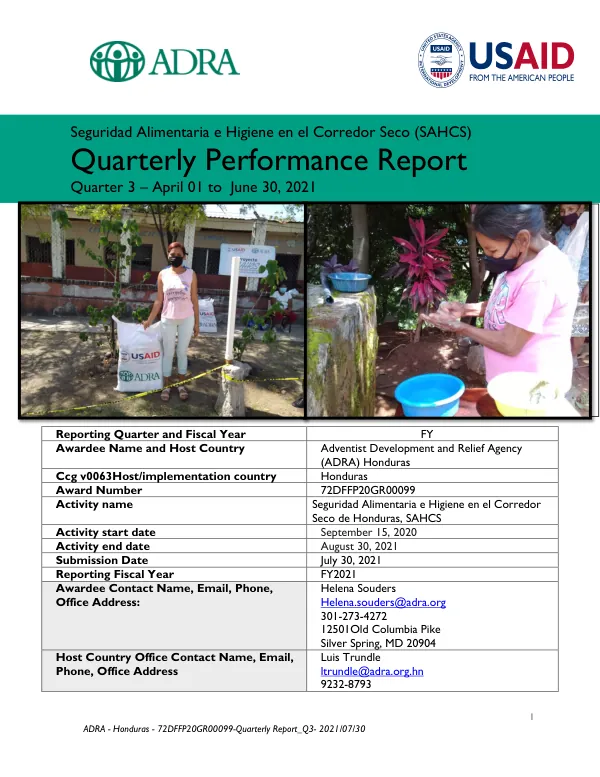
The Seguridad Alimentaria e Higiene en el Corredor Seco (SAHCS) project in Honduras, implemented by the Adventist Development and Relief Agency (ADRA), aimed to provide food assistance and promote water, sanitation, and hygiene (WASH) practices among vulnerable families.
2021 · 13 pages
Sign in to readA free account is required to download.
Abstract
The project began on September 15, 2020, and was scheduled to end on August 30, 2021. During the third quarter of 2021, from April 1 to June 30, the project added 450 new households, bringing the total number of beneficiaries to 5,224. Deliveries of food rations were carried out according to plan, with a delivery time of 5 days. ADRA opened more distribution points to reduce waiting times for beneficiaries, which were significantly reduced from 20% in the first distribution to 1% in the sixth distribution. The project continued to promote WASH practices, with a focus on hand hygiene and the establishment of handwashing stations. WASH volunteers conducted sensitization activities in 129 communities, reaching all 5,224 vulnerable families. Radio spots were broadcast with key messages on WASH, and 720 spots were aired during the third quarter. In terms of programming performance, the project achieved significant improvements in food security and WASH indicators. Beneficiary families reported that the food received lasted them for most of the month, and 31% shared their ration with other family members. The diversity of foods in the USAID food bag contributed to all beneficiary families being in adequate food consumption condition. The WASH sector saw significant improvements in indicators W8 and W10, with a high percentage of technical personnel's time focused on strengthening awareness and adoption of good hygiene practices. Hygiene promotion on the adoption of practices for the prevention of COVID-19 infection was conducted, with significant progress in the percentage of people targeted by the hygiene promotion program who know at least three critical moments for hand washing. The project's goal is to have 85% of families aware of the 5 critical moments for handwashing, and the baseline study found that only 29% of households could name at least 3 of the 5 critical handwashing moments. According to the sixth PDM study, 100% of the families interviewed knew at least 3 of the 5 critical moments for handwashing. In the WASH sector, the project also aimed to have 75% of households with an established handwashing location with soap and water. The baseline study found that 26% of households met this condition, and according to the results of the sixth PDM, 93% of households meet this condition. Community accountability was ensured through Post Distribution Monitoring (PDM) of the fourth, fifth, and sixth deliveries, which verified the quality and quantity included in the bags. Families expressed satisfaction and gratitude with the project, and the results of the PDM showed that the families were satisfied with the benefit they received. The project's implementation was carried out as planned, with a focus on food security and WASH practices. The project's goal is to provide food assistance and promote WASH practices among vulnerable families, and the results of the third quarter show significant improvements in food security and WASH indicators.
Related documents