USAID DEC
Perception Survey V-cum-Endline 2018
Sajhedari Bikaas Project, a partnership for local development, aimed to establish an enabling environment for community development in Nepal.
2018 · 71 pages
Sign in to readA free account is required to download.
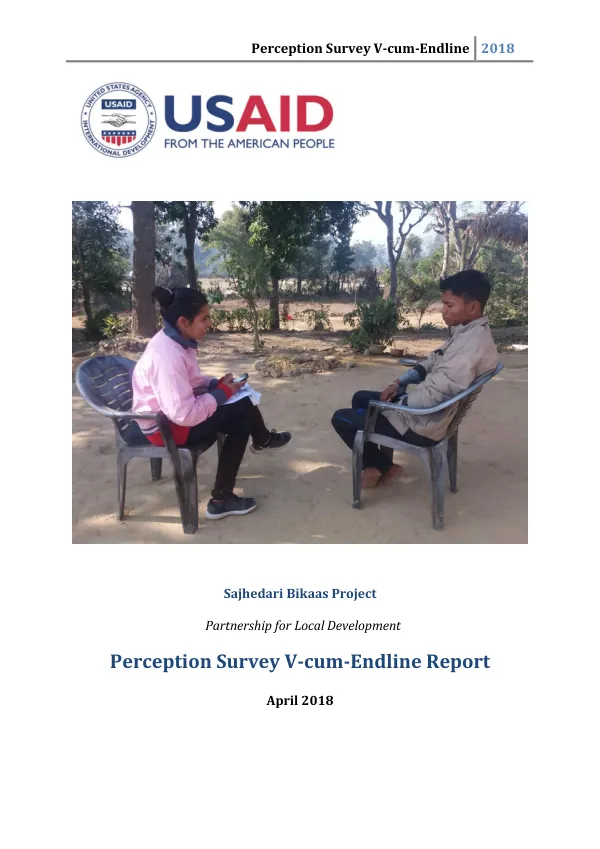
Abstract
The project's objectives were to enable communities to access resources for development, implement inclusive development policies effectively, and ensure local government units function effectively. The project also focused on addressing cross-cutting issues such as gender-based violence. The perception survey, conducted in 2018, involved a household survey, focus group discussions, and key informant interviews. The survey aimed to assess the awareness of local entities, community development programs, and the effectiveness of local government units. The sample size consisted of 2,880 respondents, with a margin of error of 1.7%. The survey found that 71% of respondents were aware of the roles and responsibilities of various entities, including the Community Mediation Center, Women's Organization for Rural Transformation and Holistic Development (WORTH), and the Rural Local Government (RLG). The survey also revealed that 55% of households experienced conflicts or problems, with 45% of these households using peaceful means to resolve conflicts. The survey found that 63% of respondents were satisfied with the services of the Community Mediation Center, and 45% of respondents reported that the center had helped them resolve conflicts. The survey also found that 58% of respondents had received technical support for business activities from WORTH, and 45% of respondents reported that they had started a business after receiving support from WORTH. The survey found that 71% of respondents were members of the RLG, and 45% of respondents reported that the RLG was involved in local-level planning processes. The survey also found that 33% of respondents reported that the RLG was conducting social development activities, and 45% of respondents reported that the RLG was participating in local-level planning processes. The survey found that 71% of respondents were aware of the Community Development Programs (CDPs) in their locality, and 42% of respondents reported that they were actively participating in decision-making in the CDPs. The survey also found that 45% of respondents reported that the CDPs had helped their community, and 45% of respondents reported that the CDPs had implemented projects by users' groups. The survey found that 71% of respondents perceived that the Women's Community Forum (WCF) was active, and 45% of respondents reported that the WCF had implemented gender equality and social inclusion (GESI) strategies. The survey also found that 45% of respondents reported that the WCF members provided meaningful input, and 45% of respondents reported that the WCF had helped their community. The survey found that 71% of respondents were aware of the local government units' functions, and 45% of respondents reported that the local government units were functioning effectively. The survey also found that 45% of respondents reported that the local government units had implemented projects by users' groups, and 45% of respondents reported that the local government units had helped their community. The survey found that 71% of respondents perceived that the Sajhedari program was effective in promoting community development, and 45% of respondents reported that they had benefited from the program. The survey also found that 45% of respondents reported that the program had helped them resolve conflicts, and 45% of respondents reported that the program had promoted social development activities. The survey found that 71% of respondents were aware of the local-level planning processes, and 45% of respondents reported that they had participated in the planning processes. The survey also found that 45% of respondents reported that the local government units had implemented projects by users' groups, and 45% of respondents reported that the local government units had helped their community. The survey found that 71% of respondents perceived that the Sajhedari program was effective in promoting community