USAID DEC
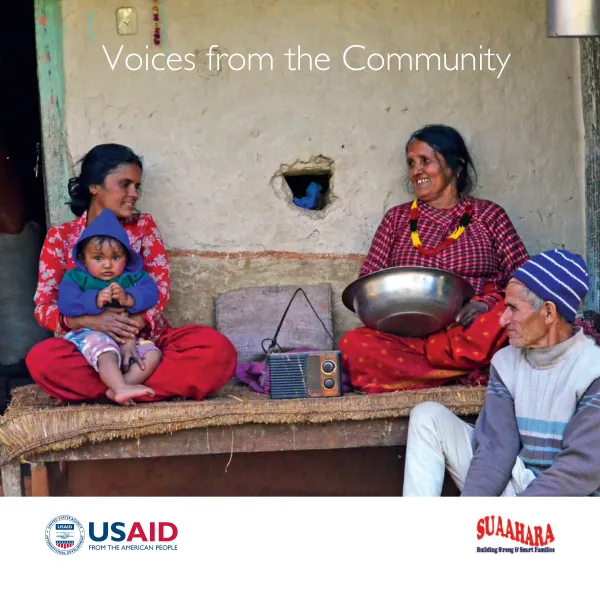
Voices from the Community: Celebrating Key Life Events to Improve Health and Nutrition in Nepal
Sign inUSAID
Voices from the Community: Celebrating Key Life Events to Improve Health and Nutrition in Nepal
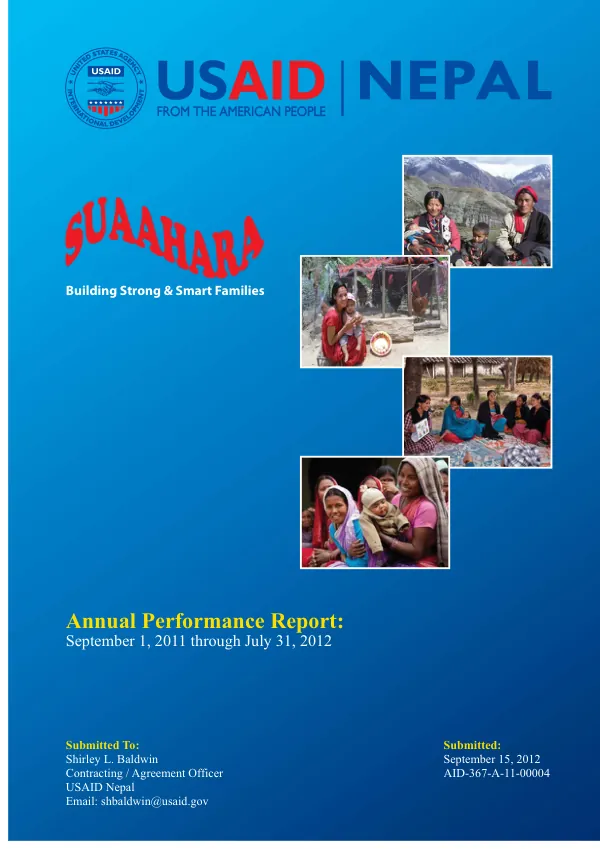
The Suaahara program, funded by USAID, has adapted traditional rituals in Nepal to promote improved health, water, hygiene, and sanitation, and nutrition for mothers and babies.
2016 · 20 pages
Sign in to readA free account is required to download.
Abstract
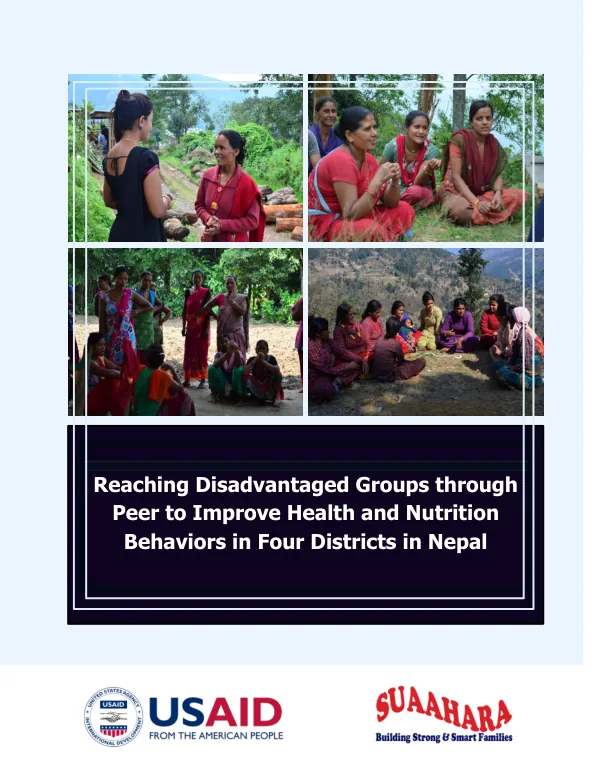
The program focuses on key life events, such as pregnancy, childbirth, and the baby's sixth month feeding ceremony. Health mothers' groups across Nepal are celebrating these events, which have become a platform for focused discussion on health and nutrition. The celebrations involve local gifts, advice on health and nutrition, and the distribution of information on improved practices. Women who participate in these events are more likely to know that they should give more food or breastmilk to their children when they are sick, wash hands before feeding children, feed a child eggs after six months of age, and feed children meat after six months of age. They are also more likely to practice exclusive breastfeeding and feed a child dark leafy greens in the past 24 hours. The Suaahara program has shown remarkable success, with many groups taking initiative to celebrate key life events and felicitate mothers even outside of the program's mandate. The Shreejana Aama Samuha, a mothers' group in Gaindakot of Nawalparasi district, has taken ownership of the celebrations and continues to reinforce healthy practices among families. The group has showered 32 women with gifts and reinforced healthy practices, and has seen a positive effect on the families' practices. In addition to the celebrations, the Suaahara program has also institutionalized the practice of awarding mothers with a Matri-Shishu Bachat piggy bank and locally produced foods after the birth of a child. The Jalbire of Sindhupalchok, Brahmayani Loan and Savings Cooperative, has taken this practice one step further by awarding mothers immediately after the birth of a child with a piggy bank and gifts of locally produced foods. Since April 2015, the Cooperative has awarded 12 mothers, and has seen an increase in membership as a result of the celebrations. The Suaahara program has also played a crucial role in providing information and guidance to mothers during times of crisis, such as the 2015 earthquake. The Bhanchhin Aama radio program, initiated by the Suaahara project, provided mothers with information and reassurance during the disaster. Pavitra BK, a resident of Fulpingkot, Sindhupalchok, was able to turn to the Bhanchhin Aama program for guidance and reassurance during the earthquake, and was relieved to learn that unborn babies are not affected by the earthquake. The Suaahara program has been instrumental in changing practices and promoting good health and nutritional behaviors in Nepal. The program's focus on key life events and the distribution of information on improved practices has led to a significant increase in the adoption of healthy behaviors among mothers and families. The program's success has also led to the institutionalization of the practice of awarding mothers with gifts and information after the birth of a child, and has provided a platform for mothers to share their experiences and learn from each other.
Related documents