DEVELOPMENT AND TRAINING SERVICES, INC.
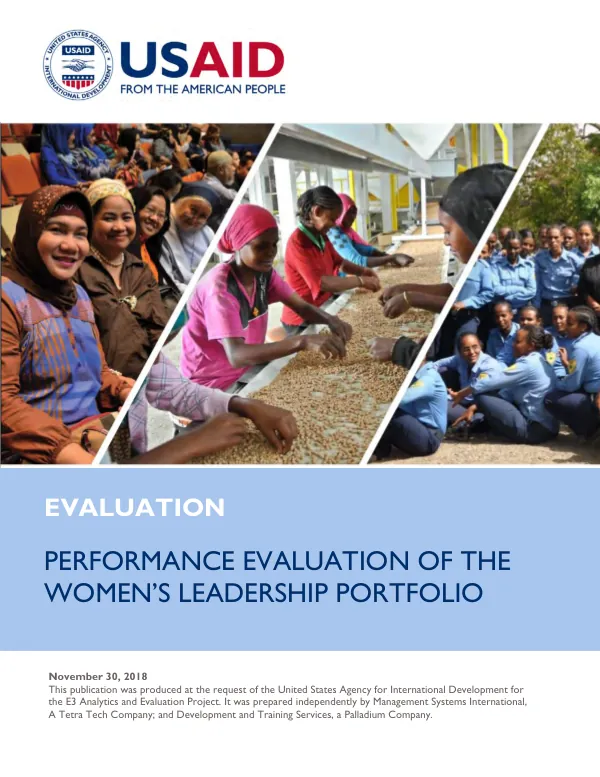
Performance Evaluation of the Women’s Leadership Portfolio
The Women's Leadership Portfolio (WLP) is a global initiative implemented by the United States Agency for International Development (USAID) to promote gender equality and women's empowerment.
2018 · 129 pages
Sign in to readA free account is required to download.
Abstract
The WLP was established to support the implementation of USAID's Gender Equality and Female Empowerment (GEFE) Policy, which aims to strengthen women's leadership and decision-making in various sectors and prevent and respond to gender-based violence. The WLP has a global reach, engaging multiple partners in key USAID activities to improve development outcomes through enhanced gender equality and women's empowerment. The initiative has contributed to increasing women's access to productive resources and services, and has decentralized the management of WLP activities from USAID/Washington gender teams to missions and other Agency operating units, increasing USAID's involvement in implementing gender programming globally. A performance evaluation of the WLP was conducted by Management Systems International (MSI) and Development and Training Services (dTS) under the E3 Analytics and Evaluation Project. The evaluation team conducted quantitative and qualitative analysis of over 1,000 USAID and implementing partner documents, telephone interviews with USAID/Washington, mission, and IP staff, and field-based interviews in six countries with local partners and beneficiaries. The evaluation found that comprehensive WLP activities with multiple interventions implemented over longer periods achieved more substantial results. The WLP advanced USAID's implementation of the GEFE Policy, especially in strengthening women's leadership and decision-making in several sectors and in preventing and responding to gender-based violence. The evaluation recommends that USAID/W WLP managers increase the potential impact and sustainability of future activities by focusing on key priorities and selected areas where pivotal gains can be made. WLP managers should allocate scarce resources to fewer, more strategically selected activities with larger budgets for longer periods. Enhanced communication and learning among USAID, its partners, and stakeholders will further enhance results, capacity, and resolve to continue advancing gender equitable development and resilience. The evaluation also highlights the importance of decentralizing the management of WLP activities, which has increased USAID's involvement in implementing gender programming globally. The WLP has a global reach, engaging multiple partners in key USAID activities to improve development outcomes through enhanced gender equality and women's empowerment. The evaluation team conducted a thorough analysis of the WLP, including a review of over 1,000 documents, telephone interviews with USAID staff, and field-based interviews in six countries. The evaluation found that the WLP has made significant contributions to promoting gender equality and women's empowerment, and has provided valuable lessons for future USAID programming. Overall, the WLP has been a successful initiative in promoting gender equality and women's empowerment, and has provided valuable lessons for future USAID programming. The evaluation's recommendations will help to increase the potential impact and sustainability of future WLP activities, and will continue to advance gender equitable development and resilience.
Related documents