THE CADMUS GROUP, INC.
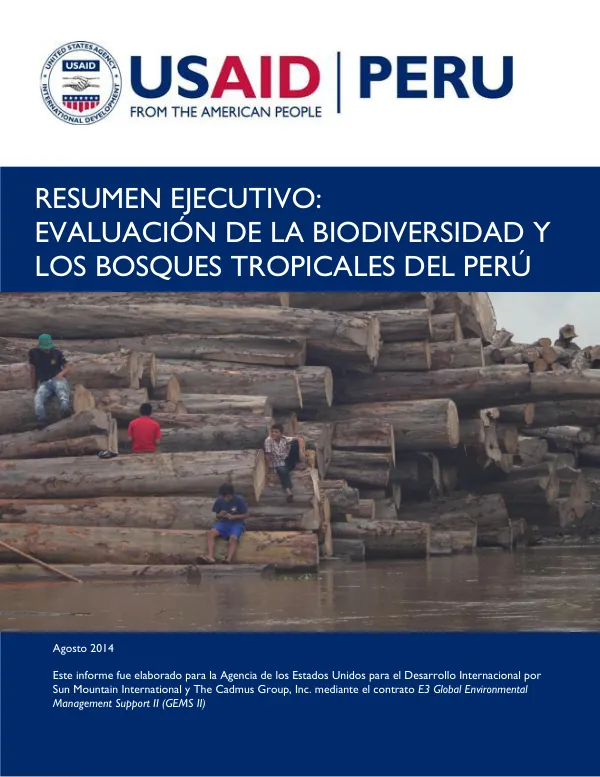
Peru Tropical Forest and Biodiversity Assessment
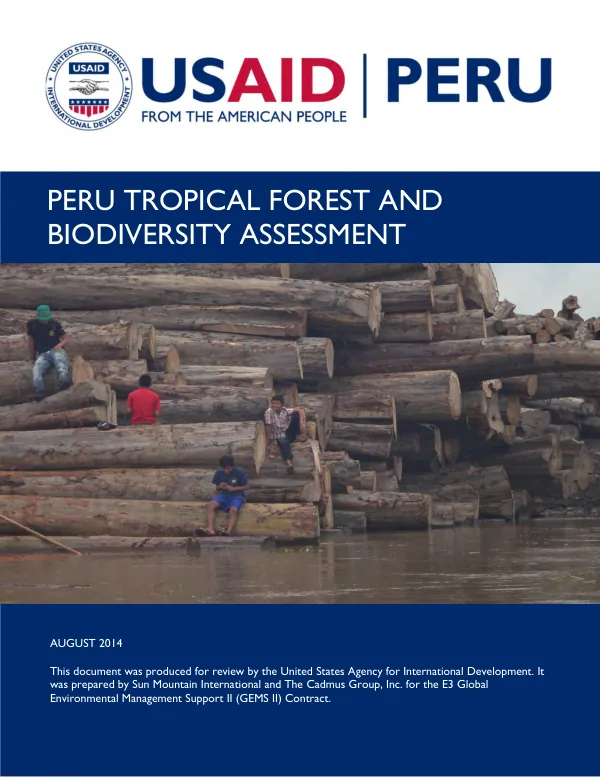
The Peru Tropical Forest and Biodiversity Assessment was conducted in August 2014 to evaluate the country's tropical forests and biodiversity.
2014 · 142 pages
Sign in to readA free account is required to download.
Abstract
The assessment was prepared by Sun Mountain International and The Cadmus Group, Inc. for the E3 Global Environmental Management Support II (GEMS II) Contract, funded by the United States Agency for International Development (USAID). The assessment aimed to provide a comprehensive overview of Peru's tropical forests and biodiversity, including the country's location, administrative subdivisions, physiographic provinces, climate, hydrology, soils, vegetation, and ecoregions. The report also examined the human environment, including population, indigenous peoples, and territories, as well as the country's economy, principal economic sectors related to the environment, and climate change. The assessment identified Peru as a global biodiversity powerhouse, with a rich array of tropical forests and unique ecosystems. However, the country faces significant threats to its biodiversity and tropical forests, including deforestation and land-use change, overexploitation, illegal and informal gold mining, infrastructure development, habitat degradation, and urban markets and mass production. The report highlighted the importance of addressing the root causes of biodiversity and tropical forest loss and degradation, including poverty, lack of access to markets, and inadequate governance. The assessment recommended that the Peruvian government and international partners work together to develop and implement effective policies and strategies to conserve and sustainably manage the country's tropical forests and biodiversity. The assessment team conducted over 60 interviews and planning sessions with government officials, NGOs, and local communities to gather information and recommendations. The report also included maps and photographs to illustrate the country's tropical forests and biodiversity. The assessment identified several key areas for conservation and sustainable management, including the Amazon rainforest, the Andes mountain range, and the coastal deserts. The report also highlighted the importance of protecting indigenous territories and promoting sustainable livelihoods for local communities. The assessment recommended that the Peruvian government and international partners work together to develop and implement effective policies and strategies to conserve and sustainably manage the country's tropical forests and biodiversity. This includes strengthening governance and law enforcement, promoting sustainable land-use practices, and supporting sustainable livelihoods for local communities. The report concluded that Peru's tropical forests and biodiversity are critical components of the country's natural heritage and play a vital role in supporting the livelihoods of local communities and the global environment. The assessment emphasized the need for urgent action to address the threats facing Peru's tropical forests and biodiversity and to promote sustainable development and conservation in the country.